What high-pressure or low-pressure applications are suitable for Mini Size Centrifugal Fans?
Typical Applications of Mini Size Centrifugal Fans:
1. High-Pressure Cooling for Electronic Equipment
Utilizing a high-speed single-phase direct-drive or EC motor, it can provide stable airflow under high-pressure (≥400Pa) conditions.
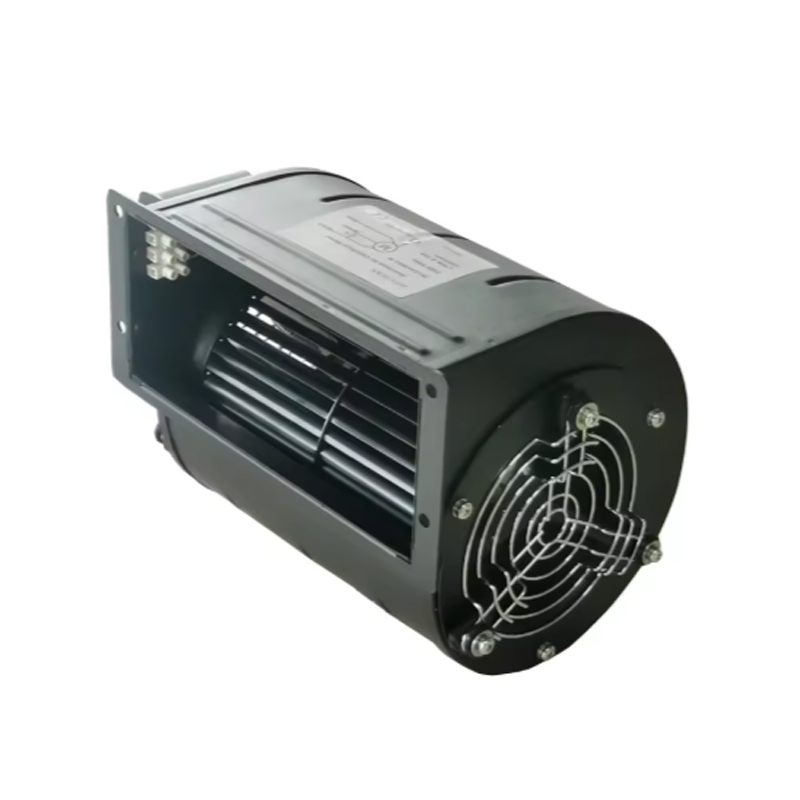
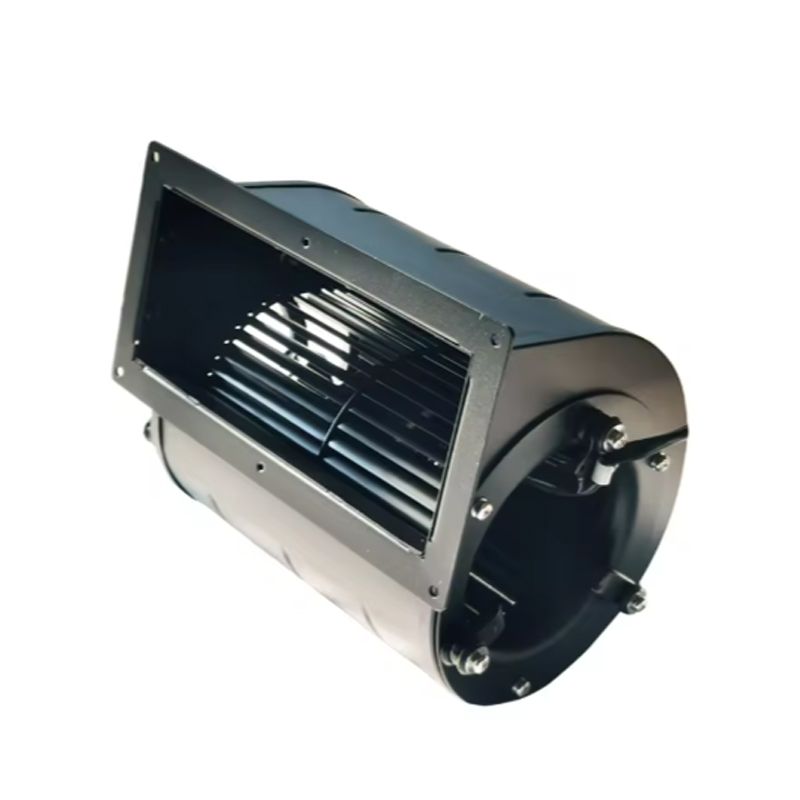
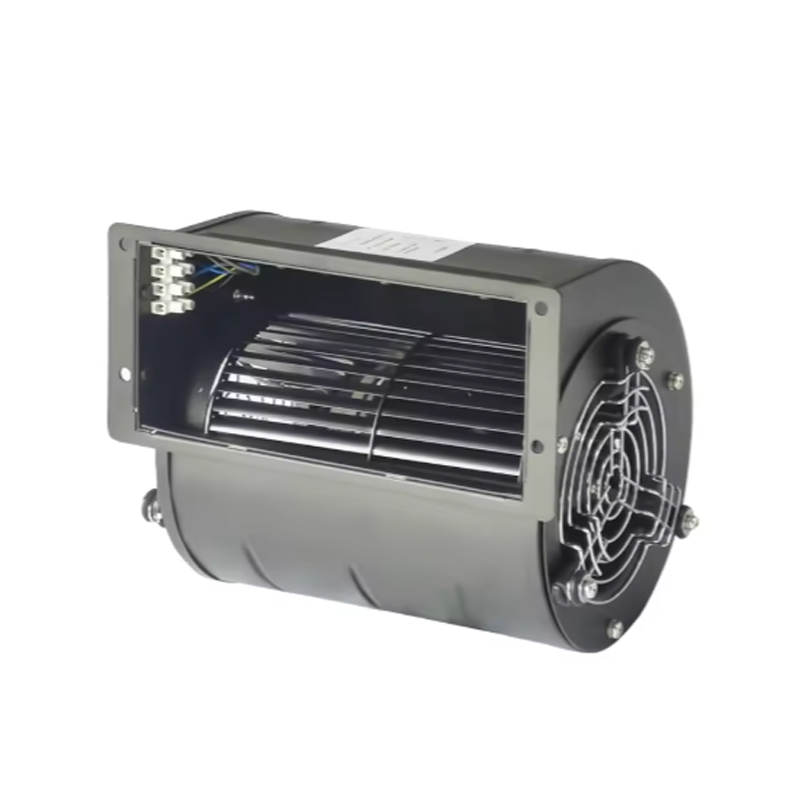
The compact body (133mm, 146mm, 160mm) makes it easy to embed in space-constrained enclosures such as servers and communication equipment.
It quickly extracts hot air using centrifugal force, improving the heat dissipation efficiency of electronic components and extending their lifespan.
2. Low-Pressure Operation of Small Ventilation Systems
It can maintain a good airflow-to-pressure ratio even in low-pressure (≤150Pa) environments.
Suitable for applications requiring localized ventilation, such as instrument cabinets, laboratory workbenches, and mini air conditioners.
The low-noise design ensures a comfortable working environment.
3. Localized Cooling of Mechanical Equipment
For mechanical components that generate localized hot spots, such as high-speed motors and frequency converters, Mini Size centrifugal fans can achieve precise airflow within a medium pressure range.
Its compact structure facilitates direct installation within the equipment, reducing piping losses.
4. Fresh Air and Air Purification Systems
In applications requiring small size and high efficiency, such as VAV (Variable Air Volume) systems and air purifiers, Mini Size centrifugal fans can provide uniform fresh air distribution at pressures as low as 50 Pa.
CE certification ensures compliance with EU mechanical safety standards, making it suitable for international projects.
How does the noise level of Mini Size Centrifugal Fans compare to traditional centrifugal fans?
Noise Level Comparison with Traditional Centrifugal Fans
1. Optimized Structure Reduces Noise
Mini Size centrifugal fans use single-phase direct drive or EC motors, eliminating the mechanical noise of traditional belt drives.
The streamlined design of the inlet and outlet reduces airflow impact noise.
2. Noise Advantages of Small Size
The relatively small impeller diameter, although resulting in high rotational speed, limits the range of airflow turbulence, resulting in an overall noise level approximately 3-5 dB(A) lower than large centrifugal fans.
3. Low-Noise Materials and Manufacturing Process: The casing uses high-density damping material to further suppress vibration propagation.
Precision machining ensures uniform clearance between the impeller and the casing, preventing noise caused by airflow leakage.
4. Actual Test Data (Provided by the Company): At rated speed, the noise level of a Mini-Size centrifugal fan is generally between 45-55 dB(A); while traditional centrifugal fans with the same airflow
volume typically range from 55-65 dB(A).
| Parameter |
Mini Size Centrifugal Fans |
Traditional Centrifugal Fans |
Note |
| Side noise |
approx. 41 dB |
50 dB–90 dB (most ≥ 60 dB) |
Mini Size is noticeably quieter |
| Inlet noise |
approx. 46 dB |
approx. 55 dB–80 dB |
Small size reduces airflow impact noise |
| Noise fluctuation |
little effect from speed and impeller shape |
strongly affected by speed, impeller count, housing material |
Optimized aerodynamic impeller and low‑noise motor |
| Noise‑reduction technology |
high‑precision balancing, low‑vibration bearings, EC silent motor |
traditional mechanical coupling, limited noise‑suppression measures |
Simplified structure and direct‑drive design lower mechanical noise |
How to select a model to avoid overload or insufficient power issues with Mini-Size Centrifugal Fans?
1. Determine System Pressure Requirements: First, calculate the required static pressure (Pa) and airflow (m³/h), referring to the corresponding pressure-airflow curve in the product specification table.
Select a model near the target operating point to ensure the fan operates within its rated power range.
2. Consider Motor Drive Type: For applications requiring variable speed adjustment, prioritize EC (brushless DC) motors, which allow for wide-range speed control and avoid overload caused by fixed speed.
Single-phase direct-drive AC motors are suitable for projects with low speed requirements and cost sensitivity.
3. Check Power Margin: When selecting a model, allow at least 10%-15% power margin to accommodate increased power demands due to changes in system resistance or rising ambient temperature.
4. Utilize Technical Support from Ningbo Haoyue Fan Manufacturing Co., Ltd.: The company has extensive R&D experience and can provide on-site surveys, airflow calculations, and model selection advice.
Through professional fan performance simulation software, they help customers quickly identify the most suitable Mini-Size centrifugal fan model, avoiding equipment overload or insufficient power due to incorrect selection.
Frequently Asked Questions (FAQ)
Q1: What are the core technical features of Ningbo Haoyue Fan Manufacturing Co., Ltd.'s Mini Size centrifugal fans?
A: The company uses a single-phase direct-drive AC motor or brushless DC (EC) motor drive structure, which has advantages such as high efficiency, low noise, convenient speed adjustment, and compact structure.
Q2: What are the main application scenarios for Mini Size centrifugal fans?
A: They are suitable for various industrial, commercial, and household environments, including heat dissipation for small electronic devices (such as computers, medical instruments, and communication equipment), air purification, kitchen fume extraction, hotel exhaust, and explosion-proof applications in paint booths. They are widely used due to their small size and low noise.
Q3: What are the typical airflow and noise levels of Mini Size centrifugal fans?
A: Common products have airflow ranging from tens to hundreds of cubic meters per hour, with a noise level of approximately 64 dB(A), meeting low-noise requirements.
Q4: What key parameters should be considered when selecting a Mini Size centrifugal fan? A: The parameters that need to be paid attention to include: air volume (m³/h), air pressure, speed (rpm), power (W), noise level (dB), motor type (AC/EC) and protection level (IP44, etc.).

 English
 Español

 ENG
ENG
