
 English
 Español
Content
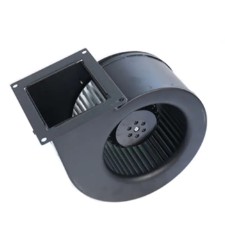
1. Basic Definition
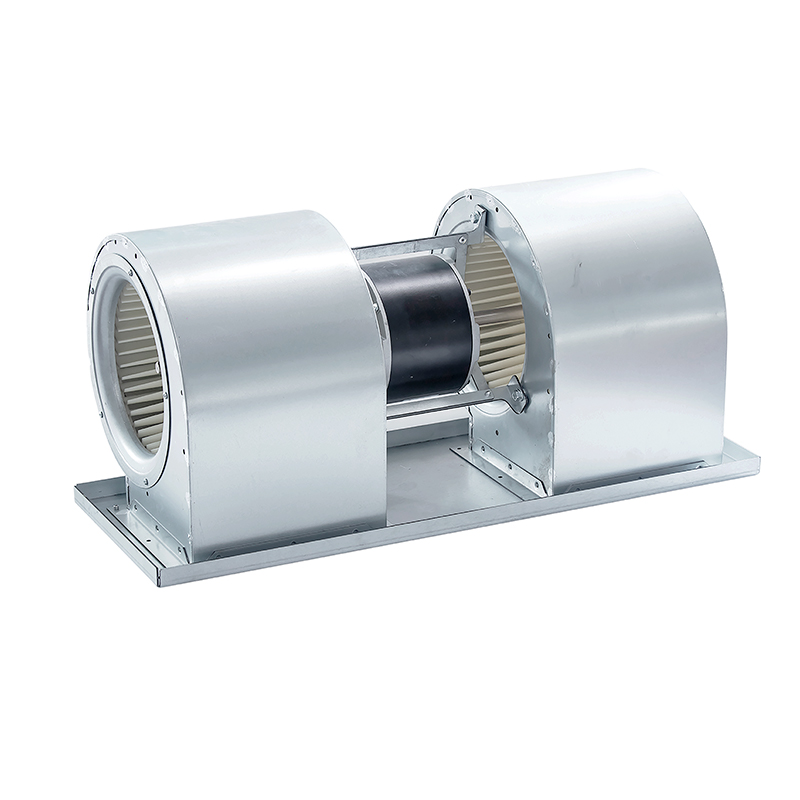
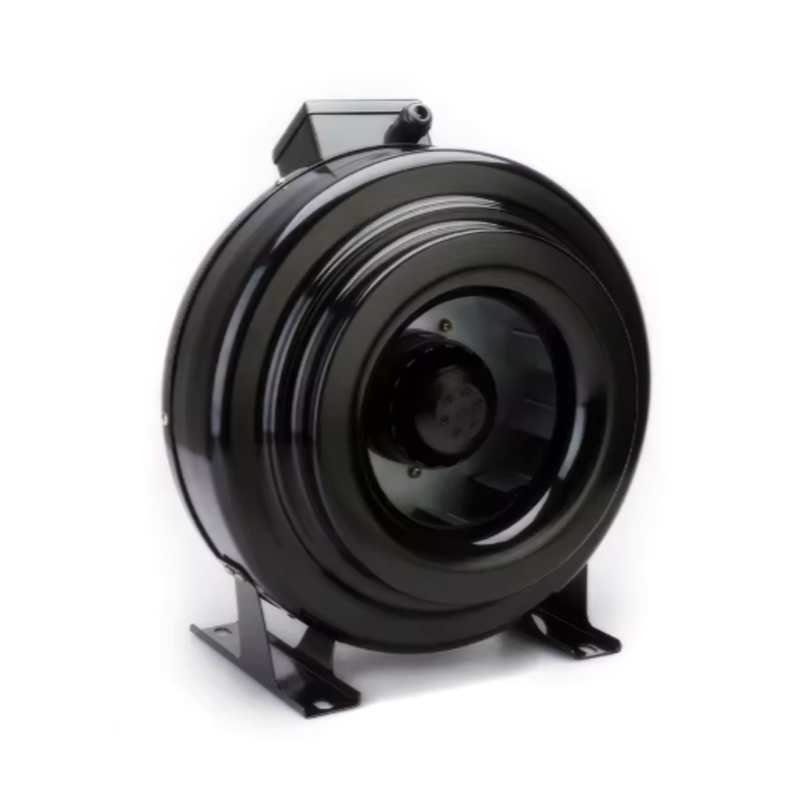
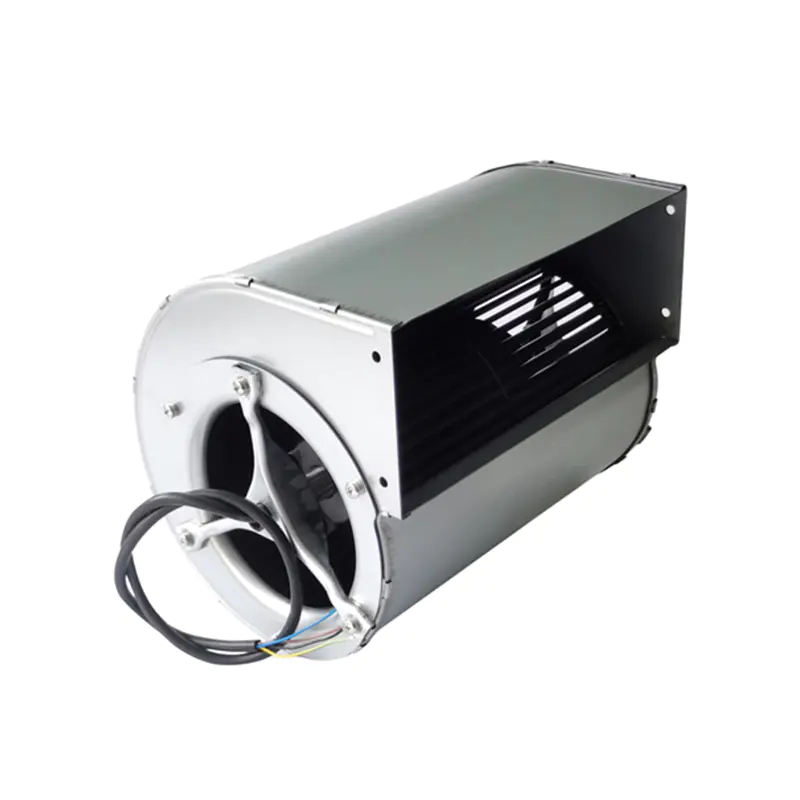
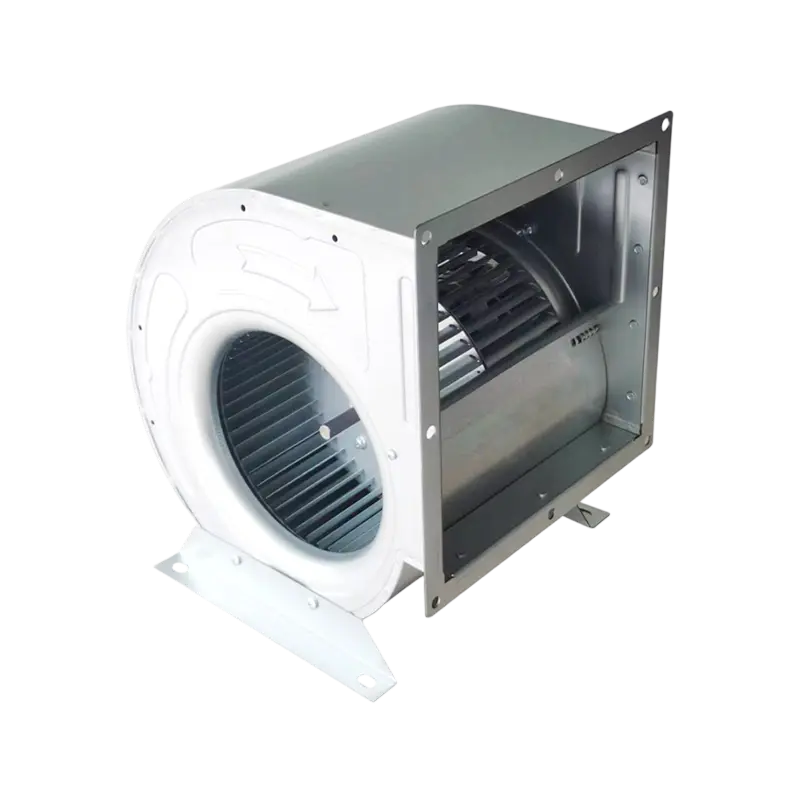
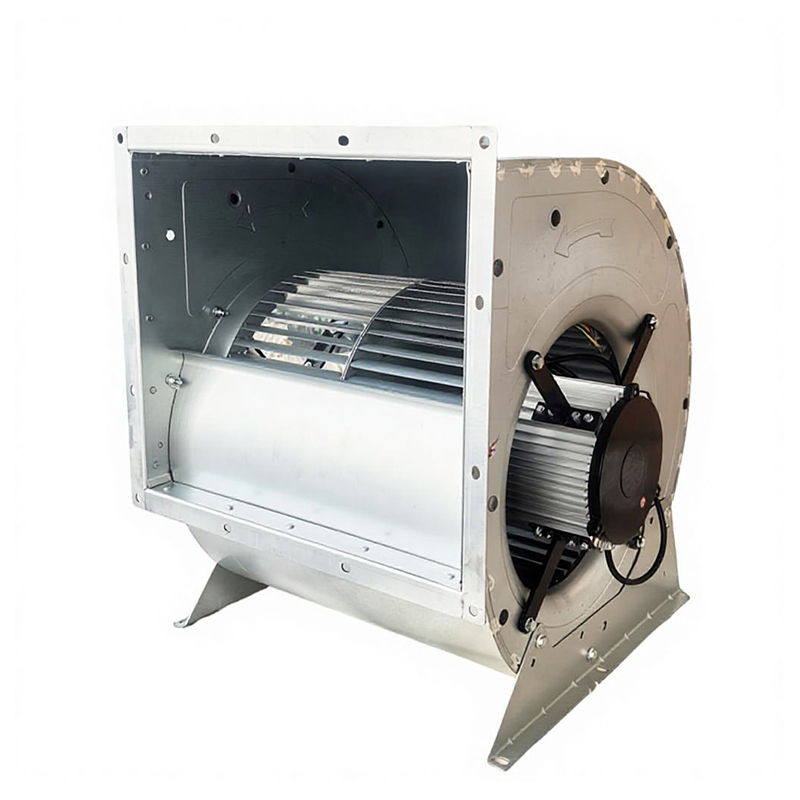
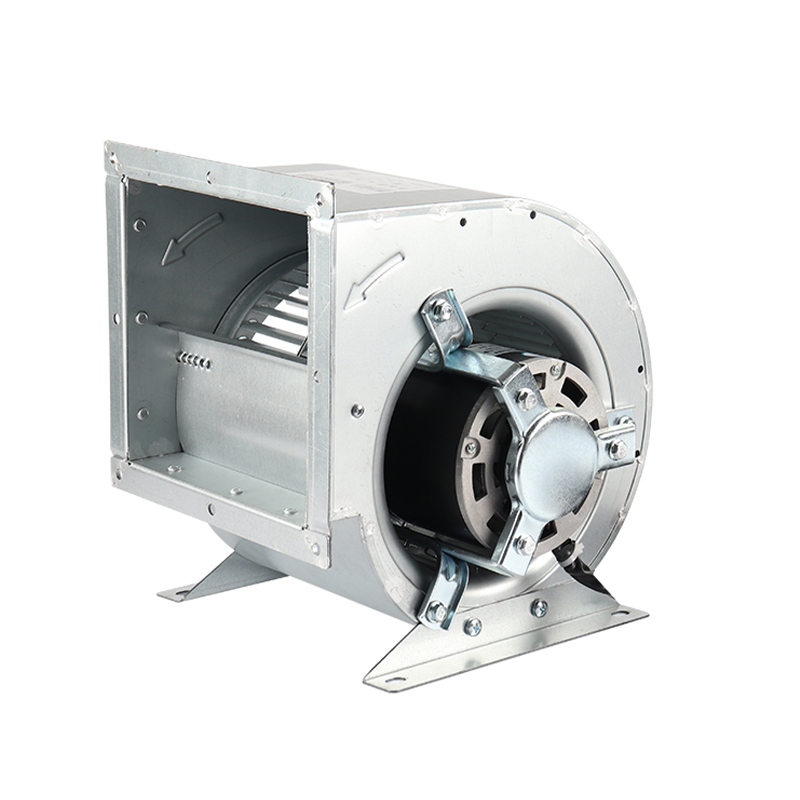
AC centrifugal fans are core ventilation devices that utilize an AC motor to directly drive an impeller at high speed. Centrifugal force draws air or other gases in through the inlet, accelerates them, and converts kinetic energy into pressure energy through a volute (diffuser). Compared to axial fans, centrifugal fans can achieve higher static pressure within a relatively compact casing, making them widely used in industrial and building systems requiring overcoming duct resistance, increasing air delivery height, or achieving a combination of large air volume and high pressure.
High Efficiency: Employing single-phase or three-phase AC motors, combined with backward- or forward-curved impeller structures, they can provide a stable air volume of 0.5-2 kPa or higher while maintaining low power consumption.
Low Noise: Modern centrifugal fans achieve operating noise levels below 70 dB(A) through optimized blade geometry, the use of silencers, and vibration-damping supports, meeting the requirements of noise-sensitive commercial and residential environments.
Easy Speed Adjustment: Wide-range airflow adjustment is possible via frequency converter or multi-speed motor, adapting to the needs of variable air volume (VAV) air conditioning systems.
2. Structural Components
Motor: AC motor, commonly 1-3 phase, power 0.1kW-30kW, directly coupled or driven by a coupling to drive the impeller.
Impeller: Back-curved or forward-curved impeller, 5-12 blades, mostly made of aluminum alloy or stainless steel, determining the fan's flow-head characteristics.
Vortex (Diffuser): Decelerates and redirects the high-speed airflow generated by the impeller, completing the kinetic energy-pressure energy conversion; a key component for achieving high pressure.
Inlet and Outlet Flanges: Standardized flanges facilitate quick connection to piping systems; commonly DN50-500.
Support and Vibration Damping Devices: Elastic supports, vibration damping pads, or spring supports are used to suppress mechanical vibration and reduce noise propagation.
3. Differences from other fans
Compared to axial fans: Axial fans are suitable for large air volume and low pressure applications, and the fan body is slender; centrifugal fans provide higher pressure head in the same volume, and are suitable for systems with high pipeline resistance.
Compared to crossflow fans: Crossflow fans have uniform air output and thin plate design, and are often used in air conditioning coils; centrifugal fans have concentrated air output direction, which is convenient for long-distance air supply in high-rise buildings or industrial plants.
What is the working principle of AC Centrifugal Fans?
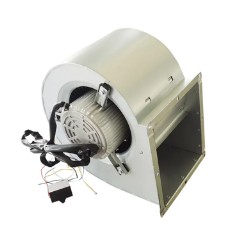
1. Centrifugal force generation
When the motor drives the impeller to rotate at high speed, the blades apply tangential velocity to the gas, causing the gas to accelerate radially inside the impeller. According to Euler's equation, the dynamic pressure obtained by the gas at the impeller outlet is proportional to the circumferential velocity (u) of the impeller, forming centrifugal force, which throws the gas towards the volute wall [4].
2. Kinetic energy to static pressure
The gas gradually decelerates in the volute or diffuser, and the kinetic energy is converted into static pressure. The diffusion angle and wall smoothness of the diffuser determine the energy recovery efficiency; commonly used recovery coefficients are between 0.2 and 0.3.
3. Flow Path
Inlet: Gas enters the impeller center through the inlet, forming axial flow.
Impeller Interior: Under the action of the blades, the flow becomes radial and accelerated.
Vortex/Diffuser: Gas diffuses outward along a spiral path, with pressure gradually increasing.
Outlet: High-pressure airflow enters the pipeline or system from the fan outlet.
4. Energy Balance
The overall power equals the sum of the increase in gas pressure energy and kinetic energy, plus mechanical losses (bearing friction, leakage, etc.). Power consumption can be significantly reduced by optimizing blade angles, reducing gap leakage, and using high-efficiency motors.
5. Control Methods
Variable Frequency Speed Regulation: Changes the motor speed to achieve continuous adjustment of airflow/pressure.
Multi-Speed Motor: Achieves discrete speed regulation by switching different stator windings.
Intelligent Monitoring: Real-time monitoring of parameters such as speed, pressure, and temperature, combined with a PLC or BMS system for fault warning.
What are the common faults of AC Centrifugal Fans?
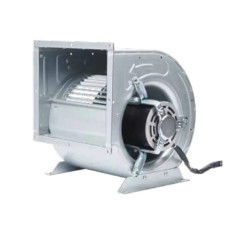
1. Mechanical Vibration and Imbalance
Causes: Uneven impeller mass distribution, bearing wear, or installation errors leading to rotor imbalance.
Symptoms: Strong low-frequency vibration and noise during operation, reduced airflow.
Solutions: Dynamic balancing, replacement of worn bearings, or impeller repositioning.
Bearing Failure
Causes: Insufficient lubrication, prolonged overload operation, or contaminants entering the bearing.
Symptoms: Metallic friction sound, increased temperature, unstable speed.
Solutions: Regularly add appropriate lubricating oil, use sealed bearings, and perform preventative replacement.
2. Impeller or Volute Wear
Causes: High-pressure airflow impact, particulate matter intrusion causing blade scratches or volute corrosion.
Symptoms: Reduced airflow, fluctuating outlet pressure, increased noise.
Solutions: Clean the intake filter, use corrosion-resistant materials, or replace damaged impellers.
3. Motor Failure
Causes: Aging motor insulation, short circuit in stator windings, or overload operation.
Symptoms: Difficult starting, reduced torque, abnormal current fluctuations.
Solutions: Insulation resistance testing;Using a soft starter to reduce inrush current;Replacing the motor if necessary.
4. Leakage and Seal Failure
Causes: Increased clearance between impeller and casing; aging of seals.
Symptoms: Internal airflow leakage leads to decreased efficiency and increased external noise.
Solutions: Replace seals; adjust impeller-casing clearance to design value.
5. Abnormal Noise
Causes: Impeller imbalance, airflow impact, structural resonance, or silencer failure.
Symptoms: Noise levels exceed design values, affecting the working environment.
Solutions: See Section 5 for noise reduction measures.
| Fault Type | Main Symptoms | Possible Causes | Prevention / Remedy |
| Bearing wear | Abnormal noise, increased vibration, reduced fan speed | Continuous high‑load operation, insufficient lubrication, dust ingress | Regularly check and replenish oil/grease, use dust‑tight seals, replace bearings according to the manual |
| Motor overheating | Excessive motor temperature, automatic trip, power drop | Voltage fluctuations, poor ventilation, overload | Install temperature sensors, ensure stable power supply, keep motor cooling passages clear |
| Impeller imbalance or deformation | Sudden drop in airflow, pressure fluctuations, strong vibration | Impeller impact, long‑term fatigue of metal | Use high‑strength alloy impellers, perform periodic dynamic balancing, replace impeller when needed |
| Abnormal vibration & noise | Increased noise level, structural resonance | Loose foundation, insufficient support elasticity, improper installation | Add vibration‑isolating pads, ensure foundation is level and firmly anchored, use compliant brackets that meet standards |
What are the typical application scenarios for AC centrifugal fans in HVAC systems?
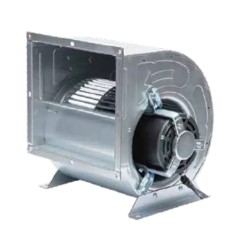
1. Variable Air Volume (VAV) Air Conditioning Systems
Function: Real-time matching of indoor airflow by adjusting fan speed, improving energy efficiency.
Advantages: The wide speed range and high-pressure characteristics of centrifugal fans allow them to maintain sufficient supply air pressure even under low loads, preventing system pressure loss.
2. Full Air System (FAU)
Function: Provides full air circulation for large commercial buildings, requiring fans to deliver stable high-pressure air.
Implementation: Back-curved centrifugal fans combined with multi-stage diffusers can achieve static pressure of 500–1500 Pa in a relatively small volume, meeting the air supply requirements of long-distance ducts.
3. Fresh Air and Ventilation System
Function: In hospitals, laboratories, and other places with high air quality requirements, it introduces fresh outside air and exhausts stale air.
Features: The high-pressure characteristics of centrifugal fans can overcome the pressure drop of high-resistance components such as filters and heat exchangers, ensuring a stable fresh air flow.
4. Dehumidification and Condensation System
Function: Provides forced air supply before chillers or condensers, improving heat exchange efficiency.
Advantages: The high air pressure of centrifugal fans can maintain sufficient airflow in low-temperature environments, preventing condenser frosting or scaling.
5. Industrial Waste Gas Treatment and Dust Removal
Function: Provides forced suction before waste gas collection and dust removal devices, ensuring effective capture of particulate matter.
Implementation: The backward-curved centrifugal fan provided by Ningbo Haoyue Company, combined with a high-efficiency filter, can operate stably at pressures above 1MPa, meeting the requirements of high-temperature and highly corrosive environments.
How to reduce noise when AC Centrifugal Fans are too noisy?
1. Aerodynamic Noise Control
Blade Optimization: Use low-noise blades (such as Prime blades) and perform dynamic balancing to reduce high-frequency whistling caused by airflow impact.
Diffuser Design: Increase the front-end radius and use a gradually expanding volute to reduce airflow separation and turbulence, reducing noise by approximately 6dB.
2. Mechanical Noise Control
Bearings and Lubrication: Use low-noise bearings and maintain proper lubrication to prevent metal-on-metal friction noise.
Vibration Damping Supports: Install elastic vibration damping pads or spring supports on the fan base to isolate structural noise transmission.
3. Structural Sound Insulation and Absorption
Silencers/Silencers: Silencers are installed at the inlet and outlet, utilizing sound-absorbing materials (glass wool, mineral wool) to absorb aerodynamic noise.
Soundproof Enclosure: The fan is placed in a sealed soundproof enclosure, with the outer shell made of high-density steel plate and sound-absorbing cotton, significantly reducing noise leakage.
4. Overall System Noise Reduction Solution
Noise Source Location: The noise source (impeller, bearings, structural resonance) is first located using an acoustic analyzer, and targeted treatment is implemented.
Comprehensive Measures: Combining blade balancing, diffuser optimization, silencers, vibration damping supports, and soundproof enclosures, an overall noise reduction of 10–15 dB is achieved, meeting the industrial noise emission standard GB12348-2008.
5. Maintenance and Monitoring
Regular Inspection: Routine inspections of the impeller, bearings, and seals are conducted, and worn parts are replaced promptly to prevent noise from worsening due to aging.
Online Monitoring: Noise sensors are installed and linked to a PLC to implement noise threshold alarms and prevent abnormal noise in advance.
| Application Scenario | Key Advantages | Typical Product / Model |
| Variable Air Volume (VAV) air‑conditioning systems | High pressure differential, rapid airflow adjustment for energy‑saving control | Forward‑flow centrifugal fans with variable‑speed EC motors |
| Ducted air‑conditioning units (DUCT) | Stable large airflow, compact footprint, adaptable to various duct layouts | High‑efficiency centrifugal fans with low‑noise design |
| Fresh‑air and air‑purification systems | Continuous supply of fresh air, combined with filters to improve indoor air quality | Cross‑flow fans or axial‑flow fan combos |
| Electronic equipment cooling & dehumidification systems | High pressure to overcome sealed cabinet resistance, maintaining safe equipment temperatures | Forward‑flow centrifugal fans with variable‑frequency EC drives |
 ENG
ENG
