
 English
 Español
Content
- 0.1 1. The Essence of Electronic Commutation Technology
- 0.2 2. Working Principle of Centrifugal Impeller
- 0.3 3. Overview of Key Advantages
- 0.4 4. Differences in Position Compared to Traditional AC Centrifugal Fans
- 1 What is the working principle of EC Centrifugal Fans?
- 2 What are the main differences between EC Centrifugal Fans and traditional AC centrifugal fans?
- 3 How do EC Centrifugal Fans maintain stable airflow in high static pressure environments?
- 4 How does the EC Centrifugal Fans controller achieve precise airflow regulation?
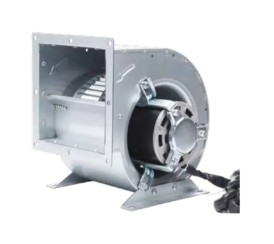
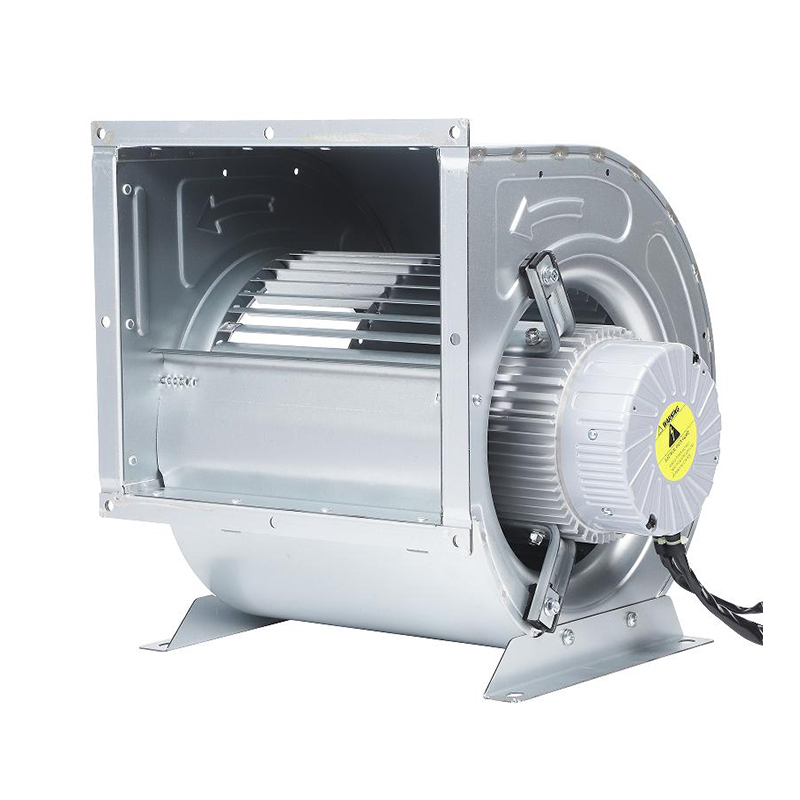
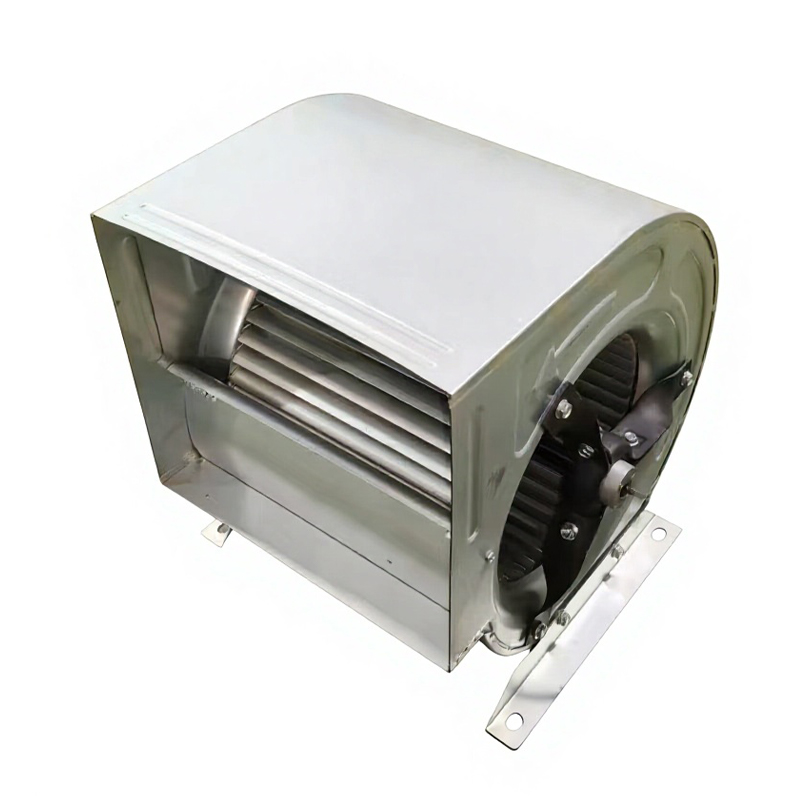
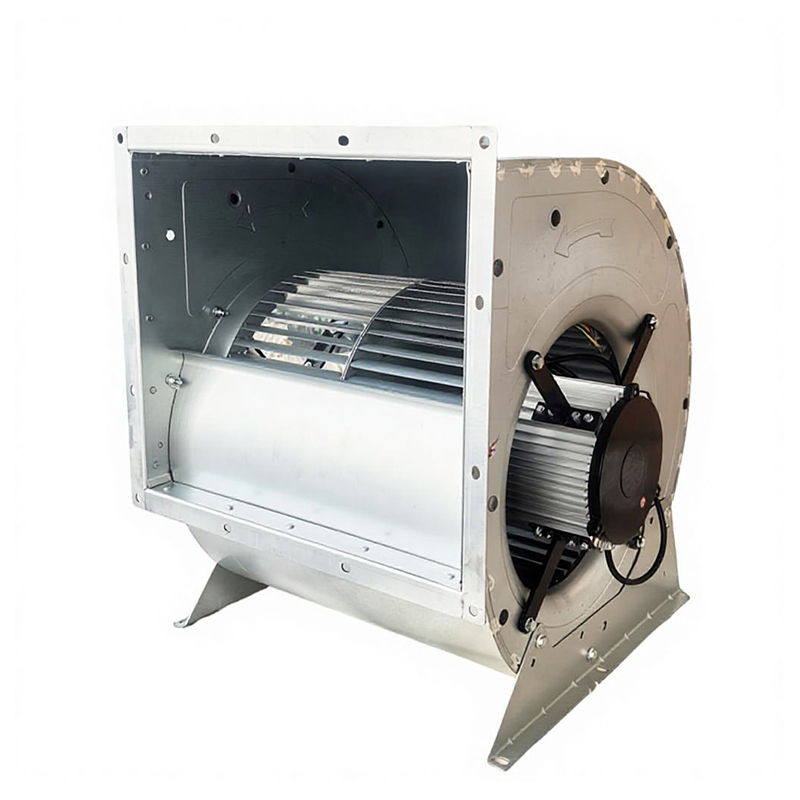
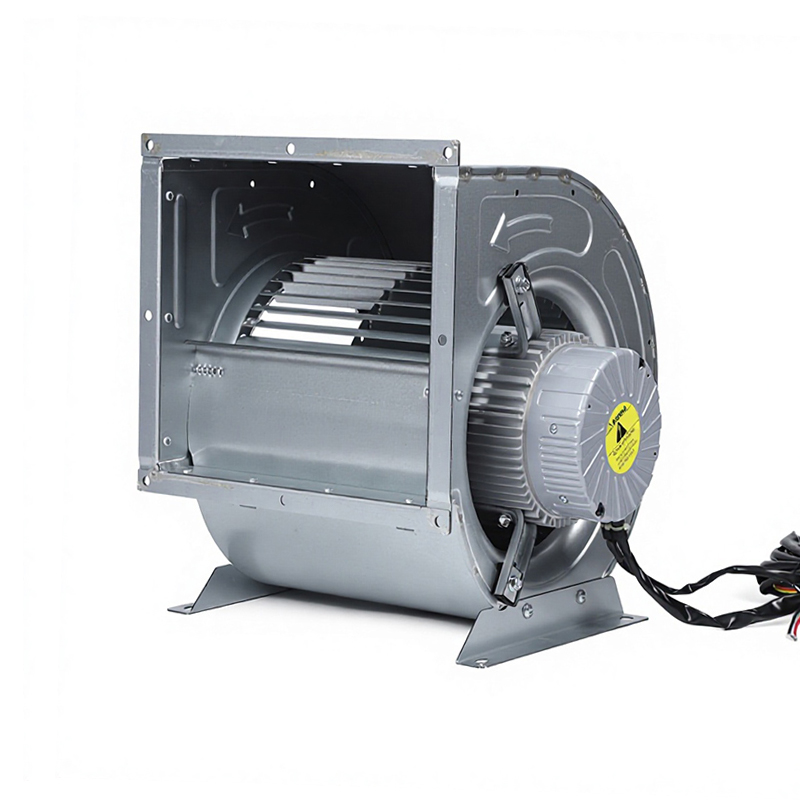
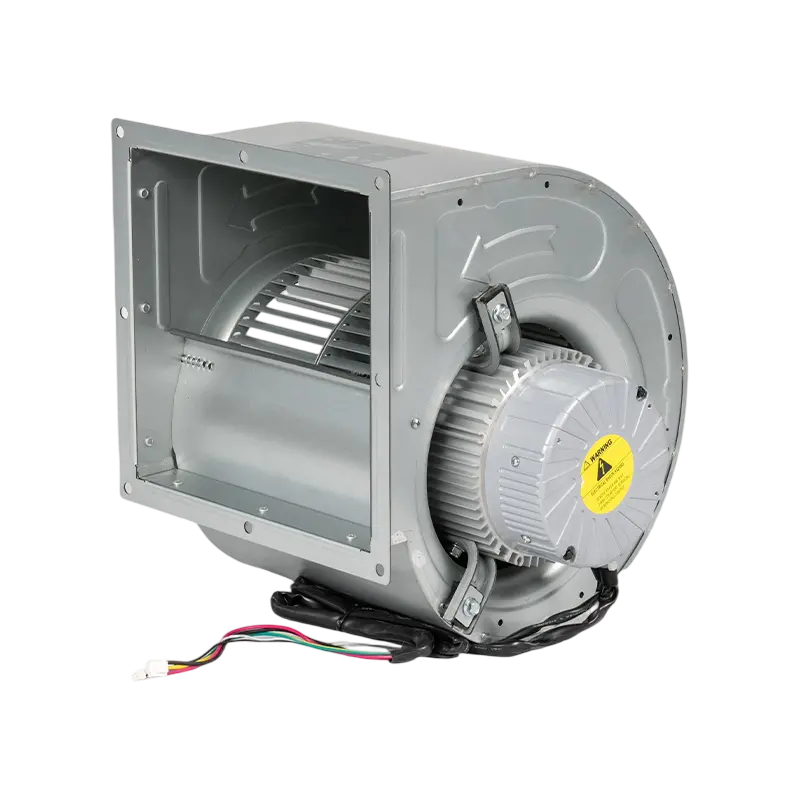
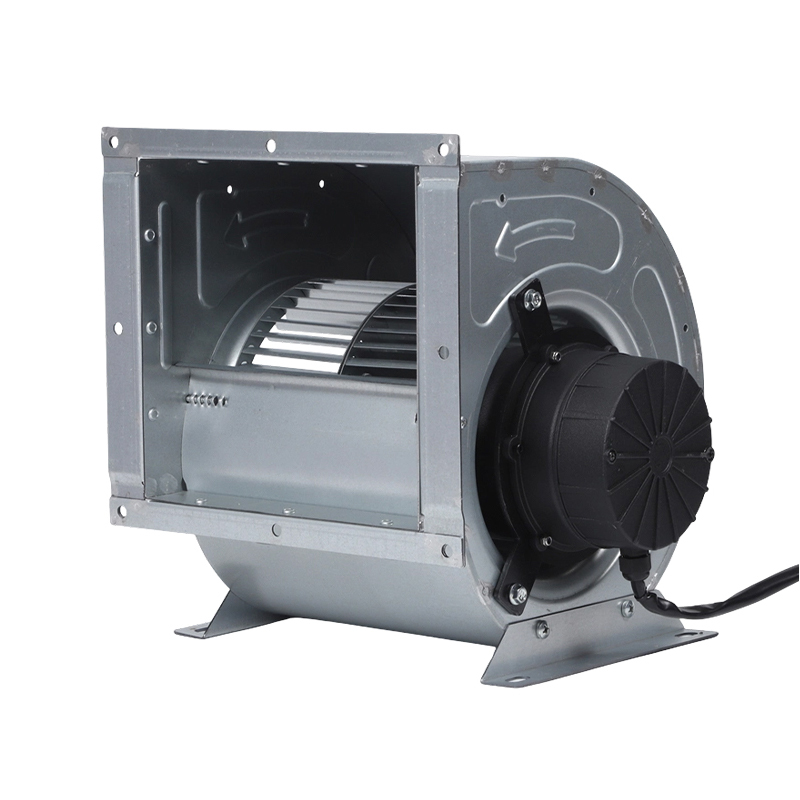
EC Centrifugal Fans are a type of high-efficiency ventilation equipment that directly couples an electronically commutated (EC) motor with a centrifugal impeller. Its core lies in replacing traditional mechanical commutation or direct AC drive with an electronic controller, achieving brushless, brushless pole, low-noise, and variable-speed operation.
1. The Essence of Electronic Commutation Technology
Brushless Permanent Magnet Rotor: The rotor is equipped with permanent magnets, and the stator coils generate an alternating magnetic field through an electronic commutator, causing the rotor to rotate continuously.
Electronic Controller (ECController): Monitors rotor position, speed, load, and other parameters in real time, adjusting the power supply voltage and frequency to achieve soft start, soft stop, and stepless speed regulation.
High Energy Efficiency: Compared to traditional AC motors, EC motors improve power factor and efficiency by 10%-20%, significantly reducing energy consumption.
2. Working Principle of Centrifugal Impeller
Centrifugal Drive: After the impeller rotates at high speed, air is thrown from the center of the impeller to the outer edge under the centrifugal force of the blades, forming a radial airflow.
Pressure Boost: The airflow is converted into static pressure at the impeller outlet, achieving high static pressure delivery, suitable for systems with high pipeline resistance.
Compact Structure: The impeller and motor are coaxially designed, eliminating the need for drive shafts, couplings, and other components, resulting in a smaller overall size and easier maintenance.
3. Overview of Key Advantages
| Advantage | Description |
| High Energy Efficiency | Electronic commutation matches power precisely, reducing energy consumption by 30 %–40 %. |
| Low Noise | Brush‑less design eliminates mechanical noise; typical operating sound pressure level is below 55 dB(A). |
| Variable Speed | Infinite speed adjustment via PWM or 0‑10 V signals meets diverse airflow requirements. |
| Reliability | Brush‑less, no mechanical commutation; service life can reach 20–30 years, resulting in low maintenance costs. |
| Smart Monitoring | Controller includes fault diagnosis and power monitoring; can be integrated into BMS (Building Management System). |
4. Differences in Position Compared to Traditional AC Centrifugal Fans
Drive Method: EC uses electronic commutation, eliminating the need for capacitors and starters; AC relies on capacitors or frequency converters.
Energy Consumption Curve: EC maintains high efficiency under partial load; AC efficiency drops sharply under low load.
Control Flexibility: EC can achieve precise closed-loop control of airflow/pressure; AC can only achieve coarse adjustment through pressure regulation or frequency conversion.
What is the working principle of EC Centrifugal Fans?
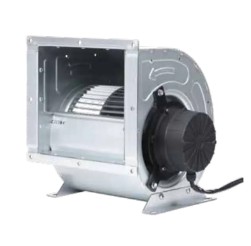
The operation of an EC centrifugal fan can be divided into four main stages: motor drive, electronic commutation, centrifugal conveying, and intelligent regulation.
1. Motor Drive and Electronic Commutation
Start-up: Upon receiving an external start command, the controller initially provides a low-frequency, low-voltage current to the rotor, causing it to accelerate slowly.
Commutation: The rotor position is detected in real time by a Hall effect sensor or magnetoresistive position sensor. The controller switches the energizing phase sequence of the stator coils at each commutation point to achieve continuous rotation.
Soft Start/Soft Stop: Gradual changes in voltage and frequency avoid inrush current and extend mechanical life.
2. Airflow Conversion in the Centrifugal Impeller
Intake: Air is drawn in through the inlet at the center of the impeller.
Acceleration: The tilt angle and curvature of the blades accelerate the air to a high-speed radial flow.
Pressure Rise: The high-speed airflow is converted into static pressure at the impeller outlet, achieving high-pressure conveying.
3. Real-time Closed-Loop Control
Sensor Feedback: Flow meters, pressure sensors, temperature sensors, etc., transmit operating data back to the controller in real time.
Algorithm Adjustment: The controller dynamically adjusts the motor power supply frequency based on the set airflow/pressure curve, achieving precise airflow regulation.
Energy Consumption Optimization: When the load decreases, the controller automatically reduces motor power to maintain high-efficiency operation.
4. Fault Self-Diagnosis and Protection
Overcurrent/Overvoltage Protection: When the current or output pressure exceeds the safety threshold, the controller immediately cuts off the power or reduces the speed.
Temperature Monitoring: When the motor winding temperature exceeds the set value, it automatically reduces speed or stops.
Communication Interface: Supports industrial protocols such as Modbus, BACnet, and CAN, facilitating integration into building automation systems.
What are the main differences between EC Centrifugal Fans and traditional AC centrifugal fans?
1. Comparison of Applicable Scenarios
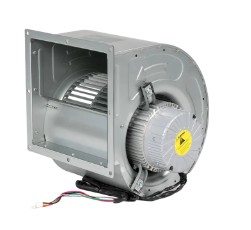
EC Centrifugal Fans: Suitable for locations with high requirements for energy consumption, noise, and precise control, such as air conditioning, precision machine rooms, laboratories, and clean rooms.
Traditional AC Centrifugal Fans: Suitable for cost-sensitive ventilation systems with less stringent speed control requirements, such as large industrial workshops and ordinary warehouses.
2. Environmental Adaptability
IP Rating: EC fans are typically equipped with IP54 and IP65 protection, enabling reliable operation in humid or dusty environments.
Temperature Range: -25°C to +60°C (wider ranges for some models), suitable for HVAC systems with alternating hot and cold loads.
How do EC Centrifugal Fans maintain stable airflow in high static pressure environments?
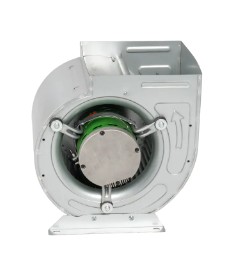
High static pressure systems (such as air ducts in multi-story buildings and condensers in condensing units) place stringent requirements on fan pressure maintenance and airflow fluctuation suppression. EC centrifugal fans achieve stable operation through the following technologies:
1. Wide Speed Range with Electronic Commutation
Wide Frequency Adjustment: The controller can adjust the motor speed within a frequency range of 0-500Hz or even higher, allowing for smooth switching between high-pressure-low-flow and low-pressure-high-flow ranges.
Soft Start/Soft Stop: During high-pressure startup, the speed is gradually increased to avoid system fluctuations caused by initial pressure surges.
2. Closed-Loop Airflow/Pressure Control Algorithm
PID Control: Based on real-time pressure sensor feedback, the controller executes a proportional-integral-derivative (PID) algorithm to quickly correct pressure deviations.
Adaptive Curve: The system can pre-load airflow-pressure characteristic curves for different operating conditions and automatically matches the optimal point during operation to maintain constant airflow.
3. Multi-Segment Differential Pressure Compensation Technology
Segmented Speed Regulation: At extremely high static pressure (>800Pa), the fan speed is increased in segments, each segment corresponding to a different differential pressure range, ensuring that pressure changes do not cause a sudden drop in airflow.
Variable Frequency Drive Compatibility: If the system already has a variable frequency drive, the EC controller can work in conjunction with it to achieve finer differential pressure regulation.
4. High-Pressure Adaptability in Structural Design
Reinforced Impeller: High-strength alloy or glass fiber reinforced plastic impellers are used to resist deformation caused by centrifugal force.
Sealing Design: The shaft seal adopts a double-seal structure to prevent high-pressure gas leakage and maintain stable system pressure.
How does the EC Centrifugal Fans controller achieve precise airflow regulation?
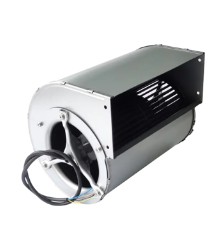
The core control unit of the EC fan is the ECController, which achieves precise airflow management through the synergy of hardware and software.
1. Hardware-level Sensing and Execution
Position Sensor: Hall effect sensors or magnetoresistive sensors capture rotor angle in real time, ensuring accurate commutation timing.
Power Module: Employs IGBT or MOSFET high-frequency switches for rapid voltage/frequency regulation.
External Interface: Supports multiple signal inputs including 0-10V, 4-20mA, PWM, Modbus RTU/TCP, and BACnet, compatible with building automation systems.
2. Software-level Closed-Loop Control Algorithm
PID/Fuzzy Control: Based on the set target airflow (or air pressure), the controller calculates the error and outputs speed control commands.
Self-Learning Algorithm: Some high-end models have built-in machine learning models that automatically optimize control parameters based on historical operating data, further reducing airflow fluctuations.
Multi-Objective Optimization: In scenarios requiring a balance between energy consumption and noise, the controller can weigh energy consumption, noise, and airflow.
3. Interactive and Monitoring Functions
Local Display: The LCD/LED panel displays key parameters such as airflow, air pressure, power, and temperature in real time.
Remote Monitoring: Operating data is uploaded to the cloud platform via Ethernet or wireless module, supporting real-time viewing via mobile APP and Web Dashboard.
Fault Alarm: When airflow deviation exceeds a set threshold, temperature is abnormal, or motor overcurrent occurs, the controller automatically triggers an alarm and can execute preset protection strategies.
4. Integration with Building Automation Systems (BMS)
Standard Protocols: Protocols such as Modbus, BACnet, and KNX enable bidirectional communication between the controller and the BMS, achieving demand response (DR) and energy consumption statistics.
Centralized Scheduling: In large building complexes, multiple EC fans can be uniformly scheduled by the BMS to achieve overall airflow balance and energy optimization.
 ENG
ENG
