What are the common faults of a blower impeller?
Common Blower Impeller Faults
Blower impellers experience significant centrifugal force during high-speed operation, making them prone to the following problems:
Bearing Abnormalities: Severe bearing vibration, excessive temperature rise, or abnormal noise are among the most common mechanical faults.
Impeller Wear or Damage: Long-term operation or the entry of foreign impurities can lead to blade wear, cracks, or even breakage, manifesting as unstable airflow and decreased pressure head.
Impeller Blockage: Dust, ash, or other solid particles accumulate in the impeller channels, causing a decrease in rotational speed and obstructed flow.
Rotor Imbalance: Uneven impeller mass distribution or assembly errors can cause strong vibrations, accelerating the wear of bearings and blades.
What is the difference between a blower impeller and a regular fan impeller?
Although both are rotating blades, they differ significantly in structure, operating principle, and application scenarios:
|
Blower Impeller |
Ordinary Fan Impeller |
| Airflow Path |
Air enters at the center of the impeller, is accelerated by centrifugal force, and is expelled toward the outer edge, creating a high‑pressure flow. |
Air passes straight through the blades along the axial direction, producing a relatively low pressure. |
| Pressure Boost |
Designed for systems that require a high pressure head, such as HVAC, variable‑air‑volume (VAV) air‑conditioning units, etc. |
Primarily provides large volume, low‑pressure ventilation (e.g., room fans). |
| Structural Strength |
Typically made of metal or high‑strength alloys to withstand high speeds and elevated temperatures. |
Often made of plastic or lightweight metal, suitable for low‑load, low‑noise applications. |
| Application Range |
Central‑air‑conditioning terminals, dehumidification fans, exhaust fans, air‑purification equipment, fresh‑air systems, and other industrial/commercial ventilation solutions. |
Household fans, computer cooling fans, and other everyday low‑capacity devices. |
How to clean or replace a blocked blower impeller?
1. Preventative Maintenance (Weekly)
After power off, clean the machine body with a soft sponge and mild detergent, ensuring no soap residue remains.
Inspect and replace the filter to prevent dust from re-entering the impeller channel.
2. On-site Cleaning Procedure
Open the casing: Remove the bolts and take off the impeller cover to expose the impeller body.
Remove buildup: Use a metal brush or vacuum cleaner to remove dust, soot, and other hard impurities from the impeller surface.
Detailed Cleaning: Thoroughly clean the impeller root and bearing housing with a brush and cotton swabs. If necessary, use brake cleaner to remove oil stains.
3. Replace the Damaged Impeller
Inspect the shaft and keyway: Before replacement, clean the motor shaft with brake cleaner to ensure there is no wear or residue.
Install the new impeller: Align with the keyway and gently press the new impeller into place, ensuring the fixing bolts are evenly tightened.
Balance Check: Perform a rotor balance test after replacement to prevent secondary vibration caused by imbalance.
4. Pre-start Inspection
Confirm that all bolts are tightened, bearings are well lubricated, and motor power wiring is correct. Run at low speed for a few minutes and observe for any abnormal noise or vibration. If necessary, check again.
Frequently Asked Questions (FAQ)
Q1: What are the features of the Blower Impeller from Ningbo Haoyue Fan Manufacturing Co., Ltd.?
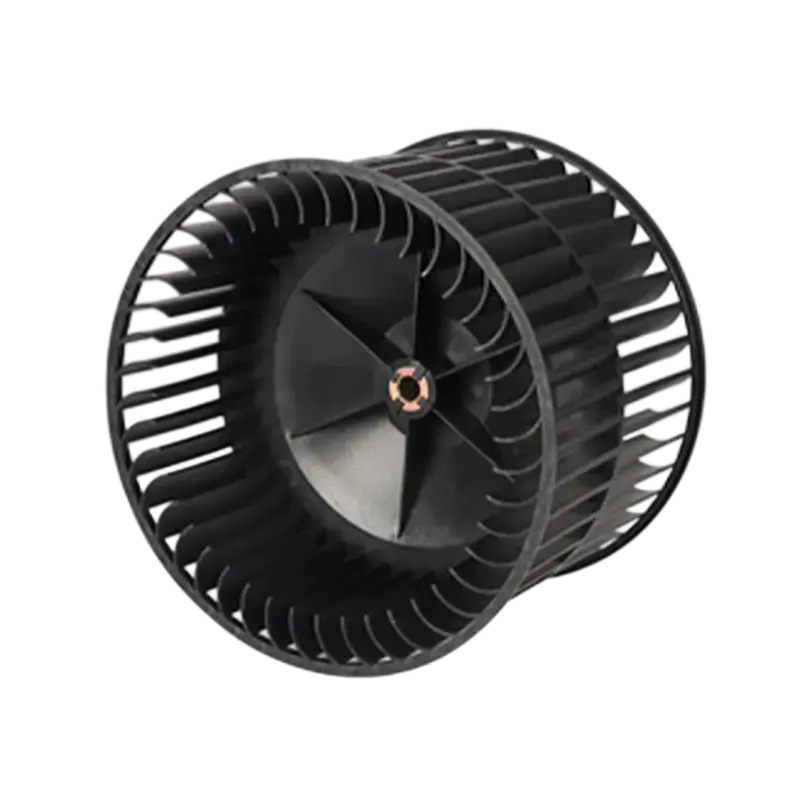
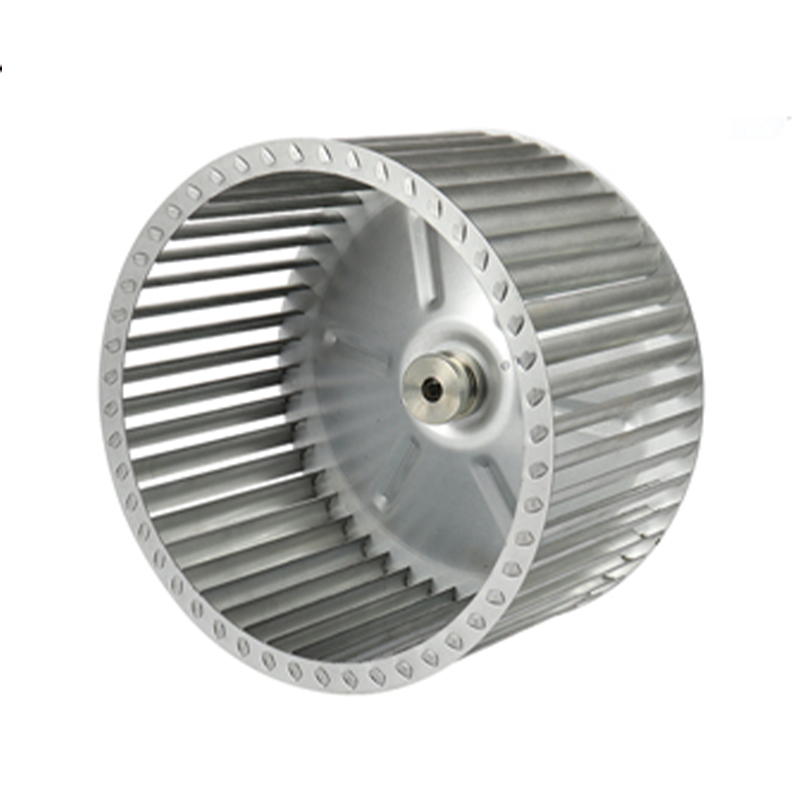
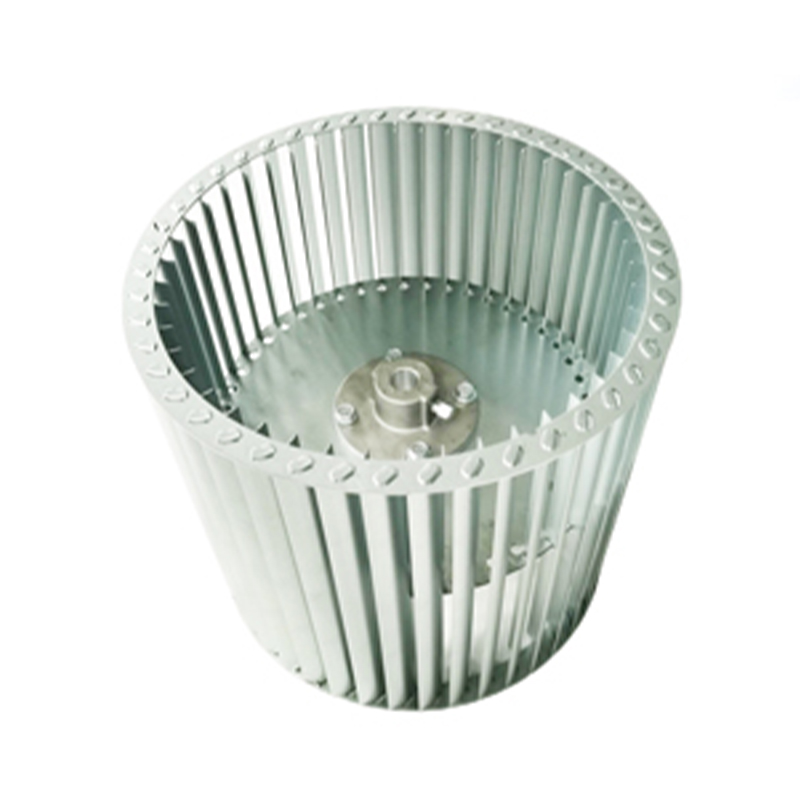
A: The Blower Impeller produced by our company adopts a single-phase direct-drive AC or EC motor drive structure, featuring high efficiency, low noise, convenient speed adjustment, and compact structure. It can meet the needs of various applications such as variable air volume (VAV) air conditioning, ducted air conditioning, and HVACR systems.
Q2: What are the commonly used impeller materials?
A: Common impeller materials include cast aluminum, cast iron, and stainless steel, which provide good strength and corrosion resistance, suitable for different working environments.
Q3: What are the standard impeller specifications?
A: Impeller specifications are diverse, with common sizes ranging from tens of millimeters to hundreds of millimeters in diameter. Speeds can reach approximately 1350 rpm, and power ranges from 80W to 150W or even higher. Specific parameters can be customized according to customer requirements.
Q4: Does the impeller support customization?
A: Yes. Ningbo Haoyue can design, cast, process and surface treat molds according to the drawings or technical requirements provided by customers, and can customize in many aspects such as size, number of blades, materials and anti-corrosion coatings.

 English
 Español



 ENG
ENG
