
 English
 Español
Content
- 1 What Is the Fundamental Difference Between AC and EC Centrifugal Fans
- 2 Why EC Centrifugal Fans Are More Energy Efficient
- 3 Noise Control: How EC Fans Achieve Quiet Operation
- 4 How to Make the Right Choice Based on Application Scenarios
- 5 Key Performance Parameter Comparison
- 6 Life Cycle Cost Analysis
- 7 Key Considerations When Purchasing
- 8 Summary and Recommendations
Key Takeaway
If your application requires high energy efficiency and frequent airflow adjustment, EC centrifugal fans are the superior choice — with motor efficiency reaching 80%-90%, they deliver over 30% energy savings compared to traditional AC fans, with noise levels as low as 55dB(A). If your application operates under relatively fixed conditions, AC centrifugal fans remain a reliable option thanks to mature VFD technology.
What Is the Fundamental Difference Between AC and EC Centrifugal Fans
The core distinction between AC and EC centrifugal fans lies in their drive method and control system. AC fans use AC induction motors with external variable frequency drives (VFD) for speed control. EC fans employ electronically commutated permanent magnet brushless DC motors with built-in digital drive controllers, enabling precise stepless speed regulation from 0 to 100%.
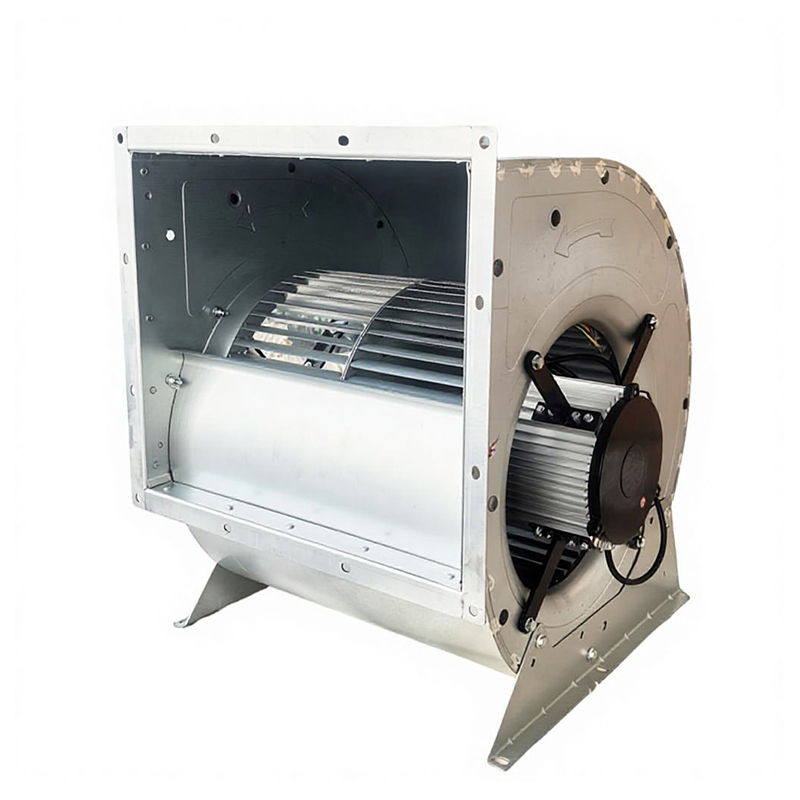
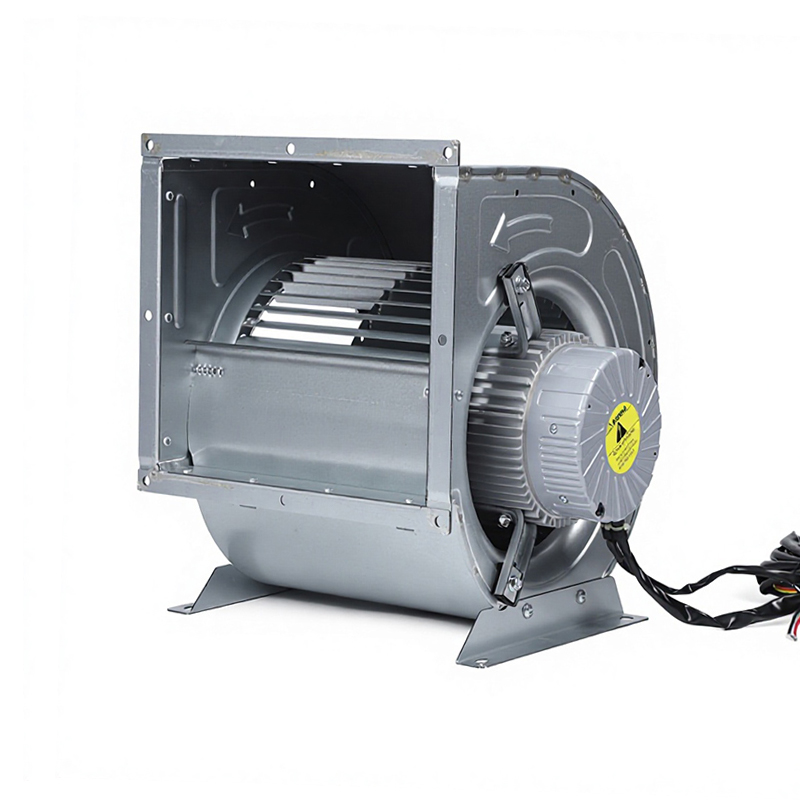
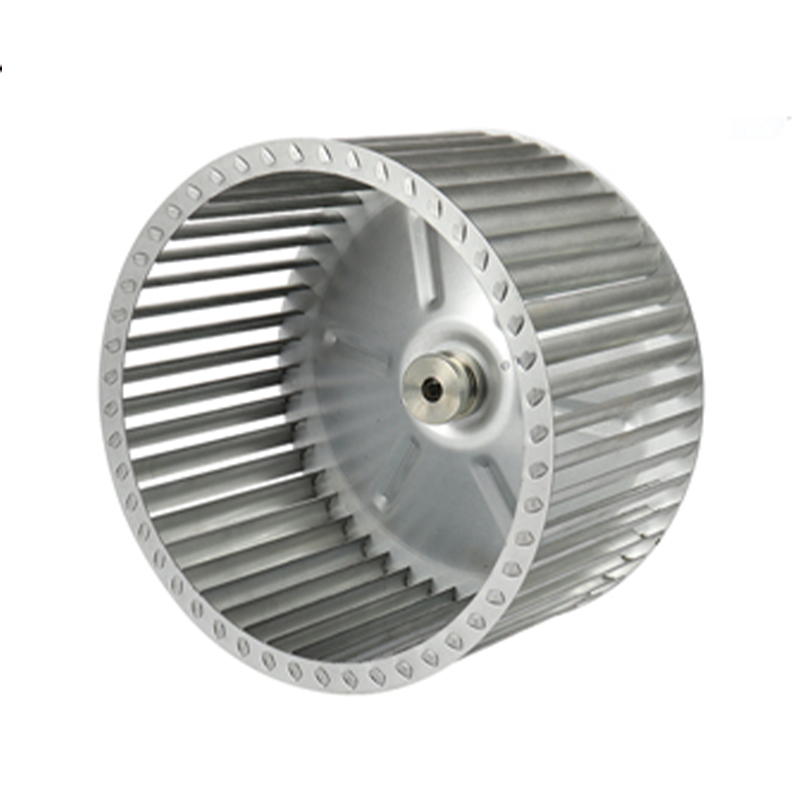
Structurally, EC fans integrate the motor, controller, and impeller into a compact unit, eliminating traditional belt drive systems. AC fans retain more conventional motor-to-impeller direct coupling or belt drive designs, which are more common in large-scale industrial applications.
| Comparison Dimension | AC Centrifugal Fan | EC Centrifugal Fan |
|---|---|---|
| Motor Type | AC induction motor | Permanent magnet brushless DC motor (EC motor) |
| Speed Control | External VFD | Built-in digital drive, 0-10V/PWM/RS485 |
| Motor Efficiency | Up to ~75% | 80%-90% |
| Noise Level | Higher (mechanical commutation noise) | As low as 55dB(A) |
| Maintenance | Periodic belt and bearing maintenance | Maintenance-free bearings, minimal upkeep |
| Initial Investment | Relatively lower | Relatively higher |
| Airflow Range | Approx. 400 m³/h to 40,000 m³/h | Covers small to large scales |
Why EC Centrifugal Fans Are More Energy Efficient
The energy-saving advantage of EC centrifugal fans is not a single technological breakthrough, but the result of synergistic optimization across motor design, drive systems, and aerodynamics.
High-Efficiency Permanent Magnet Motors
Traditional AC induction motors suffer from rotor copper losses and excitation losses, capping efficiency at approximately 75%. EC fans use permanent magnet brushless DC motors that establish the air-gap magnetic field with rare-earth magnets, eliminating excitation losses. Combined with optimized winding designs, motor efficiency stabilizes in the 80%-90% range.
Digital Drive Precision Matching
The built-in digital drive controller in EC fans monitors load changes in real time, automatically adjusting motor speed and torque output. This advantage is particularly pronounced under partial load conditions — while traditional AC fans may see efficiency drop by 20%-30% at 50% load, EC fans maintain high efficiency through precise matching, achieving overall energy savings exceeding 30%.
Advanced Power Device Technology
New-generation EC drive systems utilize high-frequency power devices such as SiC MOSFETs, significantly reducing switching losses and further improving overall system efficiency. Meanwhile, modular designs minimize piping resistance and installation errors, optimizing aerodynamic efficiency at the system level.
Noise Control: How EC Fans Achieve Quiet Operation
Noise is a critical consideration in modern HVAC systems, especially in noise-sensitive environments such as hospital operating rooms, laboratories, hotel rooms, and data centers. EC centrifugal fans offer multiple technical advantages in noise control.
Elimination of Mechanical Commutation Noise
Traditional AC motor brushes and commutators produce continuous mechanical noise and electromagnetic interference. EC fans use electronic commutation technology, completely eliminating this noise source for smoother operation and significantly lower noise floors.
Structural Noise Reduction Design
EC fan volutes typically incorporate sound-absorbing pads, with sound-absorbing cotton in outlet ducts for multi-stage noise reduction. Combined with multi-blade backward-curved impellers and optimized volute profiles, airflow impact noise is effectively suppressed. In actual operation, EC centrifugal fan noise can be controlled below 70dB, with optimized models reaching as low as 55dB(A).
System-Level Vibration Control
Through coordinated design of vibration-damping brackets and soundproof enclosures, EC fans further suppress structural vibration transmission. In contrast, AC fans with belt drive systems experience gradually increasing mechanical vibration and noise due to uneven belt tension and bearing wear over time.
How to Make the Right Choice Based on Application Scenarios
Choosing between AC and EC centrifugal fans requires comprehensive consideration of operating costs, operational complexity, and maintenance capabilities.
Scenarios Where EC Fans Are Preferred
The following applications are better suited for EC centrifugal fans:
- Variable Air Volume (VAV) Systems: Frequent airflow adjustment requirements allow EC fans' stepless speed control to significantly reduce energy consumption.
- Noise-Sensitive Environments: Hospitals, laboratories, hotels, and data centers benefit from EC fans' low noise characteristics (as low as 55dB).
- Long-Term Continuous Operation: Systems operating over 4,000 hours annually can recover the initial investment difference within a relatively short period through energy savings.
- Precision Control Requirements: Projects requiring 0-10V, PWM, or RS485 interfaces for integration with building automation systems.
Scenarios Where AC Fans Remain Suitable
In the following cases, AC centrifugal fans remain a reasonable choice:
- Fixed Operating Conditions: Fans operate at or near full speed continuously, where variable frequency energy savings are limited.
- Large-Scale Industrial Ventilation: Applications requiring extremely high airflow (above 40,000 m³/h) with lower precision control requirements.
- Existing System Retrofits: Retaining existing VFDs and electrical systems while replacing only the fan unit.
Key Performance Parameter Comparison
The following technical parameters should serve as core evaluation criteria in procurement decisions:
| Parameter | AC Fan Typical Value | EC Fan Typical Value | Notes |
|---|---|---|---|
| Airflow Range | 400 - 40,000 m³/h | Covers small to large scales | Determined by impeller diameter and speed |
| Static Pressure Range | 100 - 800 Pa | 100 - 800 Pa | Depends on impeller design and speed |
| Motor Power | 0.5 - 5 kW | 0.5 - 5 kW | EC requires less power for equivalent performance |
| Motor Efficiency | ≤75% | 80% - 90% | EC efficiency advantage is significant |
| Noise Level | Typically >70dB | As low as 55dB(A) | EC noise reduction technology is more mature |
| Control Interface | External VFD required | Built-in 0-10V/PWM/RS485 | EC offers higher integration |
| Protection Rating | IP54 optional | IP54 optional | Select based on application environment |
| Maintenance Cycle | Periodic belt/bearing replacement | Maintenance-free bearings, minimal upkeep | EC has lower lifecycle cost |
Life Cycle Cost Analysis
Although EC fans typically require a higher initial investment than AC fans, life cycle analysis often shows EC fans to be more economical.
Consider an air conditioning system operating 5,000 hours annually: assuming an AC fan rated at 3kW and an EC fan requiring only 2.1kW for equivalent airflow (30% energy savings):
- AC fan annual power consumption: 3kW × 5,000h = 15,000 kWh
- EC fan annual power consumption: 2.1kW × 5,000h = 10,500 kWh
- Annual savings: 4,500 kWh
Over a 10-year lifespan, the EC fan saves over 45,000 kWh in electricity alone, with lower maintenance costs (maintenance-free bearings, no belt replacements), demonstrating significant overall operating cost advantages.
Key Considerations When Purchasing
In actual procurement, comprehensive evaluation from the following dimensions is recommended:
Define Airflow and Static Pressure Requirements
Determine the fan operating point based on system resistance curves to avoid under-sizing or over-sizing. Insufficient airflow leads to poor heat dissipation or ventilation; over-sizing increases operating noise.
Evaluate Operating Condition Characteristics
If the system requires frequent variable airflow operation (such as VAV systems), EC fans' speed control advantages can be fully utilized. If fans operate at fixed speed continuously, AC fans with VFD can meet basic requirements.
Verify Control Interface Compatibility
EC fans typically feature built-in 0-10V, PWM, or RS485 control interfaces for direct integration with building automation systems. AC fans require external VFDs for speed control, increasing system integration complexity.
Check Noise Limit Requirements
For noise-sensitive applications, request sound power level or sound pressure level test data (such as 55dB(A)) from suppliers rather than relying solely on product claims. Note the difference between sound power level (Lw) and sound pressure level (Lp).
Consider Maintenance Accessibility
EC fans with modular bracket plates feature plug-and-play structures for easier field installation and maintenance. AC fans with belt drive systems require periodic inspection and replacement, demanding greater maintenance effort.
Summary and Recommendations
AC and EC centrifugal fans each have their applicable domains. AC fans remain competitive in fixed-condition scenarios thanks to mature technology and broad power coverage. EC fans, with 80%-90% motor efficiency, over 30% energy savings potential, noise levels as low as 55dB(A), and maintenance-free operation, have become the preferred choice for modern high-efficiency HVAC systems.
For new construction or system upgrades, prioritize evaluating the life cycle economics of EC solutions. If annual operating hours exceed 3,000, variable airflow is required, or strict noise limits apply, EC centrifugal fans are typically the wiser investment decision.

 ENG
ENG
