
 English
 Español
Content
- 1 What a Blower Impeller Actually Does
- 2 Blade Geometry: The Factor That Separates Good from Great
- 3 Material Selection and Its Real-World Consequences
- 4 How Size and Speed Define Performance Limits
- 5 Key Application Sectors and What Each Demands
- 6 Maintenance, Inspection, and Replacement Timing
- 7 How to Specify the Right Blower Impeller for Your System
A powerful blower impeller is the single most critical rotating component in any centrifugal ventilation system. It converts motor torque into high-velocity airflow by accelerating air radially outward through precisely shaped blades. Choosing the right impeller — matched to blade geometry, material, diameter, and rotational speed — directly determines system airflow volume, static pressure, noise level, and long-term energy cost. For industrial and HVAC applications, a well-engineered blower impeller can improve efficiency by up to 11% over standard designs while cutting noise by several decibels.
What a Blower Impeller Actually Does
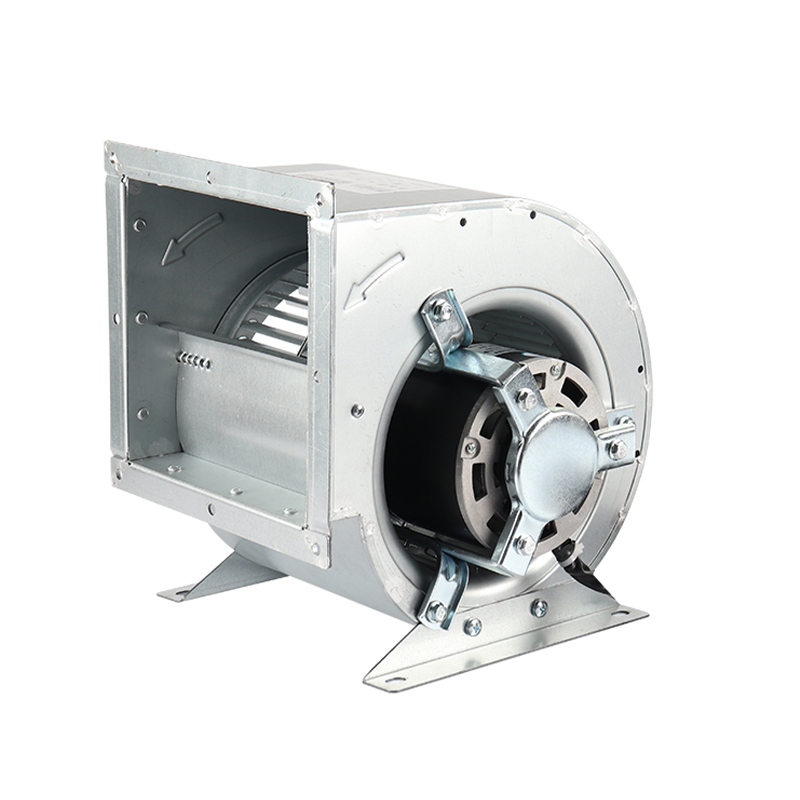
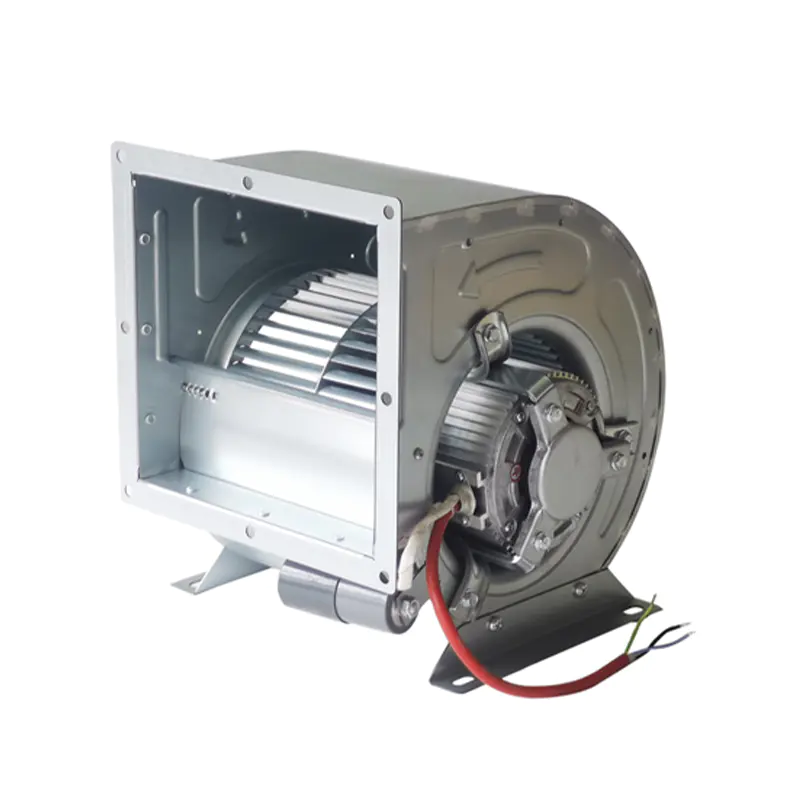
Inside a centrifugal blower, the impeller is the only part that performs real aerodynamic work. Air enters axially through the inlet eye, gets captured between the rotating blades, accelerates radially outward under centrifugal force, and exits at the blade tips at high velocity. The surrounding volute or scroll housing then converts that velocity into static pressure — the pressure that pushes air through ductwork, filters, heat exchangers, or process equipment.
The energy transfer is governed by Euler's turbomachinery equation. Blade inlet and outlet angles set how much of the motor's rotational energy is converted to pressure versus wasted as turbulence. This is why impeller blade geometry is not a cosmetic choice — it is an engineering decision with direct performance consequences. Manufacturers such as Yuyao Jiale Ventilation Equipment, who produce forward centrifugal fans and impellers with single-phase AC and EC motor drive structures, invest heavily in blade profile development precisely because small angular changes produce measurable efficiency shifts.
Blade Geometry: The Factor That Separates Good from Great
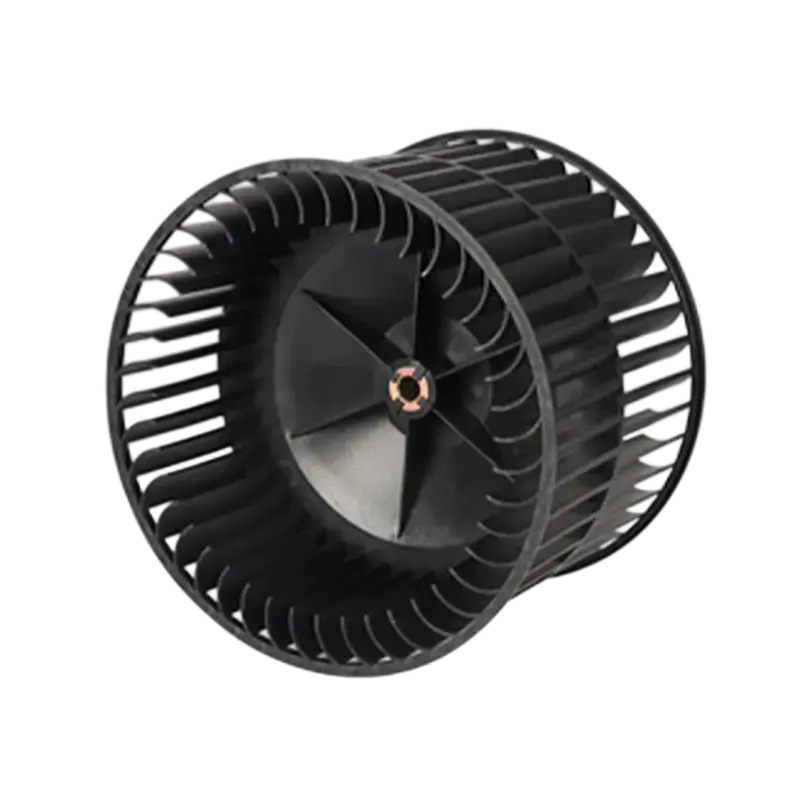
Generate high airflow volumes at lower rotational speeds. They are compact and effective for HVAC air-handling units and fresh-air systems. The trade-off is a steeper power curve — airflow resistance changes can cause motor overload if not properly matched. Jiale Ventilation's forward centrifugal impellers are a prime example, designed for central air conditioning terminals where high volume and quiet operation matter most.
Deliver the highest aerodynamic efficiency. Airfoil section blades with efficiency-optimized circumferential diffusers can boost total-to-static efficiency by up to 11% compared to conventional profiles. These blades are the preferred choice for industrial process ventilation, clean rooms, and cabinet cooling where long operating hours make every percentage of efficiency count financially.
Offer the most robust structure. They handle dust-laden, abrasive, or moist airstreams that would erode more aerodynamically refined profiles. Applications include woodworking dust extraction, grain handling, and chemical vapor exhaust — anywhere the air is not clean.
Represent the current performance frontier. Free-running impellers with 3D backward-curved blades, available in diameters from 190 mm to 630 mm in composite materials, deliver the best combination of high air volume, high efficiency, and low noise. They are increasingly standard in premium HVAC equipment.
Material Selection and Its Real-World Consequences
Impeller material choice affects weight, balance precision, corrosion resistance, and service life simultaneously. The table below summarizes the main options and their practical trade-offs:
| Material | Weight | Corrosion Resistance | Typical Application |
|---|---|---|---|
| Carbon Steel | High | Moderate (requires coating) | General industrial ventilation, dust handling |
| Stainless Steel | High | Excellent | Chemical fume exhaust, food processing, marine |
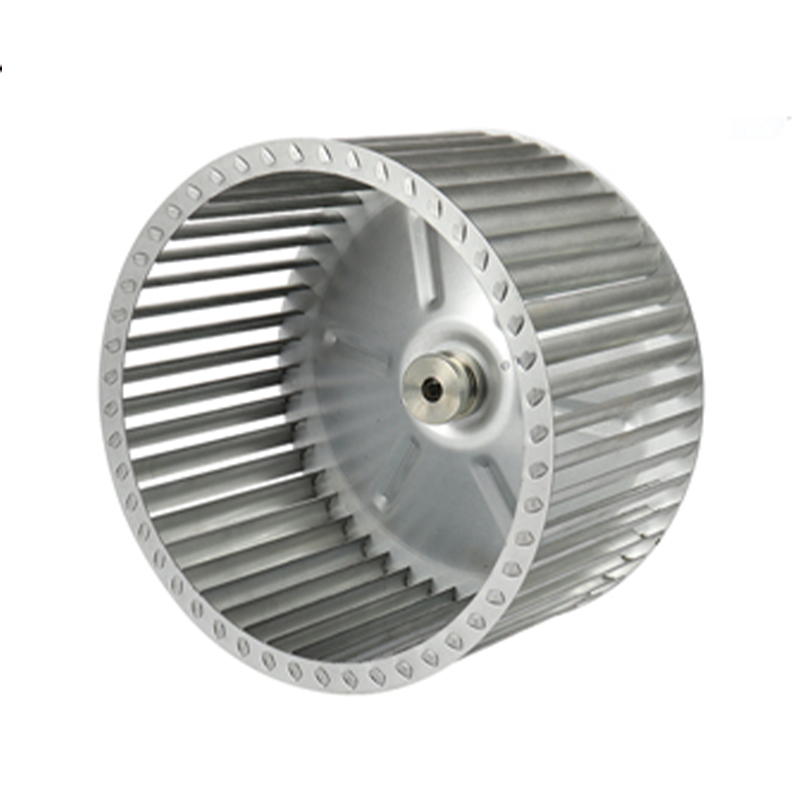
| Aluminum Alloy | Low | Good | HVAC, cabinet cooling, portable blowers |
| Composite (Nylon / PP) | Very Low | Excellent | Corrosive gas exhaust, clean rooms, laboratory fans |
Aluminum alloy impellers have gained widespread adoption in EC centrifugal fans because they allow precision balancing at short axial lengths while keeping the rotating mass low. Lighter rotors reduce bearing loads, extend service life, and make speed control by voltage variation far more responsive. For chemically aggressive environments — acidic vapors, alkalis, or abrasive particles — duplex stainless steel or ceramic/epoxy coated impellers are the engineering answer, supporting longer maintenance intervals and sustained dimensional stability.
How Size and Speed Define Performance Limits
Impeller diameter and rotational speed are the two primary levers for tuning performance. Airflow volume scales roughly with the cube of diameter increase, while static pressure scales with the square of tip speed. In practical terms:
- A 200 mm forward-curved impeller running at 1,400 rpm suits small residential air-handling units or fan coil units.
- Impellers in the 300–500 mm range, common in EC centrifugal fan platforms, serve commercial HVAC, refrigeration equipment, and dehumidification systems where both airflow volume and static pressure requirements are substantial.
- Welded centrifugal impellers with reversed curved blades from 200 mm to 1,200 mm cover the full range of low-to-medium pressure industrial applications including clean or slightly dusty air handling.
- High-speed blowers operating above 3,000 rpm rely on reinforcement rings around the inlet of the cover plate to avoid structural failure under centrifugal stress — a design detail that directly affects the maximum safe operating speed.
Balancing is inseparable from size. Precision dynamic balancing ensures that the hub and impeller rotate as one integrated unit with minimal vibration. Static balance alone is insufficient for impellers above approximately 250 mm diameter or speeds exceeding 2,000 rpm. Residual imbalance generates bearing loads that reduce service life exponentially — a 10% vibration increase can cut bearing life by more than 30%.
Key Application Sectors and What Each Demands
Forward centrifugal impellers with AC or EC motor drive are the standard choice. EC-driven impellers offer precise electronic commutation instead of mechanical commutation, delivering variable speed control with efficiencies not achievable with conventional brushed motors. These systems serve air conditioning terminal units, fresh air handlers, and ceiling cassette fans across commercial buildings.
High static pressure at compact dimensions is the defining requirement. Motorized impellers with external rotor motors — where the rotor surrounds the stator — produce an extremely compact unit by using the external rotor directly as the fan hub. Heat is efficiently removed through the airstream, and the impeller surface acts as a rotating heat sink. This architecture is why EC motorized impellers dominate refrigeration equipment globally.
Durability under hostile conditions takes priority. Radial blades in carbon steel handle abrasive dust; stainless or coated impellers manage corrosive vapors. Backward-inclined and airfoil blade profiles, selected using computational flow simulations, reduce flow separation and turbulence in confined ductwork, enhancing total-to-static pressure conversion while reducing system energy demand.
Low vibration and particulate generation are non-negotiable. Three-dimensional profiled composite impellers with high rotational balance grades meet cleanroom ventilation requirements without introducing contamination. Air purification fan manufacturers increasingly specify these impellers for their combination of aerodynamic efficiency and material cleanliness.
Maintenance, Inspection, and Replacement Timing
Blower impellers suffer wear from debris impact, high-speed operation, and cyclic stress. A structured inspection schedule protects both performance and safety:
- Inspect every 6 to 12 months as a minimum. High-dust or chemically aggressive environments warrant quarterly checks.
- Visual inspection covers blade surface for cracks, pitting, corrosion, or material buildup. Asymmetric buildup causes imbalance even without blade damage.
- Check impeller housing for debris accumulation and verify that all mounting hardware remains secure and torqued to specification.
- Measure vibration levels at the bearing housing. A sustained increase of more than 2 mm/s RMS velocity over baseline indicates developing imbalance requiring immediate attention.
- At replacement, always verify that the replacement impeller matches the original inlet angle (typically 20–30 degrees) and outlet angle (26–38 degrees) to maintain system airflow performance.
When sourcing replacement impellers, confirm that static or dynamic balance grade matches the original specification. Hub bore sizes, set screw placement, rotation direction (CW or CCW), and shaft interface dimensions must all match precisely to avoid creating new vibration or mechanical interference.
How to Specify the Right Blower Impeller for Your System
Specification errors at the procurement stage are the most common and most expensive source of blower system problems. Work through these parameters in sequence:


 ENG
ENG
