
 English
 Español
Content
- 1 How the Single-Inlet Design Works
- 2 Forward-Curved vs Backward-Curved: Choosing the Right Blade
- 3 Typical Specifications Across the Product Range
- 4 AC Motor vs EC Motor: Which Drive to Specify
- 5 Where Single Inlet Centrifugal Fans Are Used
- 6 How to Select the Right Single Inlet Centrifugal Fan
- 7 Maintenance Practices That Protect Long-Term Performance
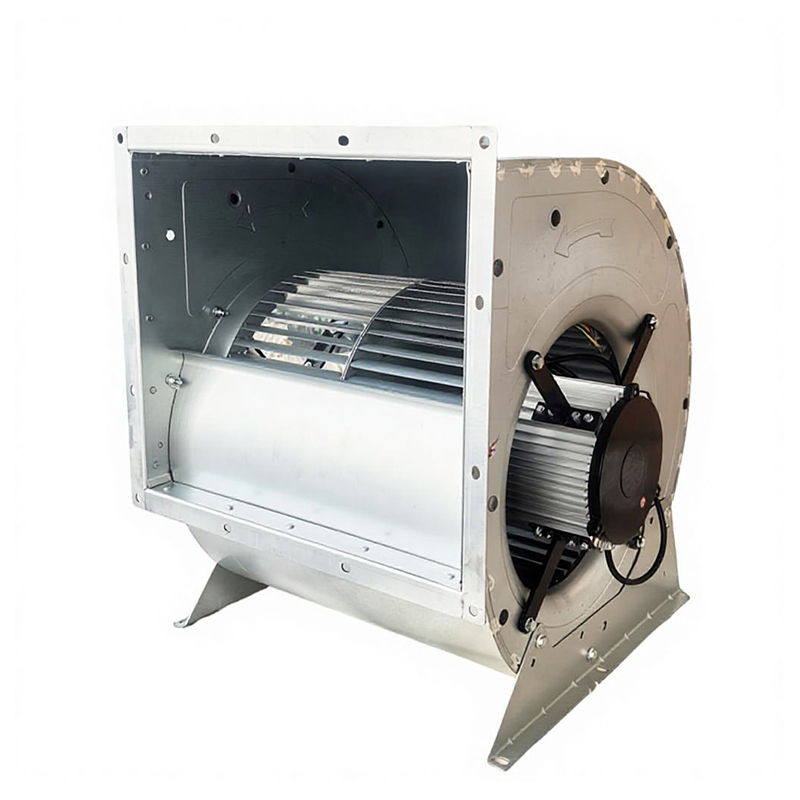
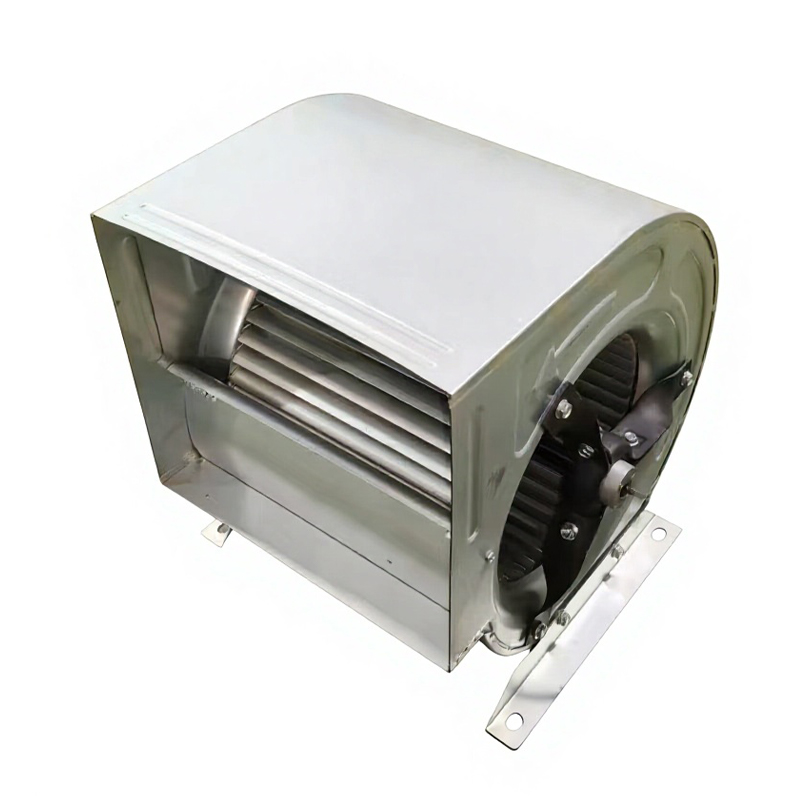
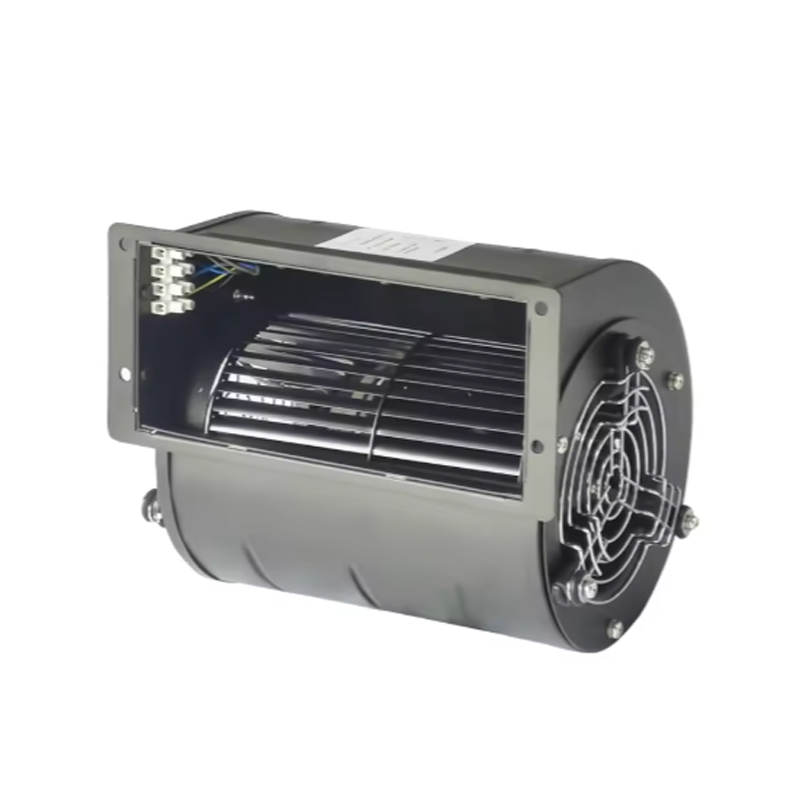
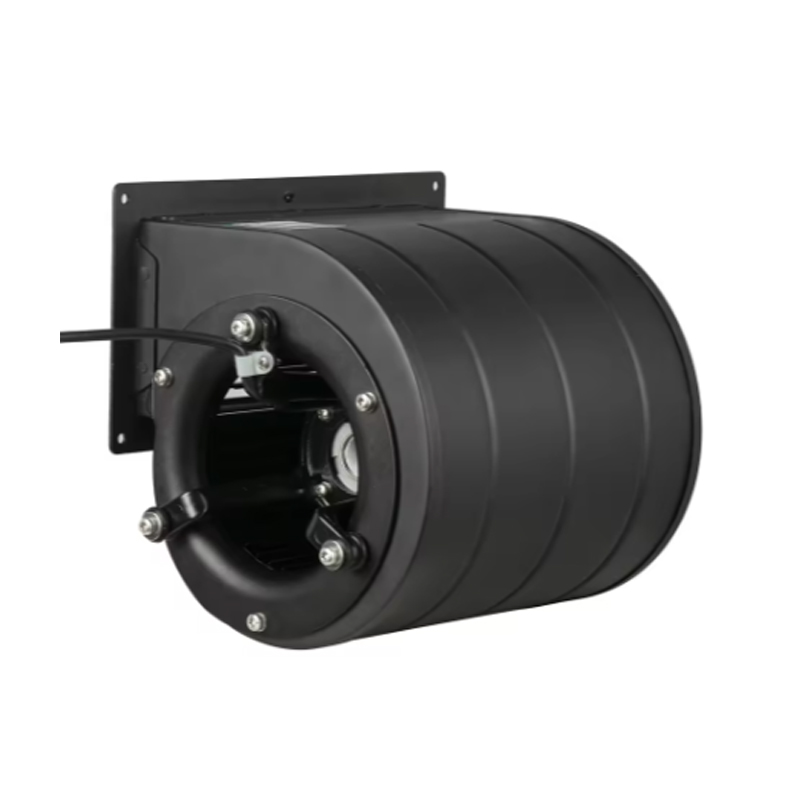
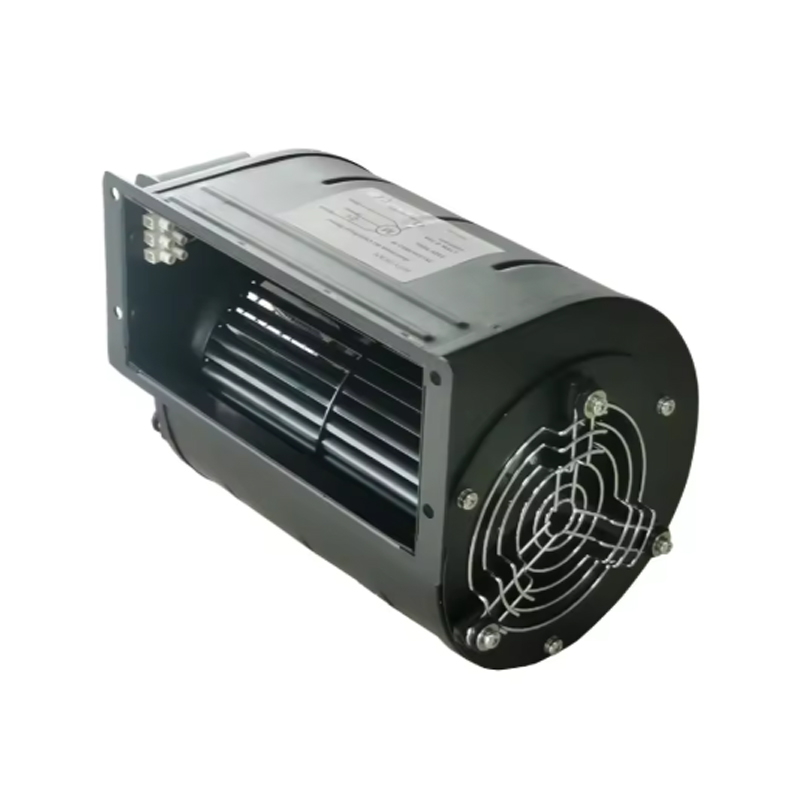
A single inlet centrifugal fan draws air through one axial opening, accelerates it with a rotating impeller, and discharges it radially at higher pressure. This single-suction geometry makes the unit more compact and easier to integrate than double-inlet designs, while still delivering the high static pressure needed for ducted HVAC systems, commercial kitchen exhaust, cleanroom ventilation, and industrial equipment cooling. For most space-constrained installations requiring directed, pressurized airflow from a compact footprint, a single inlet centrifugal fan is the correct starting point.
How the Single-Inlet Design Works
Unlike double-inlet (DIDW) fans that pull air from both sides of the impeller, a single inlet centrifugal fan has one suction eye. Air enters axially, is captured by forward-curved or backward-curved blades on the impeller, spins outward under centrifugal force, and exits through the scroll casing into the duct. The single-entry path concentrates all incoming air through one side, which simplifies the housing geometry considerably. This is why single-inlet fans fit into narrower cabinet profiles and integrate more readily with supply-air ducts that run perpendicular to the fan shaft.
The impeller itself is typically made of galvanized steel for corrosion resistance, dynamically balanced to minimize vibration during high-speed operation. Dynamic balancing is not optional at operating speeds above 1,000 rpm — residual imbalance at those speeds generates bearing loads that accelerate wear and shorten service life measurably.
- Single axial air inlet, radial discharge
- Forward-curved or backward-curved impeller blades
- Galvanized steel impeller, corrosion-resistant scroll casing
- AC or EC motor drive options
- IP54 / IP55 ingress protection standard
- Class F insulation (155°C rated)
- Thermal overload protection built in
- Dynamic balancing for vibration-free operation
Forward-Curved vs Backward-Curved: Choosing the Right Blade
Both blade profiles are available in single inlet centrifugal fans, and they serve different performance priorities. The choice affects airflow volume, static pressure capability, noise generation, and motor load behaviour — all of which must be matched to the actual installation requirement.
Generate high airflow volume at relatively low rotational speeds. This means quieter operation at equivalent airflow rates — an advantage in commercial and residential HVAC where noise limits apply. The trade-off is a steeper power curve: as system resistance rises, motor power consumption climbs sharply. Proper system resistance matching is critical to avoid motor overload at the high-resistance end of the curve.
Best suited for: air handling units, fan coil units, residential fresh air systems, commercial kitchen make-up air.
Offer a non-overloading power characteristic — motor power peaks at the design point and does not increase with falling system resistance. This makes backward-curved fans inherently safer in systems where resistance may change during operation. Efficiency is higher across most of the operating range, which translates directly to lower energy costs over the fan's service life.
Best suited for: industrial process ventilation, equipment cooling, cleanrooms, applications with variable or uncertain system resistance.
Typical Specifications Across the Product Range
Single inlet centrifugal fans are produced across a wide diameter range to cover different airflow and static pressure requirements. The table below summarises representative variants found in a typical manufacturer's lineup, including Jiale Ventilation's single-inlet series which spans compact AC-motor direct-drive units to multi-speed and high-static-pressure configurations.
| Variant | Typical Impeller Diameter | Motor Type | Speed Options | Protection Class | Primary Application |
|---|---|---|---|---|---|
| High Static Pressure Snail Type | 160 mm | AC (YDK series) | Single speed | IP54 | Ducted HVAC with high resistance |
| Direct Drive AC Motor | 160 mm | AC (YDK 160-80) | Single speed | IP54 | Air handling units, fan coil units |
| 3-Speed Forward Curved | 160 x 80 mm | AC (YDK 160-80) | 3 speeds | IP54 | Residential HVAC, speed-adjustable systems |
| Mini Snail AC Blower | Compact | AC 230W | Single speed | IP54 | Commercial kitchen exhaust, compact cabinets |
| EC Motor Variant | 160–250 mm | EC (electronically commutated) | Infinitely variable | IP54/IP55 | Energy-efficient HVAC, BMS-controlled systems |
AC Motor vs EC Motor: Which Drive to Specify
The choice between AC and EC motor drive is one of the most consequential decisions when specifying single inlet centrifugal fans for a project. Both motor types are compatible with single-inlet impeller designs, but they serve different operational and energy requirements.
Single-phase AC motors are the traditional choice. They are straightforward to wire, robust, and cost-effective for fixed-speed applications. Thermal protection is built in, and insulation rated to Class F (155°C) allows operation in warmer environments. Speed control requires external variable transformers or multi-tap windings — the 3-speed variants achieve this through motor winding selection rather than inverter control. Protection to IP54 is standard, providing dust-tight and splash-resistant operation suitable for most HVAC and light industrial environments.
Electronically commutated (EC) motors replace mechanical commutation with electronic control, enabling infinitely variable speed adjustment through a 0–10V or PWM signal — standard inputs for building management systems (BMS). This allows the fan to modulate airflow precisely in response to demand, which is where the energy savings materialise. In systems running at part load for extended periods (the majority of HVAC operation), EC-driven single inlet fans can reduce fan energy consumption by 30–60% compared to fixed-speed AC alternatives. Protection to IP55 adds an extra level of moisture resistance.
Where Single Inlet Centrifugal Fans Are Used
The single-inlet configuration appears across a broad range of end-use sectors. Each application makes specific demands on airflow volume, static pressure, noise, protection class, and motor control capability.
Fan coil units and cassette air conditioners rely on single inlet centrifugal fans to move conditioned air through indoor units with the static pressure needed to overcome filter and coil resistance. Compact 160mm units with 3-speed AC motors are the most common specification in this segment.
Kitchen exhaust systems demand continuous, reliable airflow at moderate static pressure, often in elevated ambient temperatures from cooking equipment. The snail-type (scroll) housing configuration of single inlet fans makes them straightforward to duct, and the IP54 protection level handles the grease-laden air environment with appropriate filter maintenance.
Factory ventilation, welding fume extraction, and process cooling all require fans that can operate continuously at defined airflow rates against duct system resistance. Single inlet centrifugal fans with backward-curved impellers and Class F insulation cover most of these duties, with polymer-coated casings available for mildly corrosive environments.
Cleanrooms require sustained, controlled airflow with minimal vibration. The dynamic balancing standard on single inlet centrifugal fans directly supports this — vibration transmission to the building structure or sensitive processes is minimised. EC motor variants enable the constant-flow control required to maintain cleanroom pressure differentials as filters load over time.
Electrical switchgear, server infrastructure, and telecom cabinets increasingly use integrated single inlet centrifugal fans rather than axial fans when the equipment generates significant heat in a confined space. The higher static pressure of centrifugal fans overcomes internal component resistance that would stall an axial fan.
How to Select the Right Single Inlet Centrifugal Fan
Misspecification is the most common source of performance problems in installed fan systems. Working through the following parameters in sequence avoids the majority of selection errors:
Maintenance Practices That Protect Long-Term Performance
Single inlet centrifugal fans are designed for long service life, but that life depends on consistent maintenance. The following schedule covers the minimum inspection requirements for fans in continuous HVAC or industrial service:
- Every 3 months: inspect impeller for dust or debris accumulation. Asymmetric buildup creates imbalance even without physical blade damage. Clean with compressed air or soft brush — never use water directly on the impeller if the fan has been recently running and the motor is warm.
- Every 6 months: check all mounting hardware torque. Vibration gradually loosens fasteners; retorque to specification to prevent progressive loosening.
- Every 6 months: measure bearing housing vibration with a handheld vibration meter. A reading above 2.8 mm/s RMS indicates developing imbalance or bearing wear requiring investigation before failure occurs.
- Every 12 months: verify motor insulation resistance with a megger. A reading below 1 Mohm on a 500V test indicates moisture ingress or winding degradation requiring motor service.
- At each inspection: verify that the thermal protection has not tripped silently. Some installations have automatic reset thermal protection that resets without generating an alarm — check current draw against the motor nameplate rating to confirm normal operation.
Replacement impellers must match the original specification for inlet angle, blade count, diameter, and dynamic balance grade. Installing an impeller from a different model — even one that physically fits the shaft — can shift the fan's operating point outside its efficient range and stress the motor.

 ENG
ENG
