
 English
 Español
Content
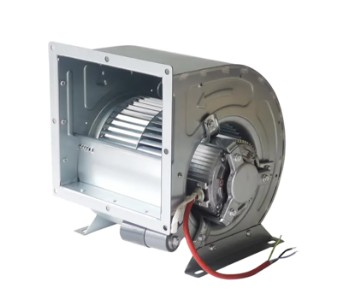
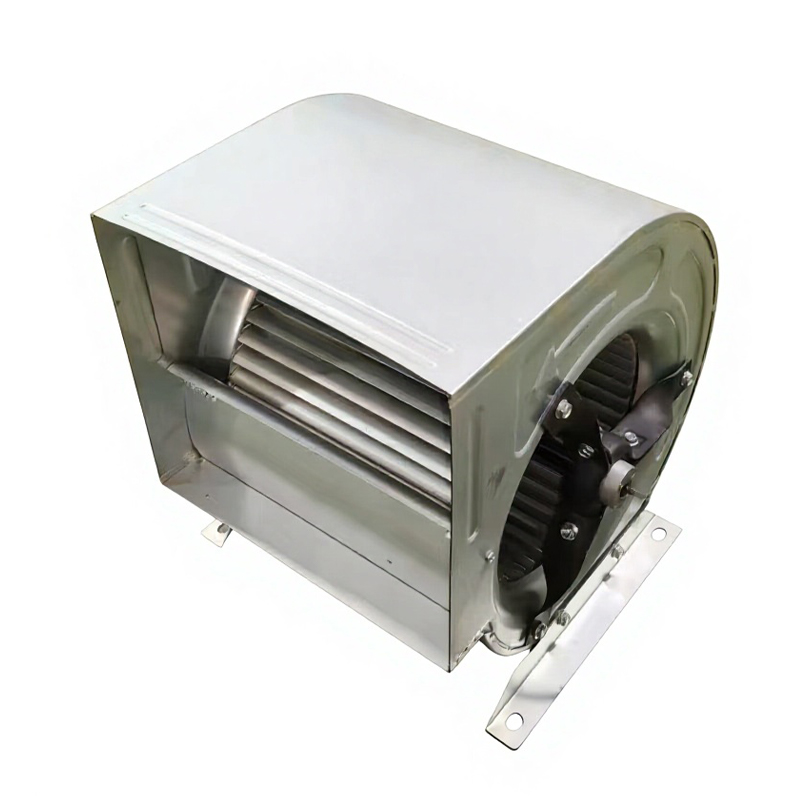
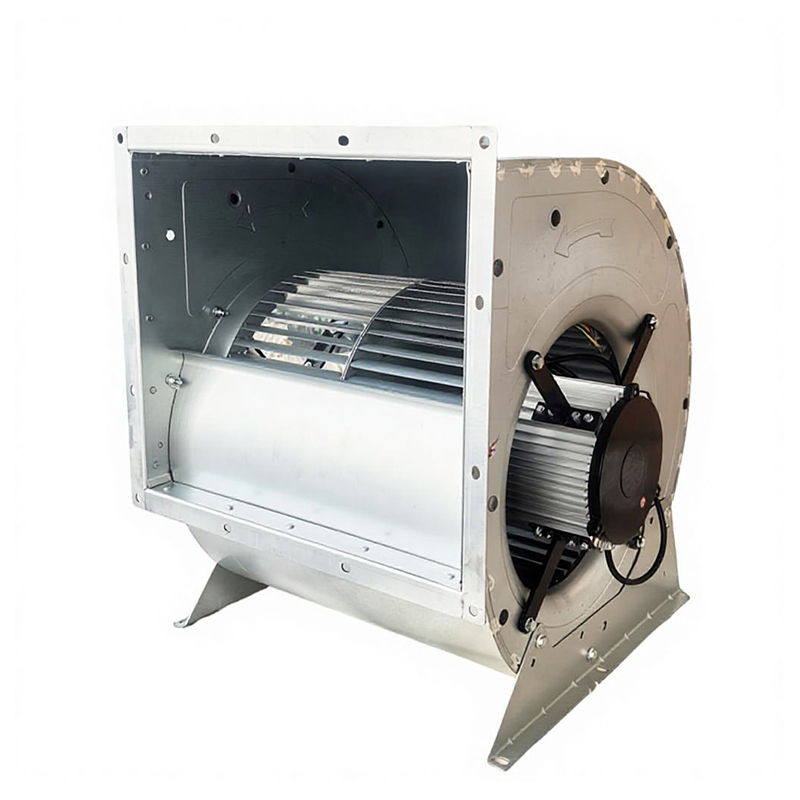
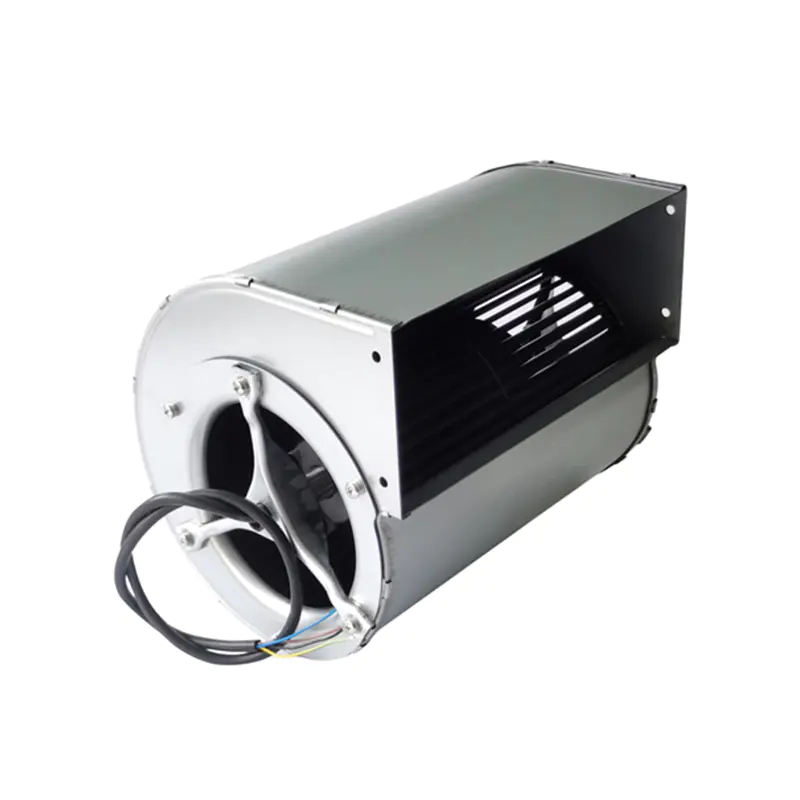
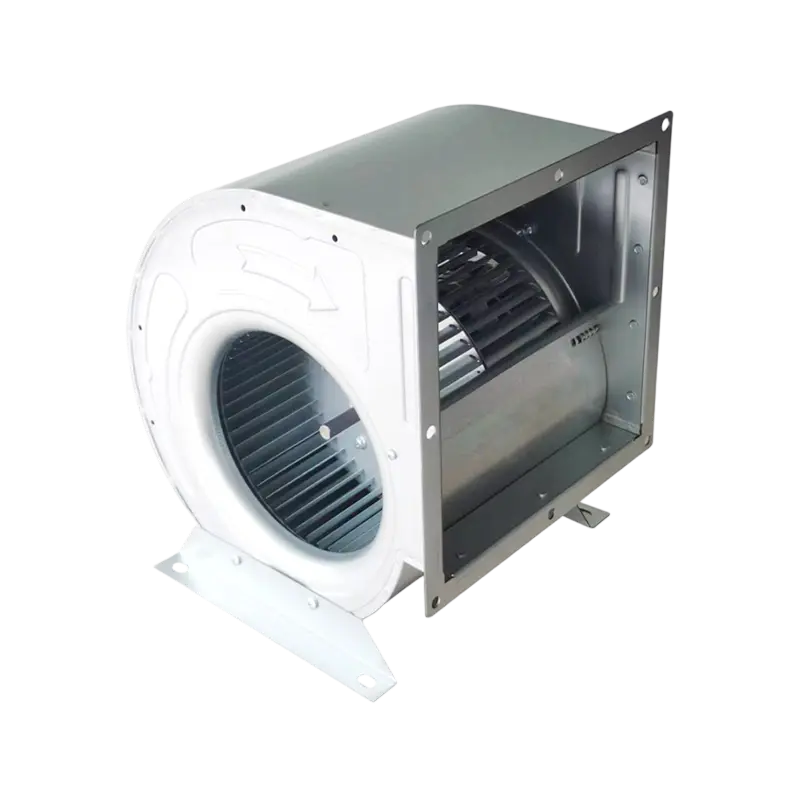
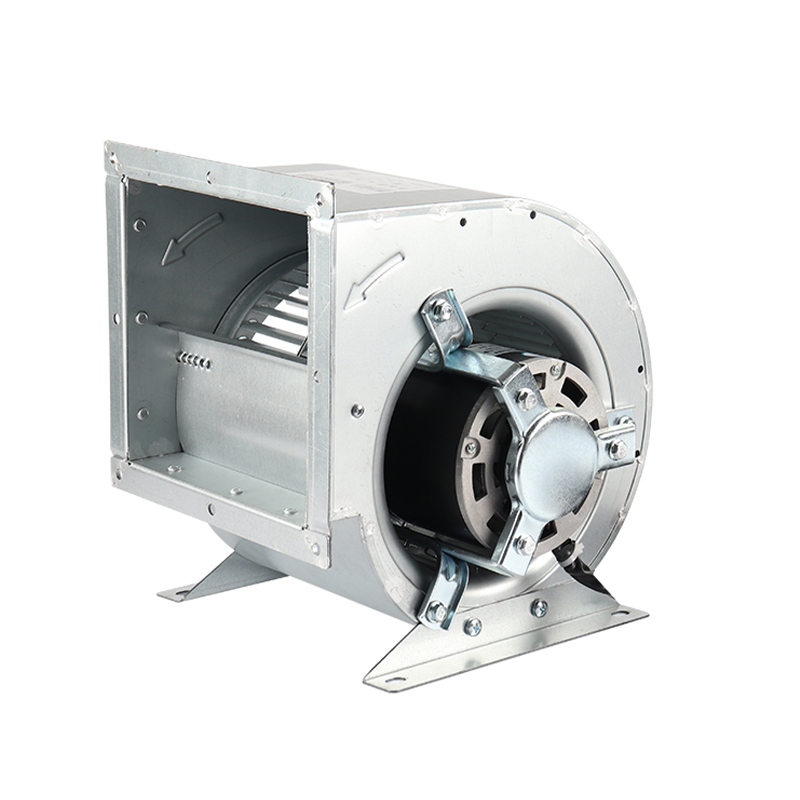
An industrial AC centrifugal fan is a ventilation device powered by alternating current (AC). Its core working principle utilizes the centrifugal force generated by impeller rotation to draw air in axially, turn it 90 degrees, and discharge it radially. Compared with axial fans, centrifugal fans can produce higher static pressure (typically reaching 500–3,000 Pa), making them particularly suitable for industrial scenarios that require overcoming duct resistance, filter resistance, or long-distance air delivery.
Based on impeller structure, industrial AC centrifugal fans are mainly classified into three types: forward-curved blades, backward-curved blades, and radial blades. Backward-curved blade fans offer the highest efficiency (up to 85% or more) with lower noise, making them ideal for long-duration continuous operation. Forward-curved blade fans can generate higher pressure at the same impeller diameter but with slightly lower efficiency. Radial blade fans excel at handling dust-laden gases and are widely used in material conveying and boiler induced-draft systems.
Core Advantages for Industrial Applications
High-Pressure Air Delivery Capability
In industrial ventilation systems, factors such as duct length, number of bends, and filter resistance significantly increase system resistance. Ordinary axial fans typically offer static pressure in the range of 50–200 Pa, which is insufficient for complex ductwork requirements. Industrial AC centrifugal fans, however, provide static pressure ranging from 500–3,000 Pa, with some high-pressure models even exceeding 5,000 Pa, easily overcoming multi-section ducts, high-efficiency filters, and heat exchanger resistance to ensure adequate airflow at the terminal end.
Stable and Reliable Operation
Industrial AC centrifugal fans are driven by AC induction motors, requiring no complex electronic commutation circuits. Their simple structure results in low failure rates. Under standard operating conditions, high-quality industrial centrifugal fans can achieve a mean time between failures (MTBF) of over 30,000 hours, with some models featuring all-copper windings and ball bearings reaching up to 50,000 hours. This high reliability is critical for non-stop essential applications such as data center cooling and chemical plant ventilation.
Extensive Power and Specification Coverage
Industrial AC centrifugal fans cover an extremely wide power range, from 50 W small equipment cooling fans to large industrial ventilation units exceeding 55 kW. Airflow coverage spans from 100 m³/h to over 100,000 m³/h, with impeller diameters ranging from 100 mm to 2,000 mm, capable of meeting virtually all industrial needs from precision electronic equipment cooling to large-scale factory ventilation.
Selection Criteria and Best Practices
Key Selection Parameters
When selecting an industrial AC centrifugal fan, the following core parameters must be comprehensively considered:
- Airflow (Q): Unit m³/h or m³/s, calculated based on ventilation space volume and air change rate
- Total Pressure or Static Pressure (P): Unit Pa, requiring calculation of duct resistance, filter resistance, and outlet dynamic pressure loss
- Power (N): Unit kW, estimated using the formula N = (Q × P) / (3600 × η × 1000), where η is fan efficiency
- Rotational Speed (n): Unit rpm, typically 1,450 rpm (4-pole motor) or 2,900 rpm (2-pole motor)
- Noise Level: Unit dB(A), backward-curved blade fans are typically 3–8 dB(A) quieter than forward-curved blade fans
- Protection Rating (IP): IP54 or higher recommended for humid or dusty environments
Application Scenarios and Selection Reference
| Application Scenario | Recommended Airflow Range | Recommended Static Pressure Range | Recommended Power Range | Blade Type Recommendation |
|---|---|---|---|---|
| Data Center Cooling | 2,000–8,000 m³/h | 800–1,500 Pa | 0.75–3 kW | Backward-curved |
| Industrial Boiler Draft/Supply Air | 5,000–50,000 m³/h | 1,500–4,000 Pa | 5.5–37 kW | Backward-curved / Radial |
| Cleanroom HVAC Systems | 1,000–15,000 m³/h | 1,200–2,500 Pa | 1.5–11 kW | Backward-curved |
| Spray Booth Exhaust | 3,000–20,000 m³/h | 600–1,200 Pa | 1.1–7.5 kW | Forward-curved |
| Material Conveying (Powder/Granule) | 2,000–15,000 m³/h | 2,000–5,000 Pa | 3–22 kW | Radial |
| Electrical Cabinet / Equipment Cooling | 100–800 m³/h | 100–400 Pa | 0.05–0.37 kW | Forward-curved / Backward-curved |
Installation and Operation Guidelines
To ensure efficient and stable operation of industrial AC centrifugal fans, the following points must be observed during installation and routine maintenance:
- Foundation Vibration Isolation: Fans with power exceeding 3 kW should be equipped with vibration isolators or pads, reducing vibration transmission by over 80% to prevent interference with building structures and adjacent precision equipment
- Inlet Protection: Install a protective mesh at the air inlet with mesh size no larger than 20 mm to prevent foreign object ingestion and impeller damage; add a primary-efficiency filter in dusty environments
- Flexible Connection: Use canvas or silicone flexible connections (150–300 mm in length) between fan inlet/outlet and ductwork to avoid direct transmission of duct stress to the fan housing
- Scheduled Maintenance: Inspect bearing temperature and lubrication condition every 2,000 operating hours; replace grease every 8,000 operating hours; clean impeller dust accumulation annually—dust buildup exceeding 1 mm in thickness can reduce efficiency by 5%–10%
- Motor Protection: Motors exceeding 2.2 kW should be equipped with thermal overload relays or motor protectors to prevent burnout from locked-rotor or phase-loss operation
Critical Factors Affecting Performance and Lifespan
Operating Environment Conditions
For every 10°C increase in ambient temperature, motor winding insulation aging rate approximately doubles. When ambient temperature exceeds 40°C, the motor rated power must be derated: 95% at 45°C, 90% at 50°C, and 85% at 55°C. In high-humidity environments (relative humidity >85%), fully enclosed motors with anti-condensation heaters should be selected to prevent insulation degradation from moisture absorption during shutdown.
For environments containing corrosive gases (such as chemical workshops or electroplating facilities), fan impellers and housings should be made of 304 or 316 stainless steel, or treated with epoxy resin anti-corrosion coating. Ordinary galvanized steel plates in acidic environments may have their service life shortened to 30%–50% of normal operating conditions.
System Matching and Operating Point Optimization
Actual fan operating efficiency depends on how well the working point matches the performance curve. When system resistance is over-designed, the actual operating point shifts toward higher flow and lower pressure regions, resulting in reduced efficiency and increased noise. By adjusting fan speed (variable frequency control) or inlet guide vane angles, the operating point can be returned to the high-efficiency zone. With variable frequency speed control, fans can maintain efficiency above 80% within 70%–100% of rated airflow, with significant energy savings—when airflow drops to 80%, shaft power falls to 51.2% of rated power (calculated by affinity laws), achieving 30%–40% electricity savings compared to throttling control.
Impeller Balance and Vibration Control
Impeller imbalance is the primary cause of excessive vibration in centrifugal fans. According to ISO 1940 standards, industrial fan impellers should achieve balance grade G6.3 or G2.5. For impeller diameters exceeding 400 mm, field dynamic balancing is particularly important—every 10 g·mm/kg increase in residual unbalance can shorten bearing life by approximately 15%–20%. During normal operation, the effective vibration velocity at fan bearing housings should be controlled below 4.5 mm/s (the "good" grade per ISO 10816 standards); immediate shutdown for inspection is required if it exceeds 7.1 mm/s.
Energy Efficiency Improvement Strategies
Variable Frequency Drive Implementation
In systems with fluctuating airflow demands (such as VAV air conditioning systems or process exhaust systems), equipping industrial AC centrifugal fans with variable frequency drives (VFDs) is the most effective energy-saving measure. Taking a 15 kW fan operating 6,000 hours annually as an example: if the actual average operating load is 70% of rated load, annual power consumption with VFD speed control is approximately 63,000 kWh, compared to 90,000 kWh with fixed-frequency operation and damper regulation, saving 27,000 kWh annually with an energy-saving rate of approximately 30%. The investment payback period is typically between 1.5 and 2.5 years.
High-Efficiency Motor Upgrade
Upgrading legacy IE1 or IE2 efficiency motors to IE3 (Premium Efficiency) or IE4 (Super Premium Efficiency) motors can further reduce energy consumption. For an 11 kW, 4-pole motor as an example: IE2 efficiency is approximately 91%, IE3 approximately 93%, and IE4 approximately 94%. Upgrading from IE2 to IE3 saves approximately 1,320 kWh annually at 6,000 operating hours; upgrading from IE3 to IE4 saves an additional 660 kWh. Although high-efficiency motors increase procurement costs by 15%–30%, the total life-cycle cost is significantly reduced.
System Resistance Optimization
For every 100 Pa increase in duct system resistance, fan shaft power increases by approximately 5%–8%. The following measures can effectively reduce system resistance:
- Minimize unnecessary bends and reducers; each 90° bend adds approximately 50–150 Pa of resistance
- Select low-resistance filters and replace clogged filter media regularly; clogged filter resistance can surge from initial 100–200 Pa to 500–800 Pa
- Properly design duct cross-sections, controlling air velocity within the 8–12 m/s range; excessively high air velocity significantly increases dynamic pressure loss
- Clean duct dust accumulation regularly; for every 1 mm increase in dust buildup, duct resistance increases by approximately 3%–5%
Future Development Trends
With the advancement of Industry 4.0 and smart manufacturing, industrial AC centrifugal fans are evolving toward intelligence, high efficiency, and modularity. Smart fans integrated with IoT sensors can monitor vibration, temperature, current, and other parameters in real time, using edge computing to predict bearing life and impeller wear conditions. This enables a shift from "scheduled maintenance" to "predictive maintenance," expected to reduce unplanned downtime by 40%–60%.
In terms of energy efficiency, new-generation industrial centrifugal fans adopting permanent magnet-assisted synchronous reluctance motors (PMaSynRM) can achieve efficiency beyond the IE5 grade, improving 3%–5% over traditional induction motors. Meanwhile, biomimetic impellers and volutes optimized through CFD (computational fluid dynamics) design can increase airflow by 8%–12% without increasing energy consumption, while reducing noise by 3–5 dB(A).
Modular design makes fan installation, maintenance, and upgrading more convenient. Standardized motor modules, impeller modules, and controller modules can be rapidly combined, reducing on-site impeller or motor replacement time from the traditional 4–6 hours to under 1 hour, significantly minimizing maintenance impact on production.
 ENG
ENG
