
 English
 Español
Content
- 1 The Primary Function of the Blower Impeller
- 2 Core Functions Beyond Basic Air Movement
- 3 Quantitative Performance Metrics: What the Data Reveals
- 4 Material & Design Choices That Define Functionality
- 5 FAQ About Blower Impeller: Addressing Common Industry Questions
- 6 Industry Applications: Where Impeller Functionality Is Critical
The Primary Function of the Blower Impeller
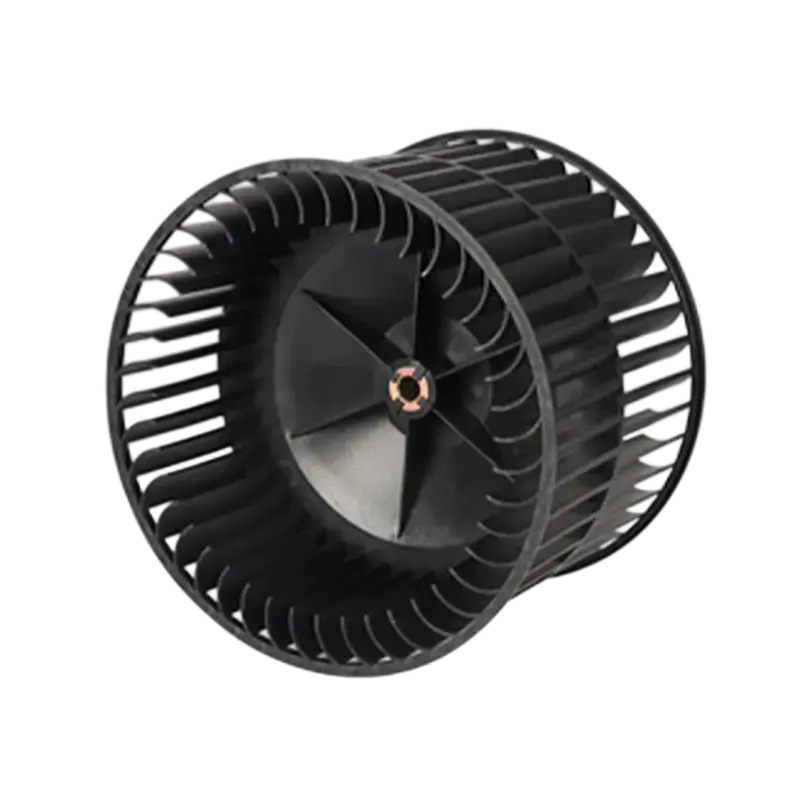
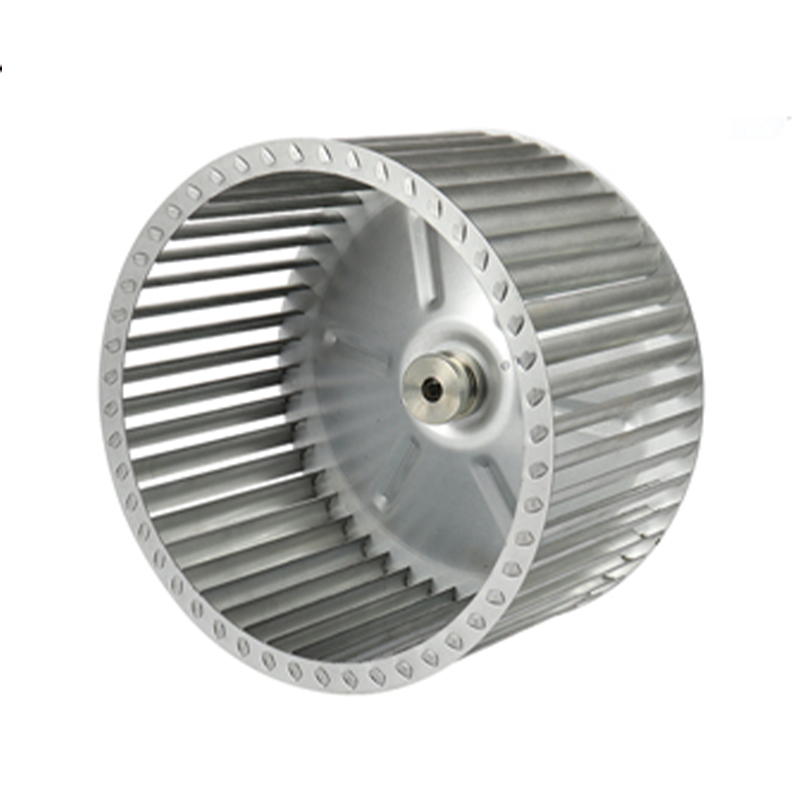
The primary function of the blower impeller is to convert rotational mechanical energy from a motor into kinetic energy and then into static pressure, thereby moving air or gas through a system. In practical terms, it is the critical rotating component that generates airflow in HVACR systems, air purification units, and ventilation equipment. Without an impeller, a blower is merely an inactive housing; with it, the system achieves targeted, efficient air movement for heating, cooling, or air quality control.
For instance, in a variable air volume (VAV) air conditioning unit, the impeller’s design determines whether the system can quietly deliver 1,200 CFM at 0.8 in. w.g. static pressure while maintaining energy efficiency below 0.3 W/CFM. This direct energy-to-airflow conversion underpins all modern ventilation performance.
Core Functions Beyond Basic Air Movement
While moving air is the obvious task, a high-performance blower impeller fulfills several critical sub-functions that directly impact system efficiency, noise levels, and equipment longevity:
- Static Pressure Generation: The impeller’s blade curvature (forward-curved, backward-curved, or radial) dictates how effectively it converts velocity into pressure. Forward-curved impellers, commonly used in HVAC, can generate static pressures from 0.4 to 1.2 in. w.g. in compact footprints.
- Energy Efficiency Optimization: Modern EC-motor-driven impellers achieve efficiency ratings up to 65-75%, reducing power consumption by 30-50% compared to traditional AC-driven alternatives in part-load conditions.
- Noise Attenuation: Aerodynamically designed impellers (e.g., with non-overlapping blades or scalloped inlets) reduce turbulence, keeping sound pressure levels below 45 dBA in residential fresh air systems—critical for occupant comfort.
- System Matching & Speed Regulation: Impellers paired with EC motors enable seamless speed regulation from 10% to 100%, allowing precise airflow modulation for demand-controlled ventilation, which can cut annual fan energy use by up to 40%.
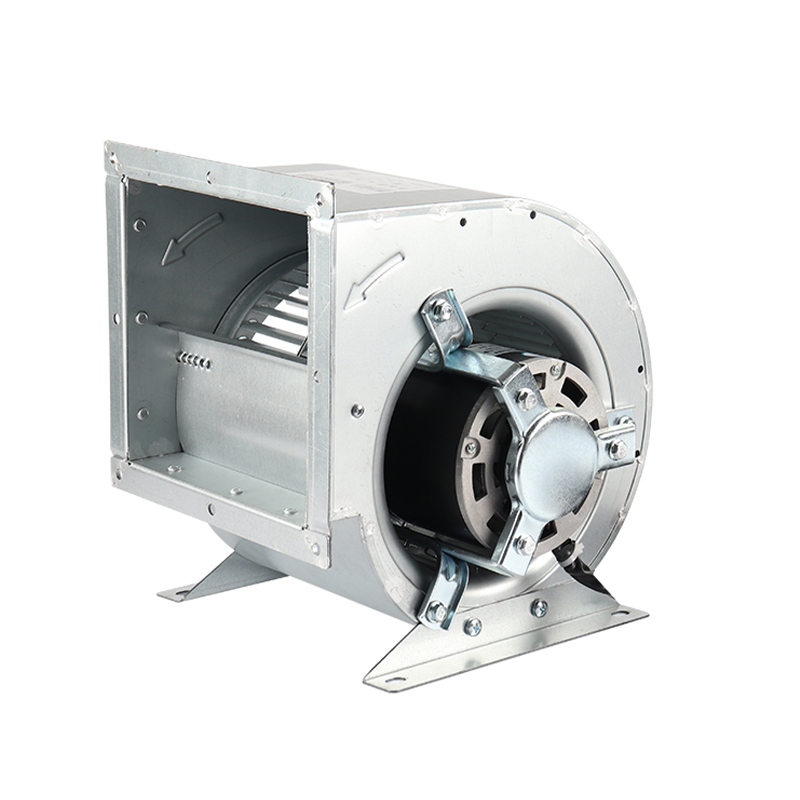
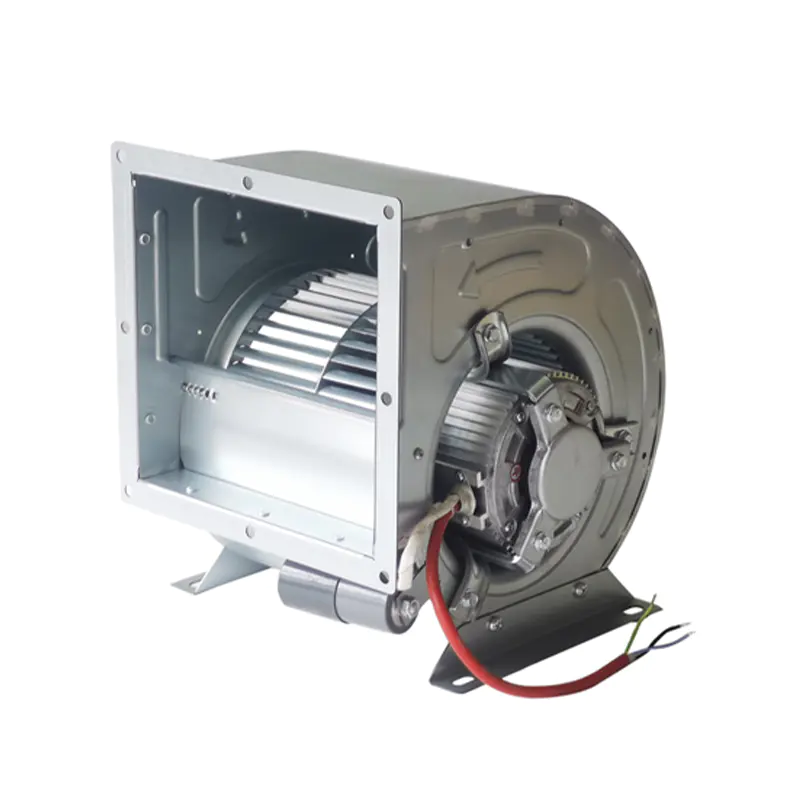
Yuyao Jiale Ventilation Equipment Co., Ltd. specializes in forward-centrifugal fans that exemplify these functions, integrating single-phase direct-coupled AC and EC motor drive structures to deliver high efficiency and low noise—ideal for ducted air conditioning units and air purification equipment.
Quantitative Performance Metrics: What the Data Reveals
To appreciate the functional impact, specific data points illustrate how impeller design translates to real-world outcomes. Below is a comparative analysis based on typical forward-curved impeller applications:
| Parameter | Standard AC Impeller | EC-Motor Optimized Impeller | Performance Gain |
|---|---|---|---|
| Airflow (CFM) | 850 | 1,020 | +20% |
| Static Pressure (in. w.g.) | 0.72 | 0.85 | +18% |
| Input Power (Watts) | 345 | 268 | -22% |
| Efficiency (W/CFM) | 0.406 | 0.263 | 35% improvement |
These metrics demonstrate that the impeller’s function is not merely about moving air but doing so with precision. A 35% improvement in W/CFM directly translates to lower operational costs and reduced carbon footprint, aligning with modern green building standards like LEED v4.1.
Material & Design Choices That Define Functionality
The functional reliability of a blower impeller is heavily influenced by material selection and aerodynamic design. Different applications demand specific characteristics:
- Forward-curved blades (steel or aluminum): Deliver high airflow at low-to-medium static pressure (ideal for ductless and ducted split systems). Their typical operating range is 300–2,500 CFM with speeds up to 1,800 RPM.
- Backward-curved blades (aluminum or composite): Achieve higher efficiency (up to 80% static efficiency) and self-limiting power characteristics, making them suitable for cleanroom HEPA filter applications where consistent static pressure (1.0–2.5 in. w.g.) is mandatory.
- Material impact: Steel impellers offer durability for industrial exhaust (handling air up to 200°C), while aluminum reduces rotor inertia by 30-40%, enabling faster EC motor response and more precise airflow modulation.
As a China-based OEM factory, Yuyao Jiale Ventilation Equipment Co., Ltd. leverages extensive experience in forward-centrifugal fan R&D to match impeller materials and blade profiles with application requirements—from quiet residential fresh air systems to high-static ducted units for HVACR.
FAQ About Blower Impeller: Addressing Common Industry Questions
1. What is the difference between a fan impeller and a blower impeller?
While often used interchangeably, a blower impeller specifically refers to a component designed to generate moderate to high static pressure (typically >0.5 in. w.g.) with consistent airflow. A fan impeller generally operates in free-air or low-pressure conditions. In HVAC applications, centrifugal blower impellers produce pressure ratios between 1.05 and 1.15, enabling air to overcome duct resistance, filters, and coils.
2. How do I know if my blower impeller is failing?
Key indicators include: (a) Unusual noise—rattling or high-pitched whine indicates imbalance or bearing wear. (b) Reduced airflow—measured CFM drops by >15% from baseline despite same motor speed. (c) Excessive vibration exceeding 0.2 in/sec on the housing. (d) Increased motor amperage (typically 10-20% higher) due to blade fouling or imbalance. Routine impeller inspection every 6 months in commercial systems prevents 80% of unplanned blower failures.
3. Can I replace an AC-driven impeller with an EC-motor impeller?
Yes, provided the impeller’s mounting dimensions, bore size, and rotational direction match. Retrofitting from AC to EC typically yields 30-50% energy savings and enables 0-10V or PWM speed control. However, ensure the system’s control logic and electrical supply (e.g., 230V AC to EC’s integrated DC conversion) are compatible. Yuyao Jiale offers drop-in EC impeller solutions with direct-coupled motors for simplified upgrades.
4. What maintenance extends blower impeller lifespan?
For optimal function: (1) Clean blades every 3-6 months using non-abrasive methods—accumulated dust can reduce airflow by up to 25% and unbalance rotating mass. (2) Verify balance: vibration velocity should remain below 0.12 in/sec for new impellers. (3) Inspect for corrosion or fatigue cracks, especially in impellers handling coastal or chemically aggressive air. Following these steps can extend service life beyond 15 years in typical HVAC applications.
Industry Applications: Where Impeller Functionality Is Critical
The blower impeller’s function directly impacts system performance across multiple sectors. Specific examples illustrate its role:
- Variable Air Volume (VAV) Air Conditioning Units: Impellers with EC motors modulate airflow from 20% to 100% capacity, maintaining static pressure within ±5% of setpoint, which reduces reheat energy by up to 35% compared to constant-volume systems.
- Air Purification Equipment: In HEPA-filtered units, impellers must overcome initial filter resistance of 0.5–1.0 in. w.g. while maintaining quiet operation (≤50 dBA). Forward-curved designs with non-metallic blades are common here.
- Fresh Air Systems & Energy Recovery Ventilators (ERVs): Compact impellers (6–10 inches diameter) operating at 800–1,500 RPM provide 100–600 CFM of outdoor air while keeping specific fan power below 0.35 W/CFM to comply with ASHRAE 90.1 efficiency mandates.
- Dehumidification Fans: Impellers are often coated with corrosion-resistant finishes (epoxy or e-coat) to withstand condensation and maintain balance in high-humidity environments (up to 90% RH).
Yuyao Jiale Ventilation Equipment Co., Ltd. manufactures impellers and centrifugal fans tailored to these applications, with a focus on compact structural space, convenient speed regulation, and compatibility with both AC and EC motor drives. Their solutions are recognized by globally renowned enterprises for reliability and performance.


 ENG
ENG
