
 English
 Español
Content
Picture two identical air-handling units serving the same floor of an office building. One is fitted with an AC centrifugal fan; the other uses an EC centrifugal fan. At full speed, both deliver the same airflow and the efficiency difference is only a few percentage points. Drop both units to 60% airflow, a typical night-time and mid-afternoon condition, and the EC fan suddenly uses 30-50% less electricity.
That part-load advantage is the main reason EC centrifugal fans keep winning efficiency-focused projects. This guide compares the two technologies on efficiency, speed control, total cost, noise, and maintenance, with the numbers design engineers and plant operators need before signing a purchase order.
How Motor Technology Creates the Efficiency Gap
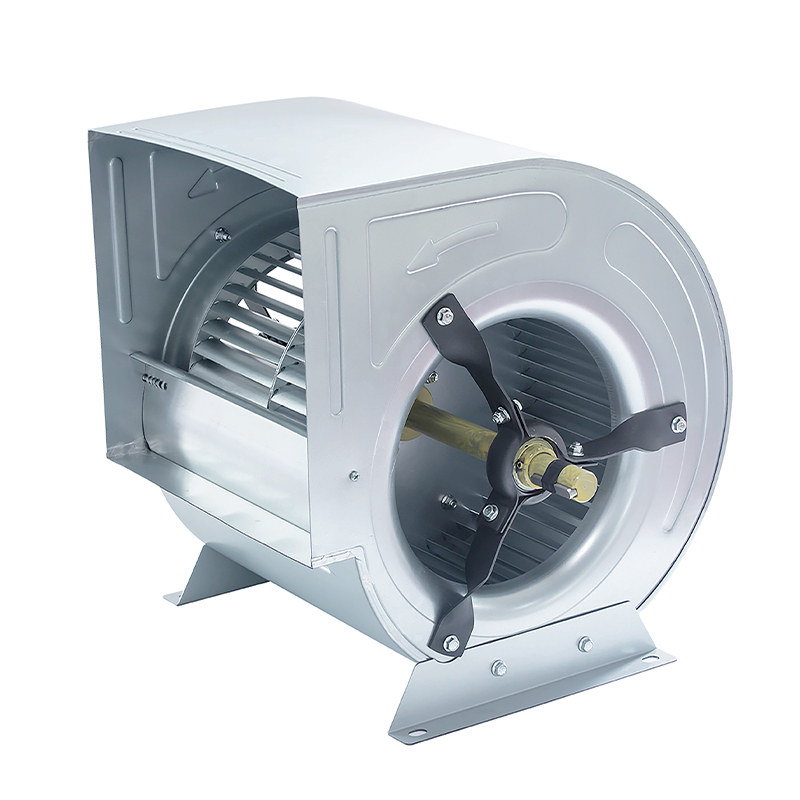
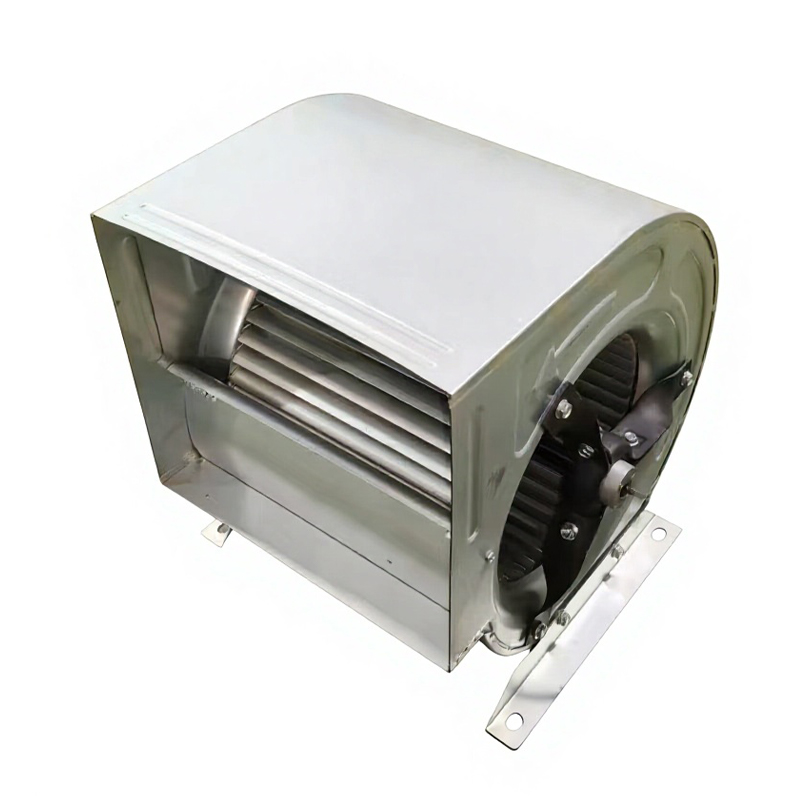
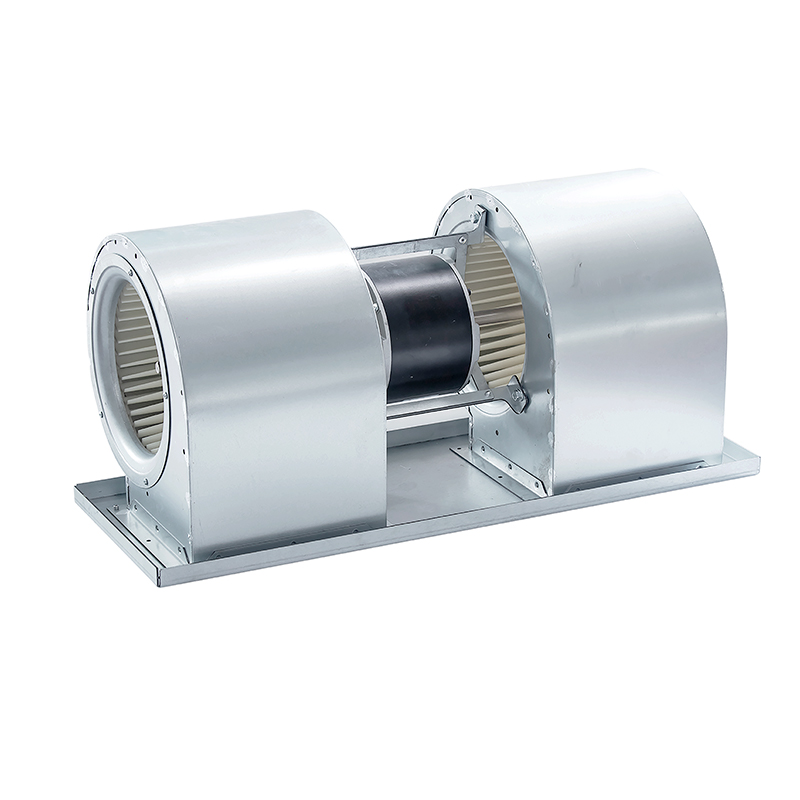
An AC centrifugal fan uses a single-phase or three-phase induction motor that locks onto the mains frequency. Speed is fixed unless you add dampers, a transformer, or an external variable frequency drive (VFD). The motor is inexpensive and robust, but its efficiency collapses as the mechanical load drops. On the AC side, the LKZ series is a representative fixed-speed design: direct-drive, forward-curved impellers, no electronics, and built for constant-duty service.
 LKZ 7-7 200W AC Centrifugal Blower FanThis fixed-speed AC centrifugal fan uses a direct-drive forward-curved impeller, built for constant-duty ventilation with 200W power and 1.8A current. A straightforward option when variable speed is not required.View Product →
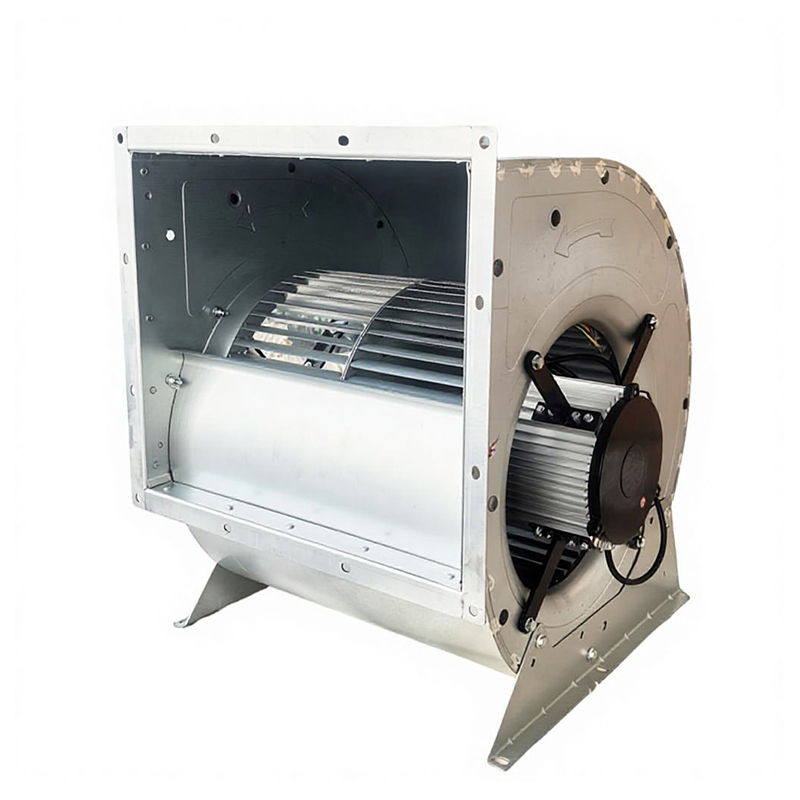
An EC centrifugal fan uses a brushless DC motor with the drive electronics mounted directly on the motor. The controller rectifies incoming AC to DC, then switches the stator windings electronically to keep rotor torque matched to the load. That arrangement holds motor efficiency above 75% from about 25% speed all the way to full speed. For a closer look at the architecture, see our technical article on what EC centrifugal fans are.
| Characteristic | AC centrifugal fan | EC centrifugal fan |
|---|---|---|
| Motor technology | Induction motor, fixed mains frequency | Brushless DC motor with integrated inverter |
| Full-load efficiency | 55-65% | 80-85% |
| 50%-speed efficiency | 25-40% | 70-78% |
| Speed control method | Damper, transformer, or add-on VFD | Integrated 0-10 V, PWM, or Modbus |
| Initial cost level | Lower, reference value | Roughly 30-50% higher |
| External control hardware | Dampers or VFD required for modulation | None required |
Efficiency at Full Speed vs Part Load
At rated full speed, a good AC centrifugal fan converts about 60-65% of input power into useful airflow. A comparable EC fan reaches 80-85%. That full-load difference matters, but it is not where the decision gets made. The real gap appears as speed drops.
The fan affinity laws explain why. Aerodynamic power changes with the cube of speed: at 50% speed the impeller needs only 12.5% of full-load power. An EC motor follows that small demand because its controller reduces voltage and current in step. An AC motor cannot release its fixed losses, so efficiency falls sharply. The chart below shows typical wire-to-air efficiency from 25% to 100% speed for both technologies.
Representative efficiency curves for 150-900 W direct-drive centrifugal fans.
At 50% speed, a typical AC motor converts only about one-third of the electricity it draws into shaft work; an EC motor still returns roughly 75%. In buildings where fans run at part load for more than half the operating hours, this gap dominates the energy bill.
Speed Control and System Integration
AC centrifugal fans have three ways to vary airflow, and none of them is free. Outlet dampers or inlet vanes throttle the air but also waste pressure and leave the motor drawing near-full power. A VFD gives efficient speed control but adds hardware cost, panel space, and a tuning step. Voltage-based control is cheap but distorts the motor and reduces efficiency further.
EC centrifugal fans come with the controller inside the motor. You connect a 0-10 V analog signal, a PWM signal, or in some cases a building-management bus, and the fan ramps to the requested speed without adding anything else to the panel.
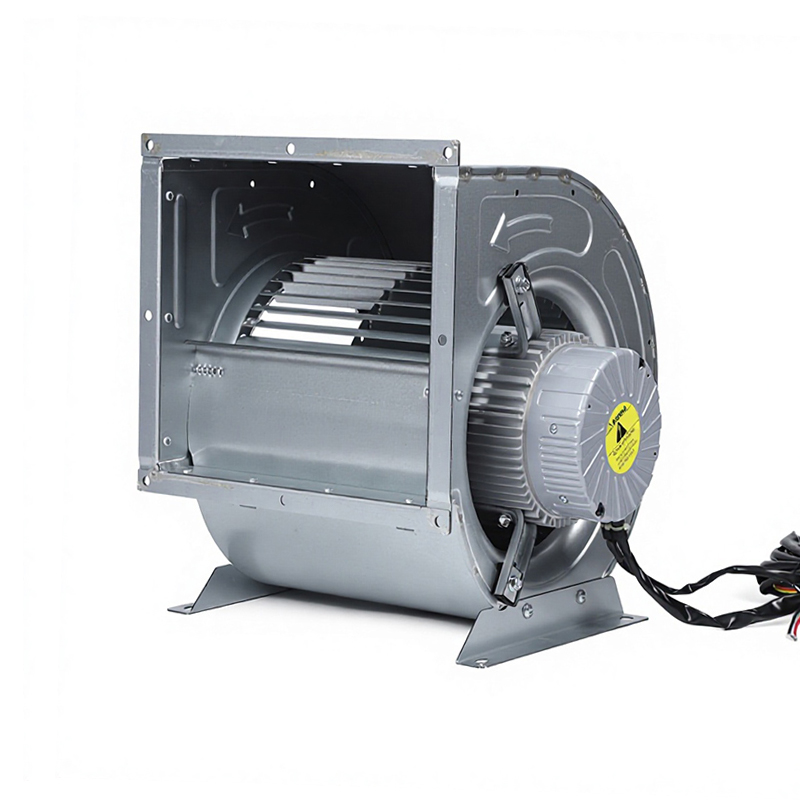
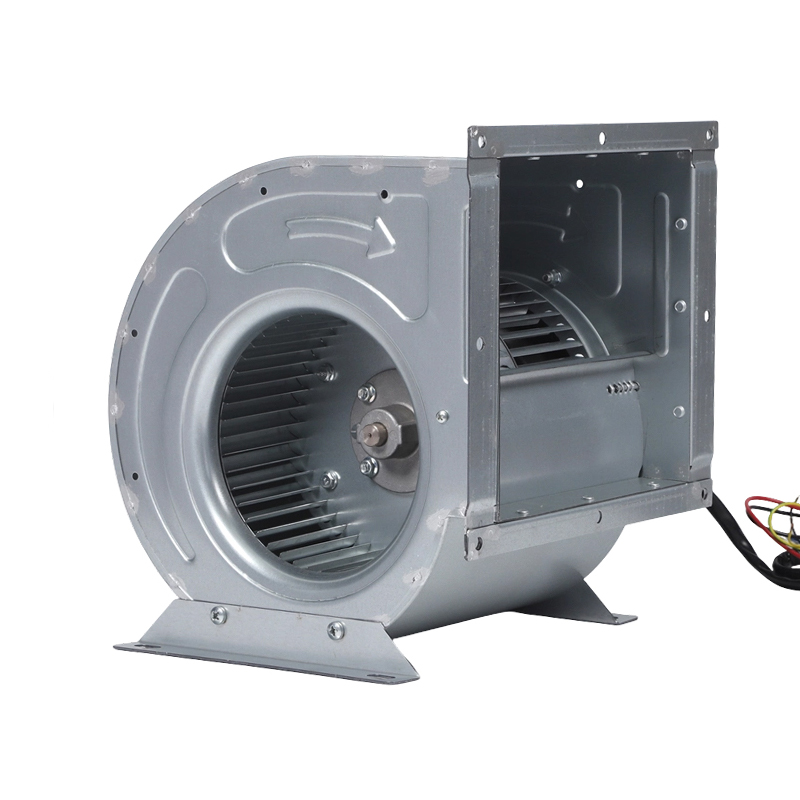 SYZ 7-7 0-10V EC Centrifugal FanAn EC centrifugal fan with integrated 0-10V speed control, simplifying commissioning and maintenance. Its compact motor-mounted board supports easy replacement, ideal for VAV air handlers and fresh-air ventilation systems.View Product →
The SYZ-77 in our EC range, for example, is built for VAV air handlers and make-up air units, where a 0-10 V analog signal has to control airflow reliably. Because the modulation hardware is already integrated, commissioning becomes a wiring task instead of a programming task, and a failed drive no longer strands the whole fan. Technicians replace a compact motor-mounted board rather than a cabinet full of components.
Noise, Maintenance, and Long-Term Reliability
EC fans also win the acoustic comparison at part load. Running slower produces less broadband noise, and without a damper there is no throttling hiss. In offices, hospitals, and schools, that acoustic margin often decides the specification.
Maintenance is a trade-off rather than a clear win. The AC fan has a simpler motor with no electronics, but an external VFD adds a separate failure point and the motor tends to run hot at low speed. The EC fan keeps all electronics on one motor-mounted board; if a drive stage does fail, you replace that board quickly and return to service. Lower average speed also reduces bearing wear, which often extends service life.
- Energy 63%
- Initial cost 22%
- Installation 8%
- Maintenance 7%
Typical 10-year cost structure for a modulating EC centrifugal fan in commercial HVAC duty.
That split explains why efficiency, not purchase price, should drive the specification. Energy dominates the bill, so the more efficient motor wins.
How to Choose: Match the Fan to the Operating Profile
Start with the duty cycle, not the spec sheet. If the fan runs at full speed almost all of the time, on a process exhaust or a constant-volume extract system, an AC centrifugal fan is a defensible choice. The price is lower, there is nothing electronic to repair, and part-load efficiency is irrelevant.
If airflow demand varies, whether through a CO2 sensor, a static-pressure probe, or a time-of-day schedule, the EC fan is usually the lower-cost option over two years and almost always over five.
- Choose an AC centrifugal fan when the duty is fixed, the budget is tight, or the environment makes electronics undesirable.
- Choose an AC centrifugal fan for constant-speed exhaust, heating-fan duty, or backup ventilation where simplicity matters most.
- Choose an EC centrifugal fan when the system runs at part load for significant periods.
- Choose an EC centrifugal fan when energy cost, carbon reporting, quiet operation, or BMS integration affects the decision.
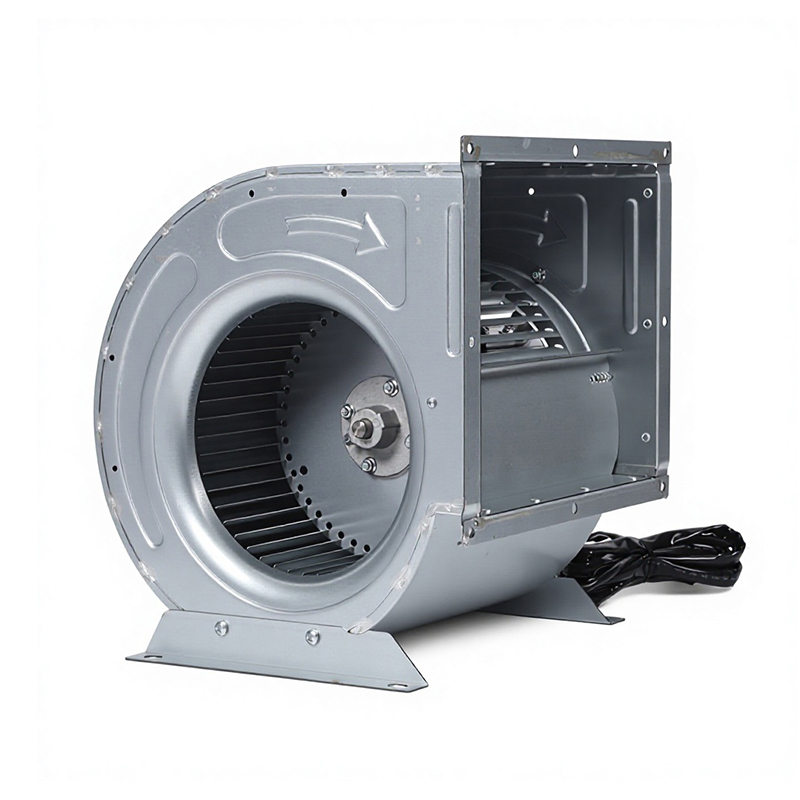 SYZ 9-9 Variable-Speed EC Centrifugal Fan for HVACThis 1000W EC centrifugal fan offers speed adjustment from 200 to 1100 RPM, enabling demand-based airflow control. Direct-drive design with forward-curved blades suits HVAC systems upgrading to variable-volume operation.View Product →
The SYZ-99 in our EC line, with its variable-speed HVAC firmware, is a common upgrade choice for air-handling units moving from constant volume to demand-based operation.
Frequently Asked Questions
How much more efficient is an EC centrifugal fan than an AC fan?
At full speed the advantage is roughly 15-25 percentage points of motor efficiency. At 50% speed it grows to 30 points or more, because AC motors lose efficiency as load drops while EC motors hold a flat curve. For the same annual airflow profile, an EC fan typically consumes 30-50% less electricity than a damper-controlled AC fan.
Can an EC centrifugal fan replace an AC fan in existing equipment?
In most direct-drive applications, yes, if the mounting dimensions, impeller diameter, and speed range match. Many manufacturers offer EC versions in the same footprints as their AC models, so a unit can be upgraded without redesigning the cabinet. Our engineers can confirm the fit for your current plenum or casing.
Are EC fans worth the higher initial cost?
For variable-load HVAC and ventilation duty, payback is typically 12-24 months on the energy saving alone. For fixed-speed applications that never throttle, the AC fan remains the better value.
Do EC fans require more maintenance than AC fans?
They require different maintenance, not more. Checks cover the electronics board and connectors, while the motor and bearings need the same attention as an AC unit. Because EC fans usually run slower, bearing life tends to be equal or better.
The Verdict
EC centrifugal fans are more efficient across the speed range that real buildings actually use, they integrate speed control into the motor, and they pay back their higher initial price through operating cost. AC centrifugal fans keep a clear place in fixed-speed, rugged, budget-first applications where an uncomplicated motor is an advantage.
Before you decide, calculate your own annual operating profile. Count the part-load hours, apply your electricity tariff, and compare the damper-controlled, VFD-controlled, and EC options. The numbers will make the decision for you. If you want a second pass on the duty point, talk to our application engineers.
 ENG
ENG
