
 English
 Español

Content
When a packaged air handling unit is delivered to site, the fan is usually the largest single consumer of power inside the cabinet. If the centrifugal fan is undersized, the unit may never reach design static pressure. If it is oversized, the motor draws more current than necessary and noise levels climb. The practical question is not simply "how much airflow do I need?" but "which centrifugal fan construction can do that efficiently, quietly and reliably?"
This guide explains how centrifugal fans work, compares the main impeller types, and translates the technical differences into selection criteria for HVAC, ventilation and air purification equipment.
What Is a Centrifugal Fan?
A centrifugal fan, also called a radial fan, uses a rotating impeller to accelerate air radially outward. Air enters near the impeller eye, is captured by blades, and is thrown outward by centrifugal force. The spiral housing, or volute, gradually expands in cross-section, converting some of the high-velocity kinetic energy into useful static pressure.
Because this pressure generation happens without relying solely on axial velocity, centrifugal fans can work against higher system resistance than axial fans. They are also typically more tolerant of non-uniform inlet flow, which makes them a common choice for filter-loaded or ducted systems.
Direct-Drive vs Belt-Driven Construction
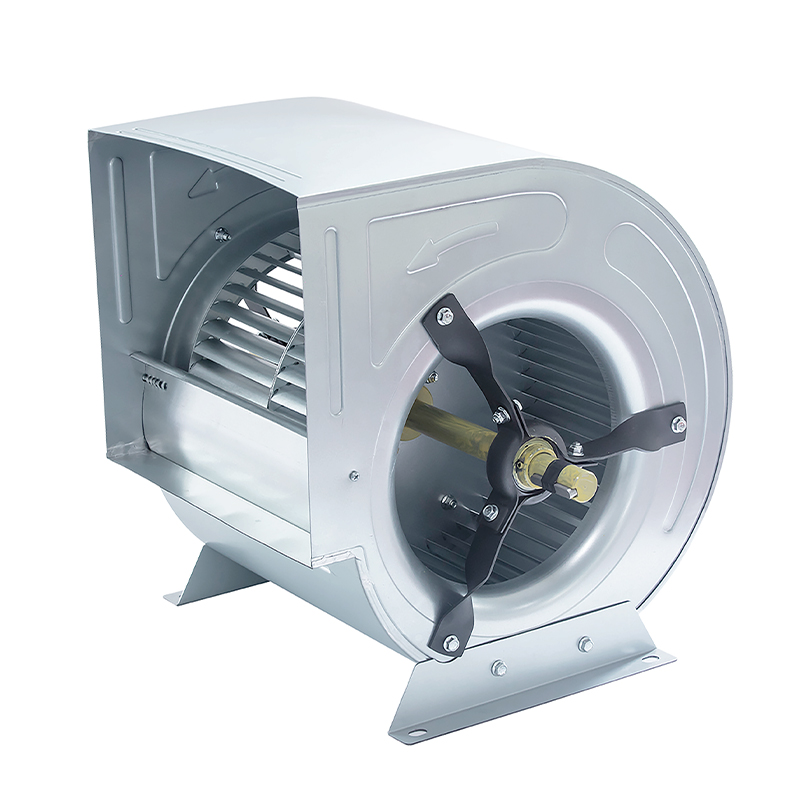
Direct-drive centrifugal fans connect the impeller directly to the motor shaft. This removes belts and pulleys, cuts maintenance, and improves compactness. Belt-driven designs are still used when the fan speed must be adjusted by changing pulley ratios or when the motor must be placed away from the airstream.
Forward-Curved, Backward-Curved and Radial Impellers
The blade shape is the most visible difference between centrifugal fan families and the biggest contributor to performance.
- Forward-curved blades have blades that curve in the direction of rotation. They generate airflow at relatively low speed, but they have lower efficiency and can overload the motor if the system resistance drops.
- Backward-curved blades curve against the direction of rotation. They produce higher pressure and efficiency, and the power curve reaches a maximum before falling, so the motor is less likely to overload.
- Radial blades are straight from hub to tip. They are simple, mechanically strong, and often used in material-handling or high-temperature applications where erosion and temperature are concerns.
| Impeller type | Efficiency | Noise | Typical duty |
|---|---|---|---|
| Forward-curved | 60–75% | Moderate | Low-to-medium pressure, compact units |
| Backward-curved | 75–85% | Lower | Higher pressure, energy-saving HVAC |
| Radial | 55–70% | Higher | Dusty or high-temperature air |
Backward-curved fans are widely used in modern HVAC air handling units because the efficiency premium quickly pays back energy costs on continuous running. Forward-curved fans remain attractive for small direct-driven blowers in fan coils and terminal units.
OEM customers who build their own housings can reduce inventory by sourcing balanced impellers directly from a fan manufacturer.
 SGCC Single Inlet Blower Impeller 160mm DiameterThis balanced galvanized steel impeller suits OEM customers building their own housings. Its single inlet and precise 8mm bore support stable high-speed operation, making it a practical component for custom fan assemblies.View Product →
Centrifugal Fans vs Axial Fans
Axial fans move air along the motor axis and rely on the propeller action of the blades. They deliver high airflow at low pressure and are common in wall-mounted extract fans and condenser cooling. Centrifugal fans, in contrast, change the direction of the air by 90 degrees and are better at overcoming pressure drops from ducts, filters and coils.
| Selection factor | Axial fan | Centrifugal fan |
|---|---|---|
| Pressure capability | Low to medium | Medium to high |
| Airflow direction | Axial | 90° inlet-to-outlet |
| Typical efficiency | Lower at high static pressure | Higher at high static pressure |
| Space in duct | Small inline footprint | Larger housing usually |
| Noise | Broadband and tonal | Can be lower with backward blades |
For a ducted system with high static pressure, a centrifugal fan will usually outperform an axial fan on both efficiency and sound. For a free-air application such as cooling a condenser, an axial fan is a better fit.
Selection Criteria for Centrifugal Fans
When you compare quotation data from different fan makers, the nameplate airflow is only the starting point. The fan must be selected at the actual system resistance, not at free air or an optimistic peak point.
- Operating point: Confirm the required airflow at the required static pressure. Ask for performance curves, not just a catalogue number.
- Efficiency: Look for total efficiency at the duty point. In continuous operation, a 10% efficiency loss can add hundreds of watts of heat to the cabinet.
- Motor type: AC motors are simple and rugged; EC motors give stepless speed control and better part-load efficiency.
- Noise: Compare specific sound power, not only the A-weighted level at one speed.
- Installation: Check inlet clearance, outlet area, shaft orientation, and available space for maintenance.
Direct-drive construction is often the best starting point for new equipment. It reduces the number of wearing parts, shortens the overall package, and allows the motor to be selected specifically for the impeller. Our guide to AC centrifugal fans explains the electrical and mechanical differences in more detail.
| Feature | AC motor | EC motor |
|---|---|---|
| Speed control | Limited, often by taps or VFD | 0–10 V / PWM |
| Part-load efficiency | Moderate | High |
| Complexity | Simple | Electronics on motor |
| Typical use | Constant-speed units | Variable-air-volume systems |
If you are coordinating a custom blower package, it helps to work with a factory that produces both the fan and the impeller. That way the wheel balance, motor fit, and housing geometry are handled by one engineering team.
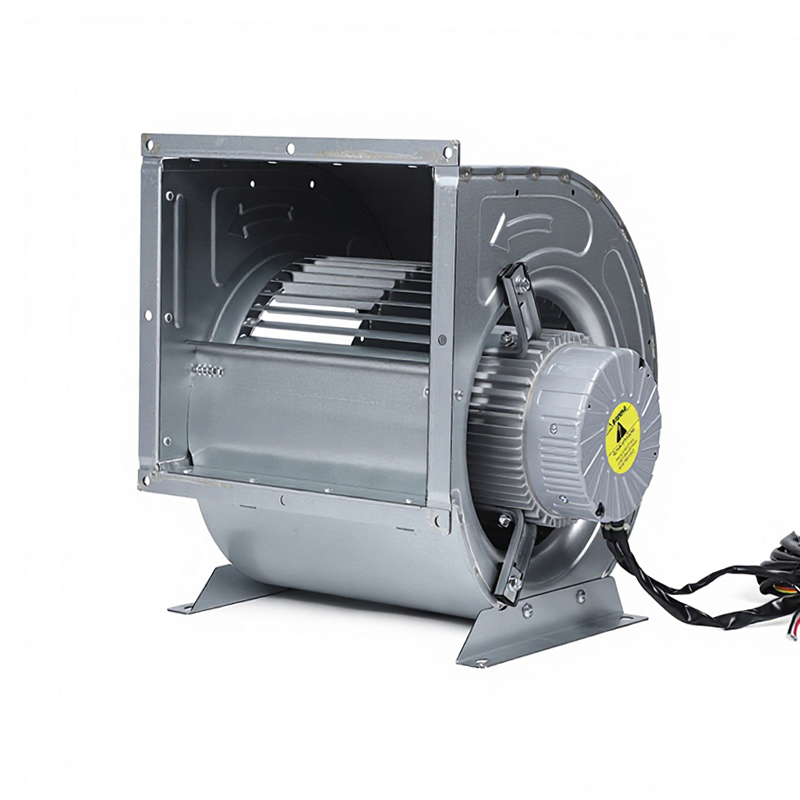
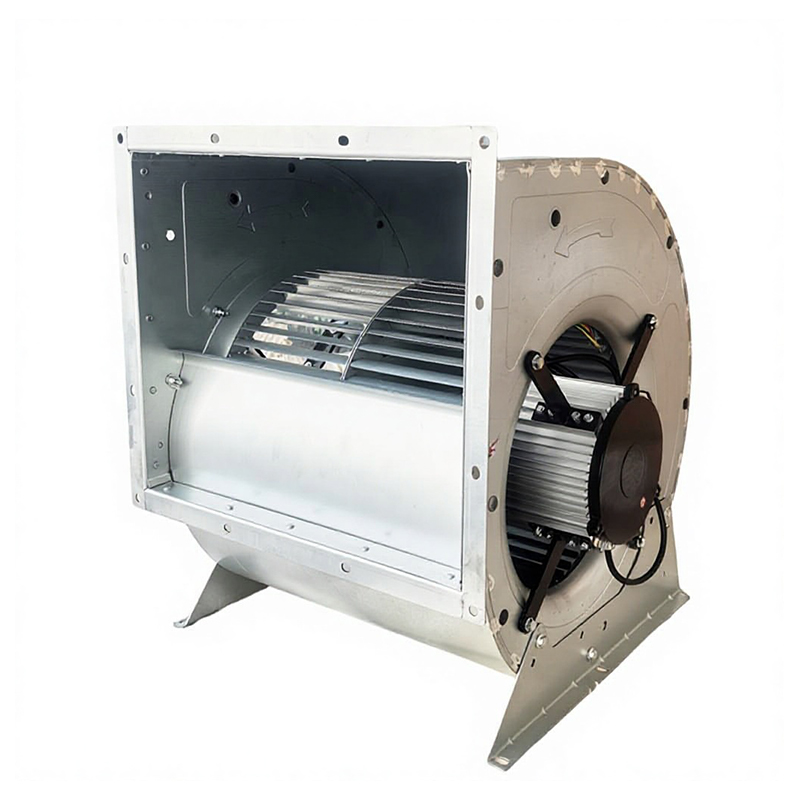
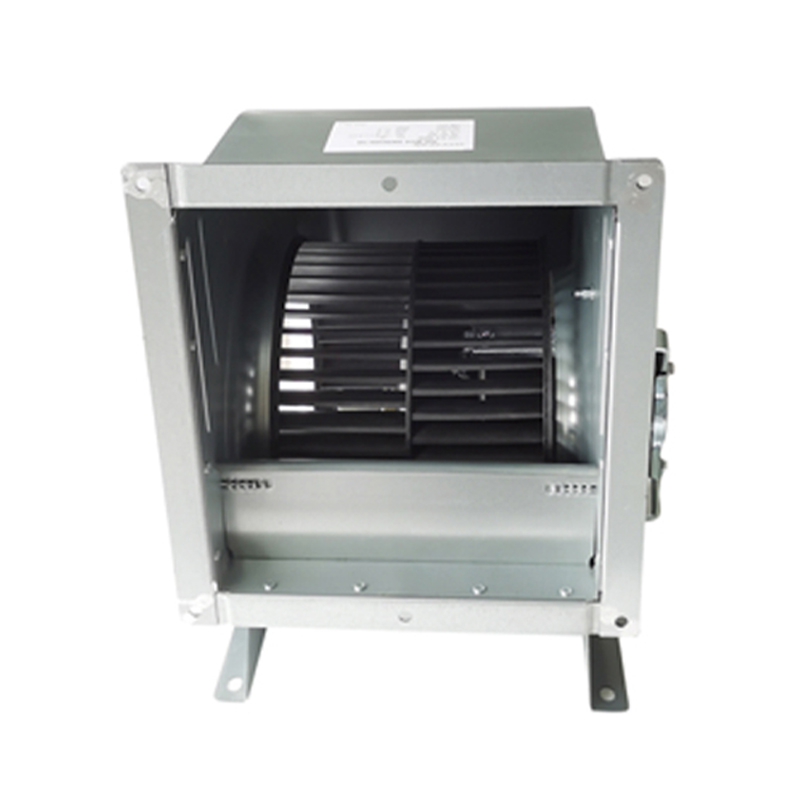 Direct Drive AC Centrifugal Fan with 600W MotorThis standalone centrifugal fan uses an IP54 aluminum-housed motor with F-class insulation, suited to ducted HVAC and exhaust applications. An optional mounting bracket adds flexibility for confined industrial installations.View Product →
Applications in HVAC, Air Cleaners and Ventilation
Centrifugal fans are the workhorses of ducted HVAC equipment. You will find them in central air handling units where they push air through cooling coils and filters, in VAV boxes that regulate airflow, and in heat recovery ventilators where external duct pressure is modest but still higher than an axial fan can sustain.
In air purifiers and compact fan coils, forward-curved mini centrifugal fans are popular because they deliver useful pressure in a space-saving package. Many of these units use direct-drive motors with thermal protection and sleeve or ball bearings designed for thousands of hours of low-noise operation.
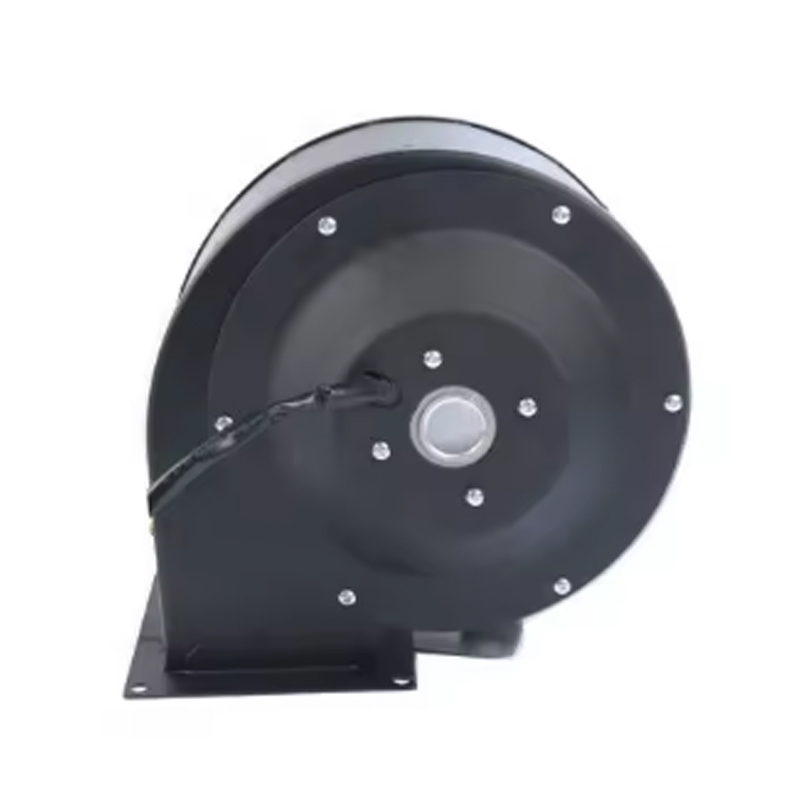
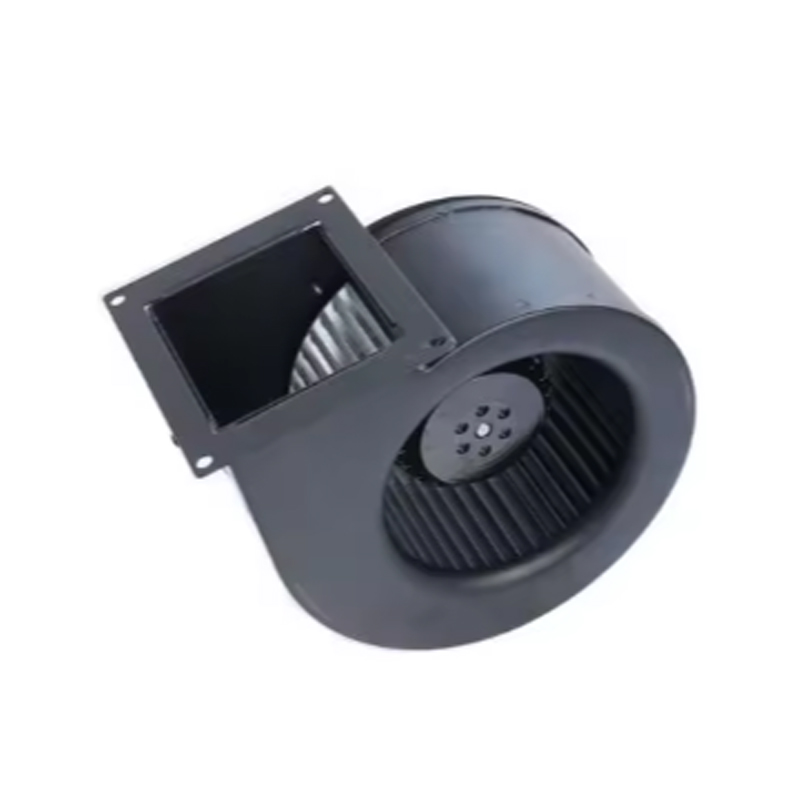
 133mm Forward Curved Mini Centrifugal FanCompact forward-curved design with ball bearings and a free-standing mounting system, ideal for air purifiers and compact fan coils. A 3-year warranty supports reliable low-noise operation in space-constrained ventilation tasks.View Product →
If you cannot decide between AC and EC motors, our engineering team can review your duty point and cabinet envelope. Contact us to discuss the selection.
Frequently Asked Questions About Centrifugal Fans
What does static pressure mean for a centrifugal fan?
Static pressure is the pressure increase measured at the outlet, excluding velocity pressure. It represents the fan's ability to overcome system resistance from ducts, filters and coils. A fan with low static pressure capability may still deliver high airflow in free air, but will fail once connected to a ducted system.
Which is better, a forward-curved or backward-curved centrifugal fan?
It depends on the duty. Backward-curved fans are more efficient and quieter at high pressure, while forward-curved fans can be more compact for a given airflow at lower pressure. For most central HVAC units, backward-curved direct-drive fans provide the best energy balance.
Can an EC motor be retrofitted to an existing AC centrifugal fan?
In many cases yes, as long as the motor frame, shaft diameter, speed range, and mounting dimensions are compatible. Retrofit kits are common in VAV systems where part-load operation is frequent and energy savings justify the investment.
How often should a centrifugal fan be balanced?
A well-made impeller is balanced at the factory and should run smoothly for years. Re-balancing is only needed after physical damage to a blade, after prolonged exposure to dust causing uneven deposits, or when vibration measurements exceed the limits in ISO 21940 or ISO 14694.
 ENG
