
 English
 Español

Content
If your HVAC or air movement system needs to move a large volume of air through ducts, filters, or heat exchangers, the forward curved centrifugal blower is often the most space-efficient and cost-effective choice. Unlike backward curved designs that prioritize high static pressure, forward curved impellers excel at delivering high airflow in compact wheel diameters — making them the go‑to solution for residential furnaces, air handlers, commercial fan coils, and many industrial ventilation units. Below, we explain exactly how they work, where they shine, and what to check when sourcing one.
What Is a Forward Curved Centrifugal Blower?
Also known as a squirrel‑cage blower, the forward curved centrifugal blower uses an impeller whose blades curve in the direction of rotation. As the wheel spins, air enters the centre and is slung outward by centrifugal force, then accelerated through the blade passages. Because the blades are shallow and forward‑leaning, the air exits at a relatively low velocity but with a high volume flow rate. This design inherently produces lower noise at similar flow rates compared to backward curved or radial fans, especially when the system resistance (static pressure) is modest.
How It Works
- Air is drawn axially into the rotating impeller hub.
- Centrifugal force pushes the air radially outward between the blades.
- The forward‑curved blade shape ‘pushes’ the air in the rotation direction, creating a high‑volume, moderate‑pressure discharge.
- A scroll housing collects the high‑velocity air and converts velocity energy into static pressure.
This operating principle makes the forward curved fan ideal for systems where the resistance is 0.5 – 3 in. w.g. (125 – 750 Pa) and where space for a large wheel is limited.
Performance: Forward Curved vs. Backward Curved
The table below summarises the key performance trade‑offs between the two most common centrifugal fan types. Understanding these differences helps you avoid oversizing or undersizing your blower.
| Parameter | Forward Curved | Backward Curved |
|---|---|---|
| Airflow volume | High (up to 40% more than backward curved) | Moderate to high |
| Static pressure capability | Low to medium (≤ 3 in. w.g.) | Medium to high (can exceed 10 in. w.g.) |
| Efficiency at best point | 55 – 70 % | 65 – 85 % |
| Noise level (dBA at same CFM) | Typically lower (quieter) | Higher (due to higher tip speed) |
| Wheel diameter required | Smaller for same airflow | Larger for same airflow |
| Typical applications | HVAC, furnace fan, fan coil, air purifier | High‑static duct systems, industrial exhaust |
Common Applications Where Forward Curved Blowers Excel
Because of their compact size and quiet operation, forward curved centrifugal blowers dominate these equipment categories:
- HVAC air handlers and fan‑coil units – The low static pressure requirements of ducted residential and light commercial systems perfectly match the fan’s characteristic curve.
- Air purifiers and filtration units – High CFM with low noise is critical in bedrooms and offices.
- Furnace blowers – Most gas and oil furnaces use forward curved wheels to push air through heat exchangers.
- Mini‑size ventilation products – Ceiling cassette fans, bathroom extractors, and small duct boosters rely on compact forward curved impellers.
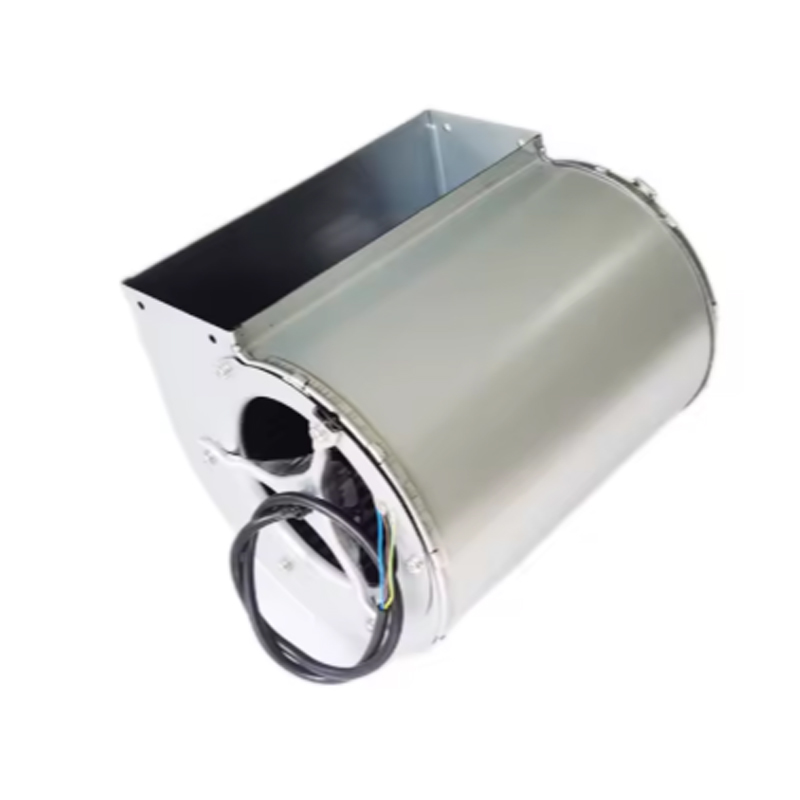
One of the most popular product lines for these demanding roles is the  133mm Forward Curved Mini Centrifugal Blower for Duct BootsThis compact fan fits inside a standard 200 mm duct boot while delivering up to 360 CFM, making it ideal for industrial ventilation with easy free-standing mounting and a 3-year warranty.View Product →, which delivers up to 360 CFM in a chassis that fits inside a standard 200 mm duct boot.
Key Selection Criteria for Engineers and Buyers
1. Static Pressure vs. Airflow
Always confirm the fan’s performance curve, not just the maximum CFM. A forward curved blower that delivers 800 CFM at free air may drop to only 400 CFM at 1 in. w.g. Use the manufacturer’s data to find the operating point of your system.
2. Motor Type and Speed Control
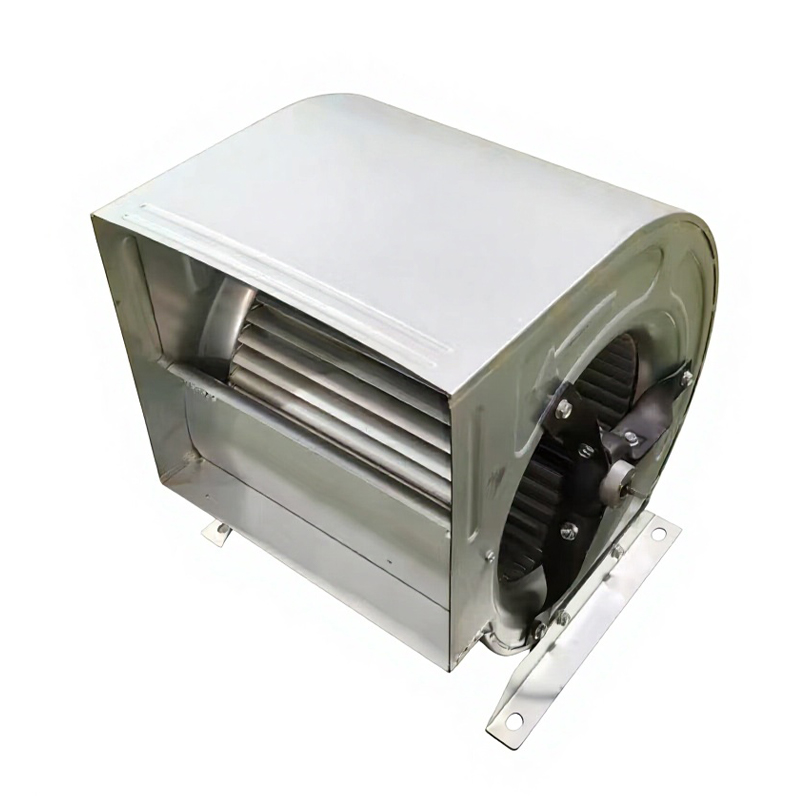
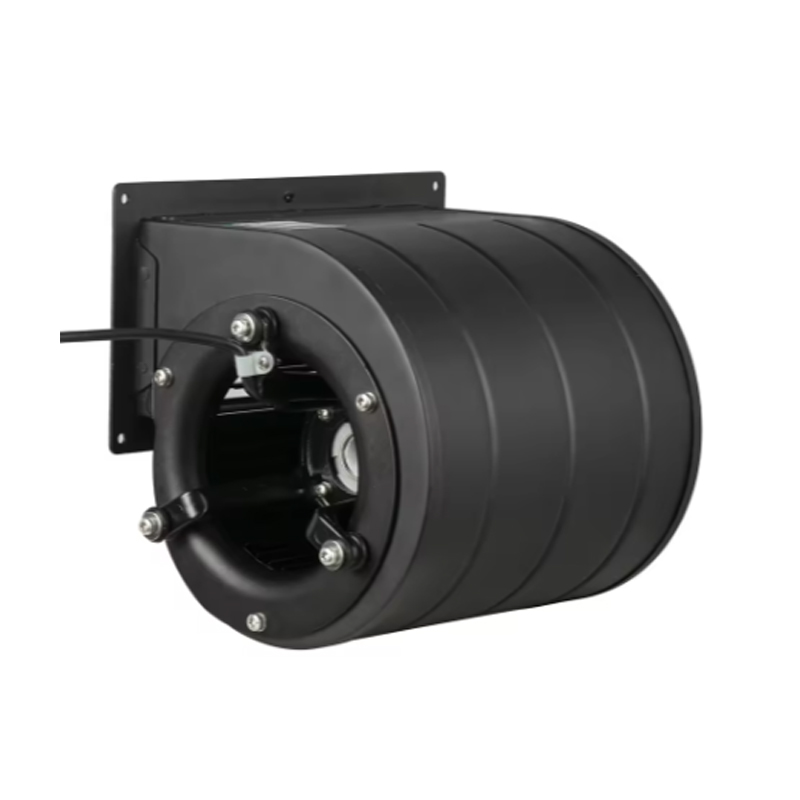
Most forward curved blowers today are available with AC induction motors (often shaded‑pole or PSC) or EC motors (electronically commutated). EC motors offer 20 – 30 % higher efficiency at part load and enable 0‑10 V analogue or PWM speed control. For example, the 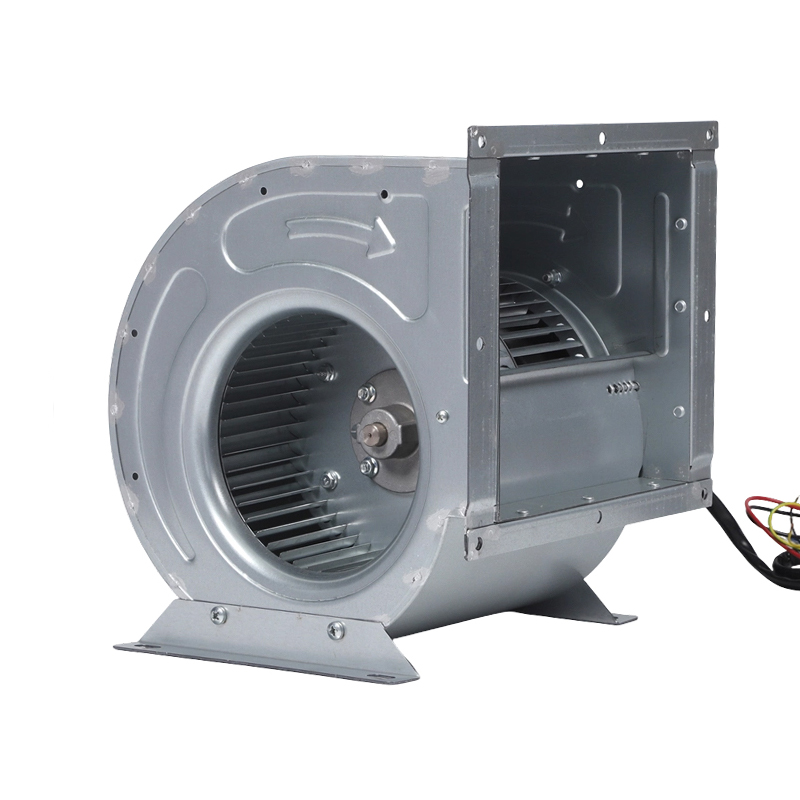 SYZ 7-7 EC Centrifugal Fan with 0-10V Speed ControlFeaturing built-in 0-10 V regulation for demand-controlled ventilation, this EC motor fan offers 20-30% higher part-load efficiency and supports free-standing installation in air handling units.View Product → provides built‑in 0‑10 V regulation for demand‑controlled ventilation.
3. Noise Constraints
Forward curved fans are inherently quieter than backward curved types, but noise still varies with wheel diameter, speed, and housing design. For residential applications, look for units with sound‑dampening scroll insulation or aero‑acoustic optimised blades.
4. Temperature and Environment
Standard forward curved blowers handle ambient air up to 60 °C (140 °F). For high‑temperature applications such as oven exhaust or process heating, special materials (e.g., stainless steel impellers, high‑temp bearings) are required.
Frequently Asked Questions
Can a forward curved blower be used for high‑static duct systems?
Not ideally. Forward curved fans stall when the system resistance exceeds about 3 in. w.g. For applications above that, choose a backward curved or radial blade fan.
How do I know if the blower will fit my existing enclosure?
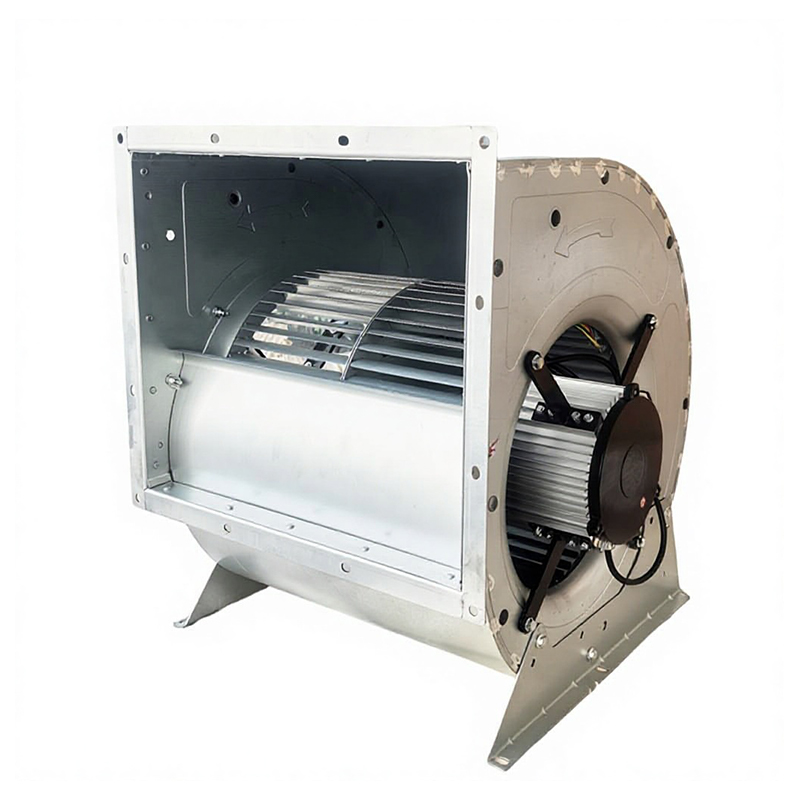
Measure the mounting footprint, inlet diameter, and outlet orientation. Most forward curved blowers are offered with either a scroll housing or as a plug‑fan design. Check the product datasheet for dimensions. The  LKZ 7-5-150W AC Forward Curved Centrifugal BlowerWith a compact 7.5×7.5 in. mounting flange and a galvanized steel housing, this blower provides reliable air delivery for duct-mounted HVAC modules and resists industrial corrosion.View Product →, for instance, has a compact 7.5 × 7.5 in. mounting flange and fits into duct‑mounted HVAC modules.
Do forward curved impellers wear out faster than other types?
With proper maintenance and clean airflow, the life of a forward curved impeller is comparable to backward curved types. However, because the blades are thin and closely spaced, they can clog faster in dirty environments. Use a pre‑filter if the air carries heavy dust or grease.
Conclusion: Right Blower for the Right Job
A forward curved centrifugal blower remains the standard for HVAC and general ventilation where high airflow, compact size, and low noise are the priorities. When you understand the static pressure limits and select the correct motor type, this blower delivers reliable, efficient performance for years. If you are evaluating a new design or replacing an existing fan, review the complete range of forward curved centrifugal blower models or contact our engineering team for a custom recommendation.

 ENG
