
 English
 Español
Content
- 1 Where Industrial Fan Noise Actually Comes From
- 2 Why a Small Speed Increase Creates a Large Noise Increase
- 3 Core Technologies for Controlling Fan Noise
- 4 Comparing Noise Control Methods by Cost and Effect
- 5 Fan Series Engineered for Lower Noise Output
- 6 How Much Each Noise Source Typically Contributes
- 7 Target Noise Levels by Application
- 8 How Fan Noise Is Measured and Verified
- 9 A Practical Checklist for Specifying Low-Noise Fans
Direct answer: the most effective way to control noise in an industrial fan system is to combine three layers of intervention rather than rely on one fix. First, reduce noise at the source by choosing a backward-curved impeller and a brushless EC motor instead of a forward-curved AC wheel. Second, contain what remains at the system level with inlet/outlet silencers, an acoustic enclosure and flexible duct connectors. Third, isolate structure-borne vibration with damping mounts so the noise cannot travel through the building frame. Applied together, these three layers typically bring measured sound pressure down by 10 to 20 dB(A) compared with an unmodified fan running at the same duty point - roughly the difference between a fan that dominates a room and one a visitor barely notices.
Where Industrial Fan Noise Actually Comes From
Before choosing a fix, it helps to know which mechanism is producing the sound. Industrial and HVAC fans generate noise through four distinct physical routes, and each one responds to a different type of engineering solution.
| Noise Source | Physical Mechanism | Typical Frequency Range |
| Aerodynamic noise | Turbulence at the blade tips and the blade-passing frequency as air leaves the impeller | Broadband, peaks 500 Hz to 4 kHz |
| Motor and bearing noise | Commutation ripple, winding vibration and bearing wear | 1 kHz to 8 kHz, often tonal |
| Structural resonance | Housing and panel vibration excited by rotor imbalance or duct pressure pulsation | 50 Hz to 500 Hz |
| Duct and installation noise | Turbulent flow at elbows, poor inlet conditions and loose fittings | Broadband, 100 Hz to 2 kHz |
On an uninstalled centrifugal fan, aerodynamic noise is usually the single largest contributor. Once the same fan is mounted in ductwork, structural and installation noise can add several more decibels that no amount of impeller redesign will remove on its own - which is why a full noise-control plan has to address the system, not just the fan.
Why a Small Speed Increase Creates a Large Noise Increase
Fan noise does not scale in step with rotational speed - it scales far faster. Under the standard fan affinity relationship, sound power rises roughly with the fifth power of speed, so doubling the rotor speed increases the sound power level by about 15 dB(A) even though airflow only doubles. This is the main reason an oversized fan throttled down with a damper is almost always noisier than a correctly sized fan running at its design speed: the damper wastes energy and the fan is still spinning faster than it needs to.
Representative sound power level versus relative fan speed, calculated from the fan affinity relationship (baseline about 78 dB(A) at 100% design speed).
Core Technologies for Controlling Fan Noise
Six engineering methods account for most of the practical noise reduction achieved on industrial and HVAC fan installations. They are not mutually exclusive - the largest gains come from stacking several of them.
Backward-Curved Impellers
Blades curved against the direction of rotation reduce turbulence and blade-passing tones compared with forward-curved wheels handling the same duty point.
3 to 6 dB(A)Brushless EC Motors
Electronic commutation removes the mechanical noise of brush contact and allows the fan to run only as fast as the load requires.
8 to 15 dB(A)Variable Frequency Drive
Matching speed to demand instead of running at fixed full speed and throttling with a damper avoids the fifth-power noise penalty described above.
Avoids 10+ dB(A) penaltySilencers and Attenuators
Absorptive baffles fitted on the inlet and outlet reduce broadband aerodynamic noise, with the effect scaling with baffle length and duct velocity.
8 to 15 dB(A)Vibration Isolation Mounts
Rubber or spring isolators decouple the fan housing from the building structure, stopping structure-borne noise from radiating through walls and floors.
3 to 8 dB(A) structure-borneAcoustic Enclosures
A sealed, internally lined enclosure around the fan and motor is the strongest single measure, most useful where a fan must sit close to occupied space.
15 to 25 dB(A)Comparing Noise Control Methods by Cost and Effect
Choosing between methods usually comes down to how much reduction is required, whether the fan is new equipment or an existing installation, and the available budget.
| Method | Typical Reduction | Relative Cost | Best Fit |
| Backward-curved impeller | 3 to 6 dB(A) | Low - a design choice | New equipment specification |
| EC motor with speed control | 8 to 15 dB(A) | Medium | Variable-load HVAC, data centers |
| Duct silencer or attenuator | 8 to 15 dB(A) | Medium | Retrofits on ducted systems |
| Vibration isolation mounts | 3 to 8 dB(A) | Low | Rooftop and indoor installations |
| Acoustic enclosure | 15 to 25 dB(A) | High | Fans located near occupied areas |
| Flexible duct connectors | 2 to 5 dB(A) | Low | Any ducted installation |
Fan Series Engineered for Lower Noise Output
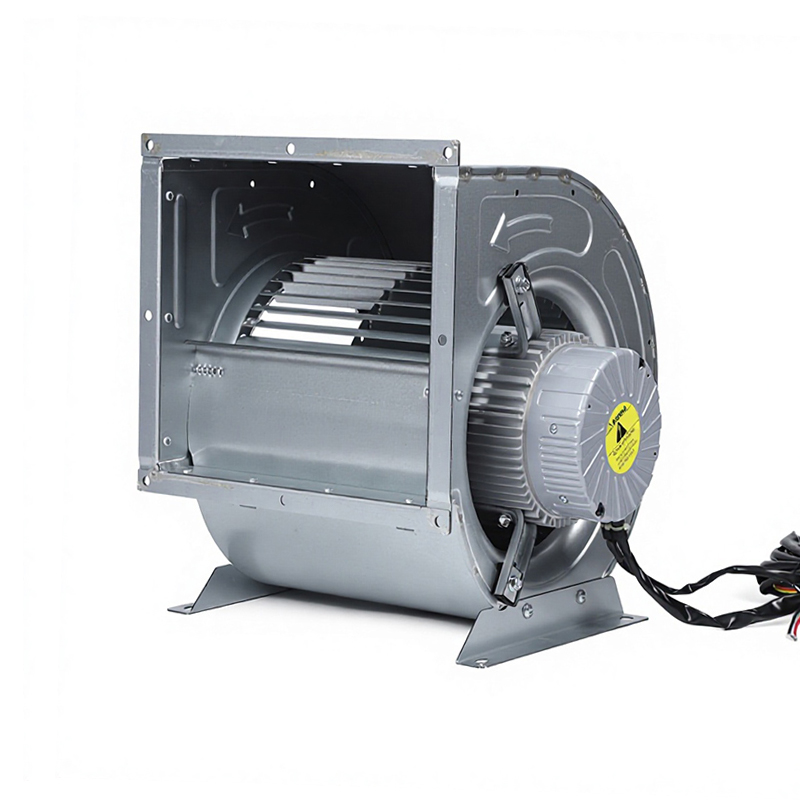
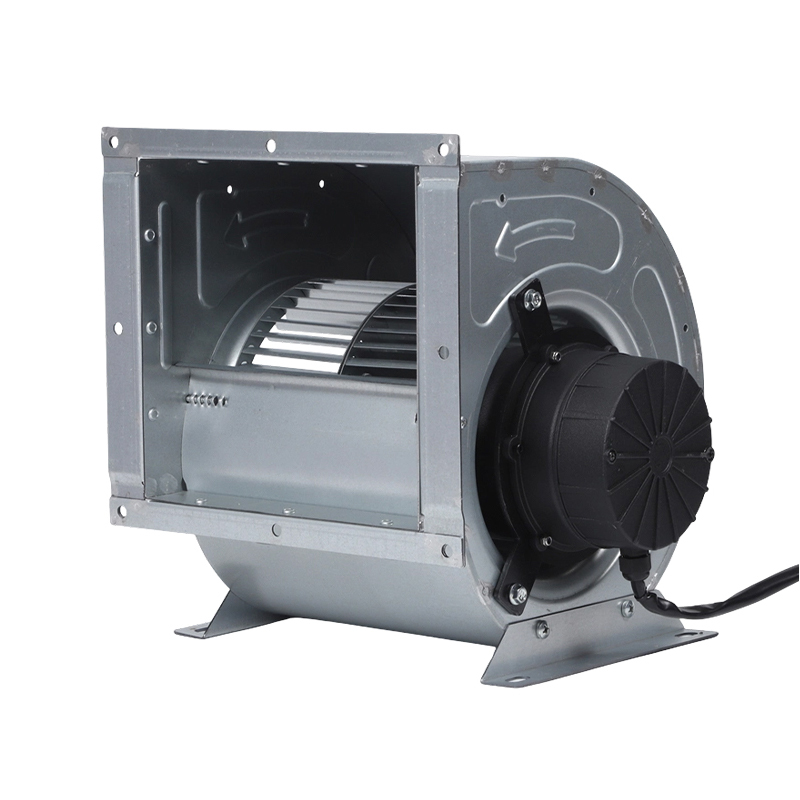
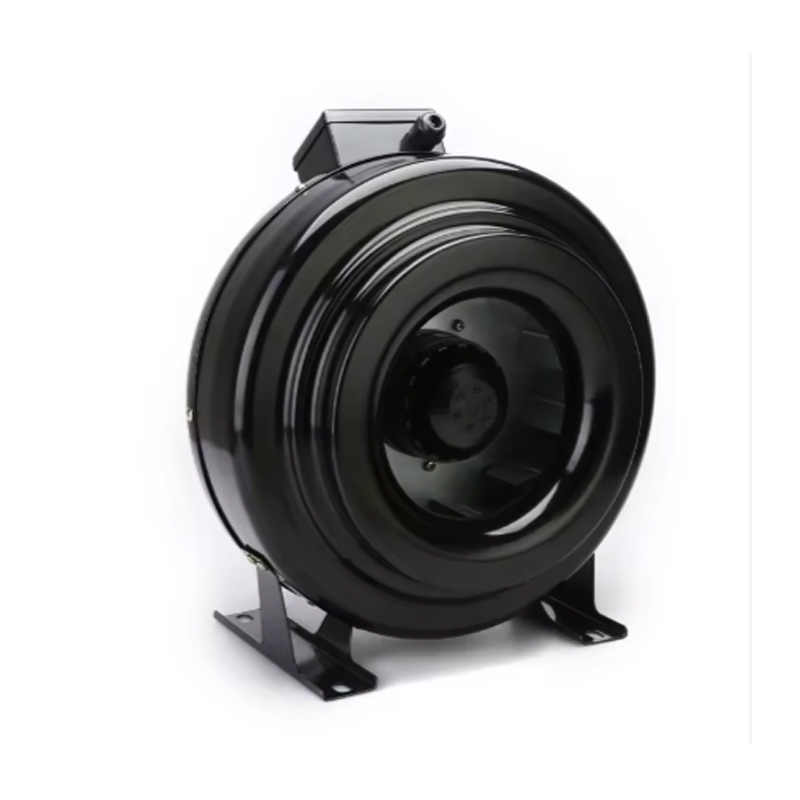
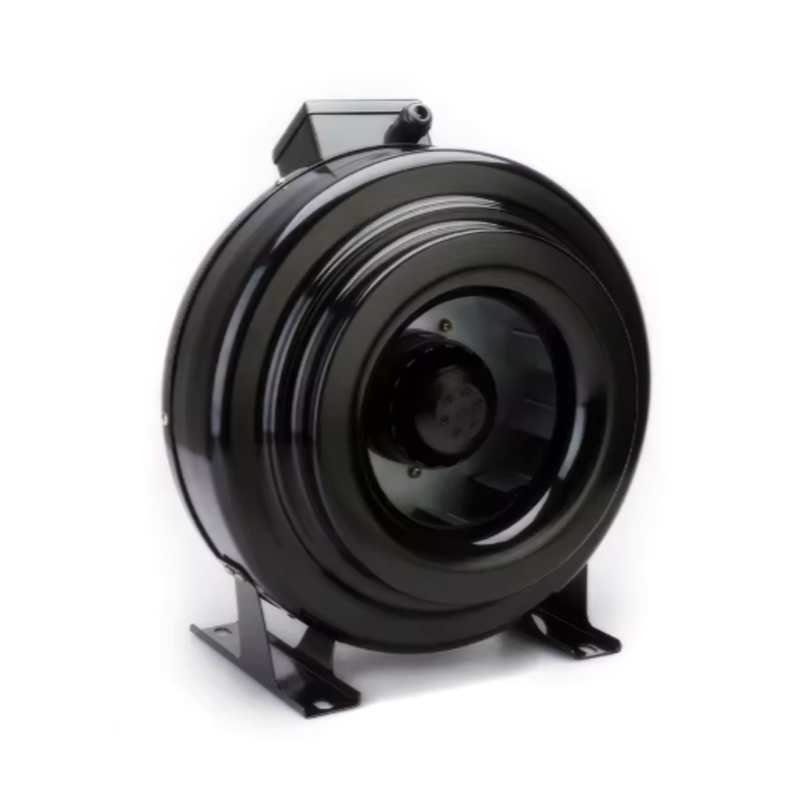
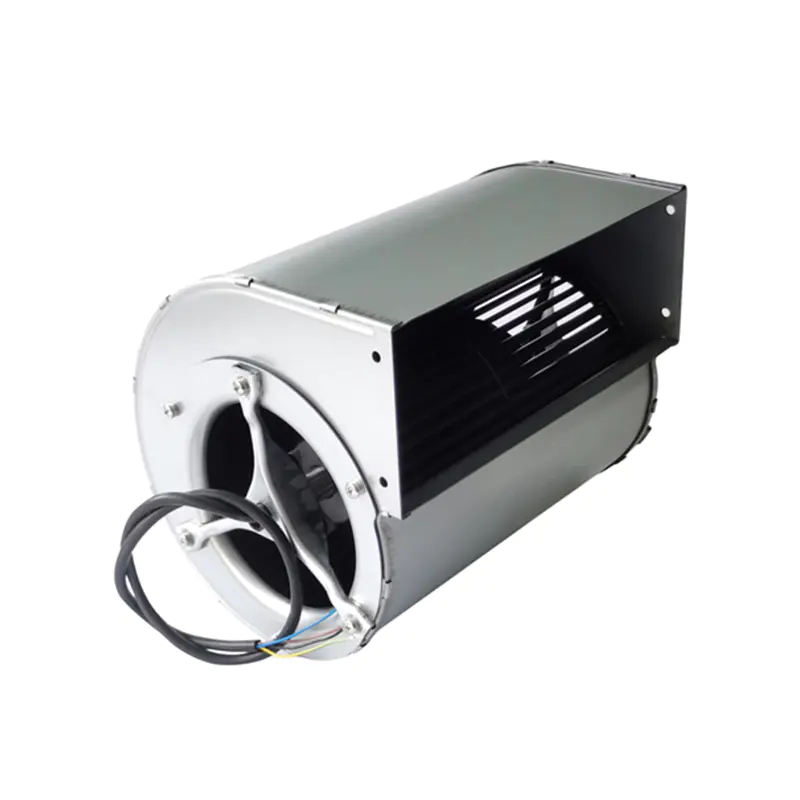
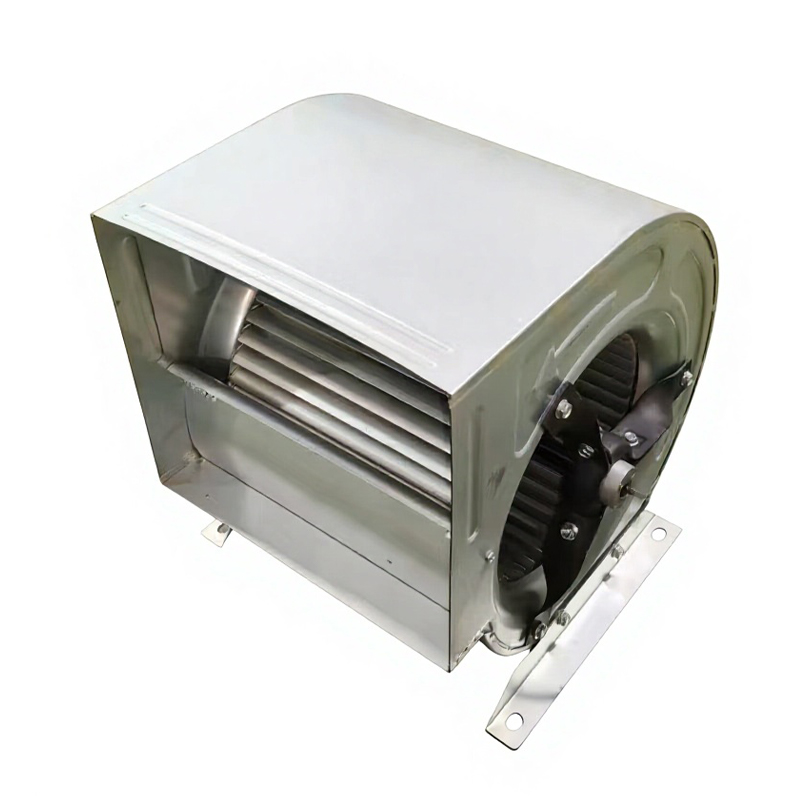
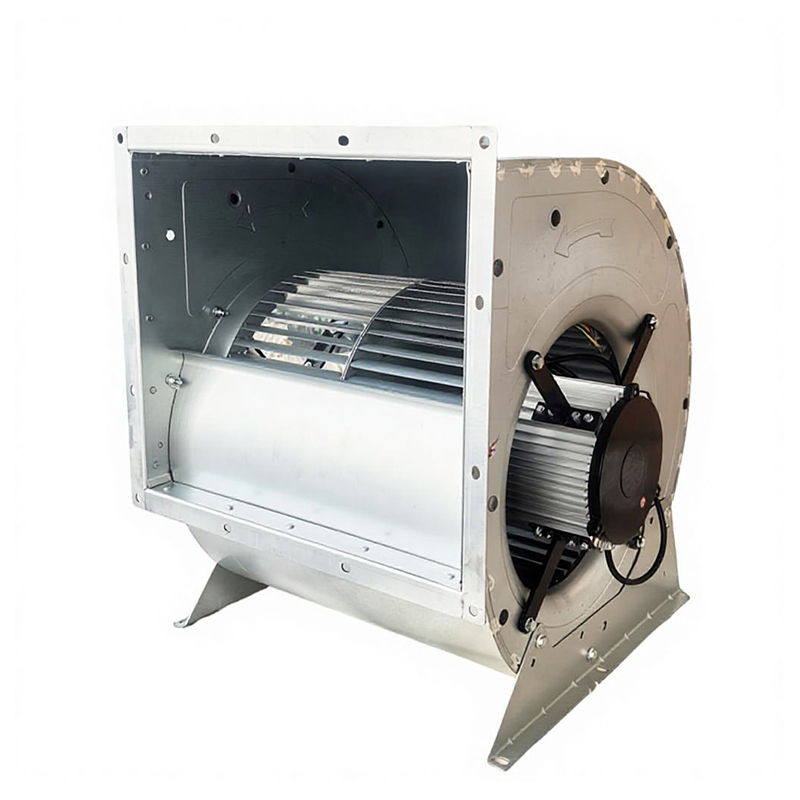
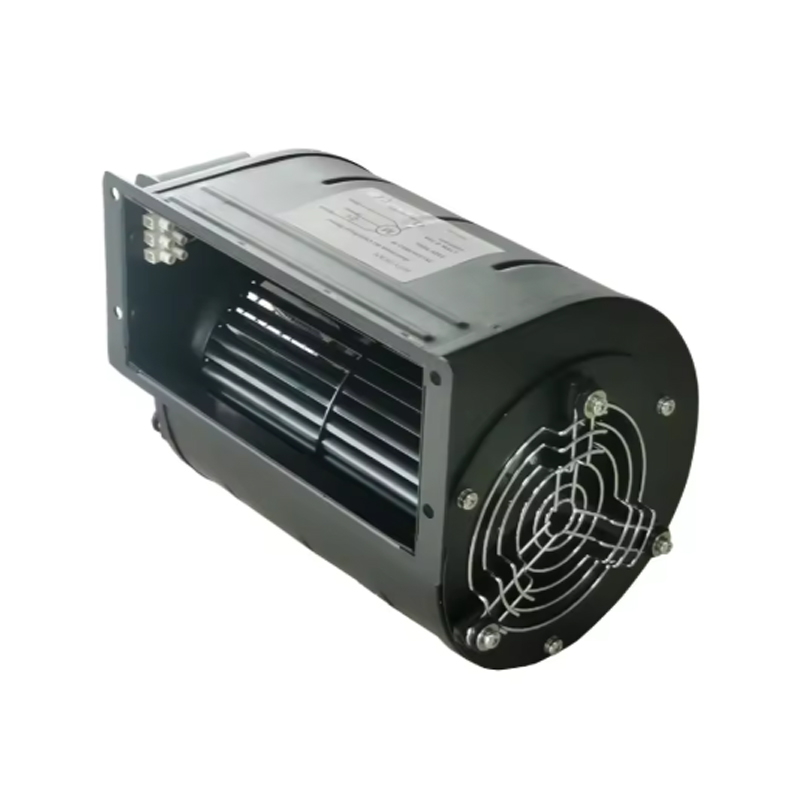
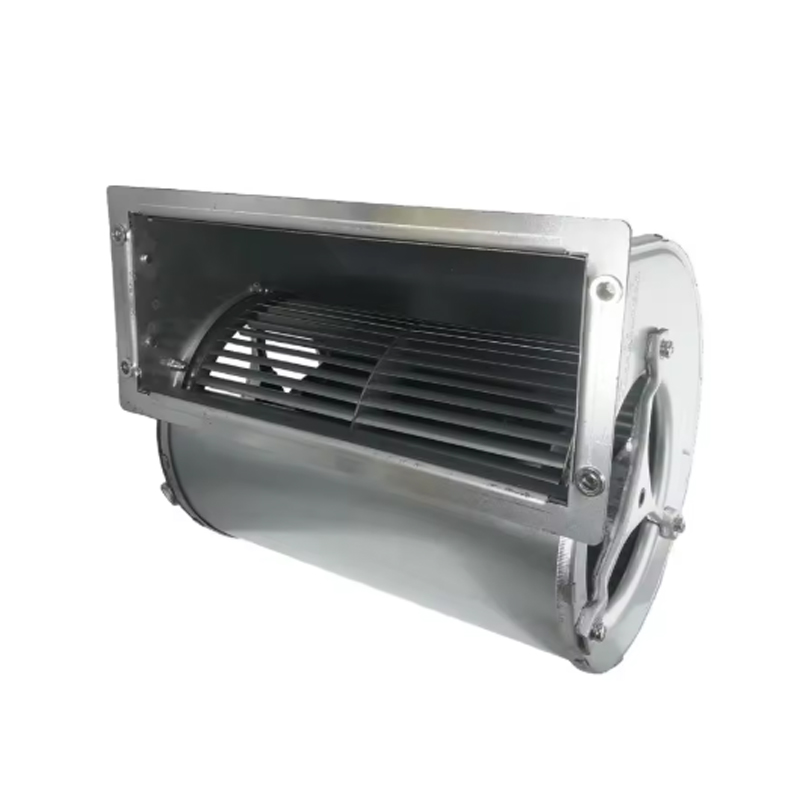
These centrifugal fan series combine backward-curved impellers, brushless EC motors or double-inlet designs to reduce aerodynamic and mechanical noise at the source, before any silencer or enclosure is added.
How Much Each Noise Source Typically Contributes
Because aerodynamic and installation noise together account for roughly 60% of the total, they are usually the first two areas to address - through impeller choice, correct sizing and clean inlet conditions - before spending on an acoustic enclosure to deal with what is left.
Target Noise Levels by Application
There is no single "quiet enough" number - the right target depends on how close people work to the fan and how sensitive the space is to background sound.
Typical design targets for sound pressure level near the fan or at the nearest occupied point; local codes and client specifications should always take precedence.
How Fan Noise Is Measured and Verified
Sound Power Level
A property of the fan itself, independent of the room or distance. This is the figure that should appear on a manufacturer's datasheet and the one used to compare fans fairly.
Sound Pressure Level
What a person or a meter actually experiences at a given point. It depends on distance from the fan, the room's acoustic behavior, and any barriers in between.
Test Standards
Sound power is normally certified in a reverberant or semi-anechoic chamber following AMCA 300 in North America or the ISO 13347 and ISO 3745 series internationally.
A Practical Checklist for Specifying Low-Noise Fans
- Confirm the target sound pressure level in dB(A) at the actual installation distance, not only the fan's rated sound power.
- Select the impeller type - backward-curved for efficiency-critical, low-noise duty - before choosing the motor type.
- Size the fan to its design duty point; avoid oversizing and throttling airflow with a damper.
- Specify an EC motor with speed control wherever the load varies through the day.
- Add inlet and outlet silencers plus flexible connectors on any ducted installation.
- Isolate the fan from the building structure with vibration mounts, particularly on rooftop or mezzanine installations.
- Ask for third-party sound power test data rather than relying on motor nameplate figures alone.
None of these methods works in isolation - the fans that end up genuinely quiet in the field are the ones where impeller design, motor technology and system-level treatment were all considered at the specification stage, not added afterward as a fix. Jiale's EC centrifugal fan, backward centrifugal fan and AC centrifugal fan ranges are built around exactly these principles, giving buyers a starting point that already reduces noise at the source.
 ENG
ENG
