
 English
 Español

Content
A 900 CFM variable air volume terminal box lands on your desk with one line at the bottom of the schedule: fan supplied by others. That line is where project weeks quietly disappear, because somebody still has to decide what moves the air and how much pressure it has to overcome.
Short answer first: HVAC stands for heating, ventilation, and air conditioning, and an HVAC system is the connected set of equipment that heats, cools, dehumidifies, filters, and distributes air through a building. The fan is one link in that chain, and it is usually the link that decides whether everything upstream performs as designed.
The sections below break the chain into the parts you actually specify, and flag where centrifugal fans and impellers change the outcome of a job.
What Counts as an HVAC System
HVAC covers four jobs, and a system is whatever combination of equipment performs them in a given space:
- Heating — a furnace, a boiler feeding terminal units, a heat pump, or a hot-water coil inside an air handler.
- Ventilation — outdoor air in, stale air out, often through the same ductwork that serves occupied rooms.
- Air conditioning — cooling and dehumidifying the air stream with a DX coil or chilled water.
- Air distribution — the fans, ducts, dampers, and filters that carry treated air to where people sit.
Two points clear up most procurement confusion. In everyday speech, air conditioning means cooling only; inside the trade it means full conditioning of air, humidity and filtration included. And a component is not a system — a centrifugal fan in a housing moves air, but on its own it heats nothing and cools nothing.
Components: What Sits Where
Almost every system, from a wall-mounted split to a rooftop unit, is assembled from the same short list of parts. The differences lie in size, control, and how many zones the equipment must serve.
| Component | Primary job | Where you normally find it |
|---|---|---|
| Heating source | Adds heat to the air stream or to water | Closet furnace, mechanical-room boiler, outdoor heat pump |
| Cooling coil | Removes heat and moisture from the air | Inside the air handler or a ceiling cassette |
| Air handling unit | Houses the fan, coils, filters, and mixing dampers | Mechanical room, rooftop curb, or ceiling void |
| Supply fan | Moves air against total system resistance | Inside the air handling unit or a separate fan box |
| Ductwork and dampers | Carries and balances air to each zone | Above ceilings, in shafts, in floor plenums |
| Filters | Traps dust before it reaches coils or occupants | Upstream of the fan and at terminal diffusers |
| Controls and sensors | Matches output to demand hour by hour | Thermostats, VAV boxes, automation panels |
Read this as a chain rather than a checklist. Every filter, coil, and damper you add raises the resistance the supply fan pushes against, and that resistance — not the airflow figure — is what usually forces a fan change late in a project.
Air Movement Is Where Specifications Go Wrong
Fan selection begins with two numbers: design airflow in CFM or m³/h, and the static pressure the system imposes in inches of water gauge or pascals. A fan rated at 900 CFM at 0.2 in. wg will not deliver 900 CFM at 0.8 in. wg, whatever the catalogue headline says. High-efficiency filters, long duct runs, and shallow ceiling voids all push that second number upward.
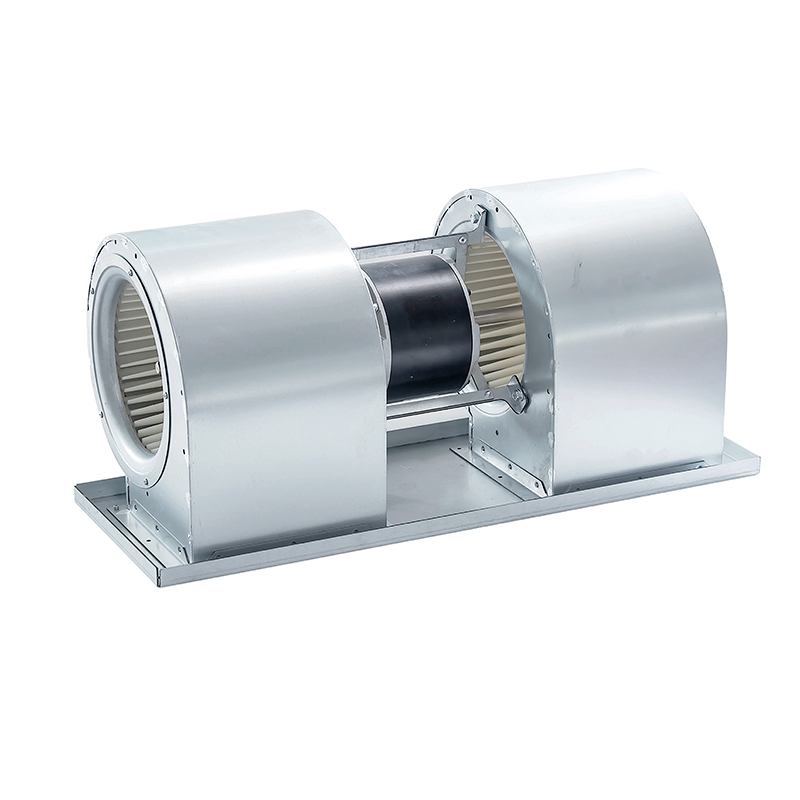
Impeller shape sets the character of the fan. Forward-curved multi-blade wheels move a lot of air from a compact housing and stay quiet, which is why they dominate ceiling-void air handlers. Backward-curved wheels handle higher static pressure at better efficiency and tolerate dirtier airstreams. Single-inlet fans suit tight duct connections; double-inlet versions pull from both sides for more flow in the same footprint.
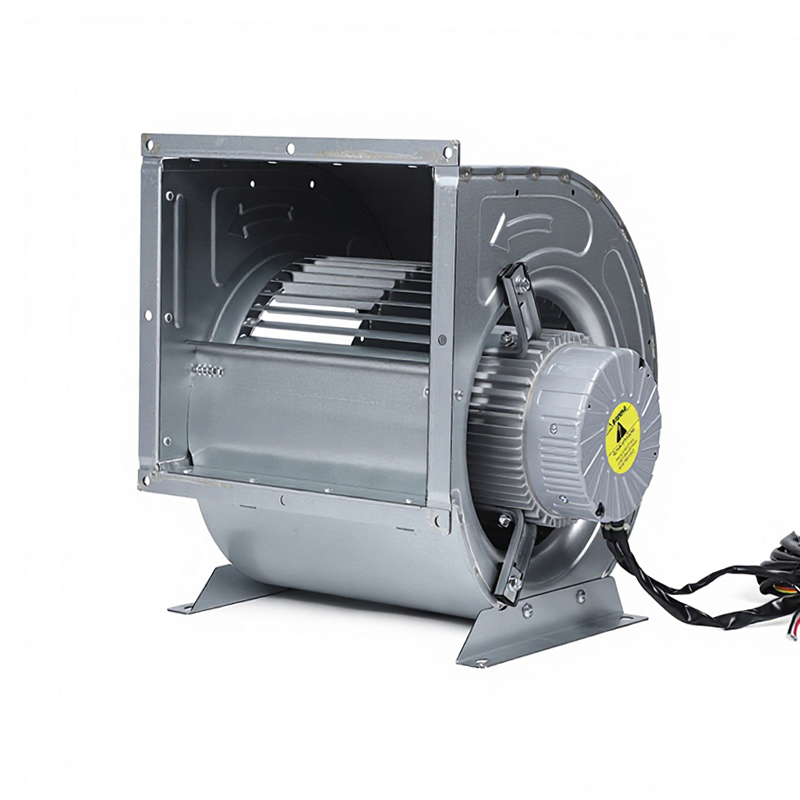
Motor choice decides how the system behaves after commissioning. A single-phase AC motor is the straightforward option for constant-volume duty. An EC motor with 0-10V or Modbus control lets the fan track real demand, which matters where a terminal box spends most of its life at part load. This overview of EC centrifugal fans covers the practical trade-offs:
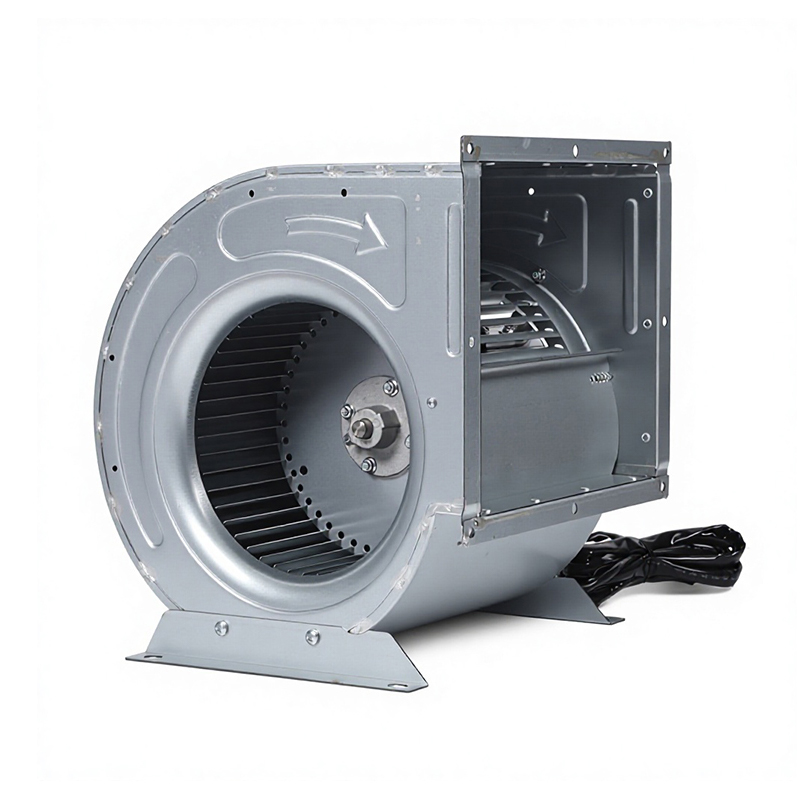 SYZ 9-9 Variable-Speed EC Centrifugal Fan for HVACVariable-speed EC centrifugal fan with 200–1100 RPM, 1000 W direct-drive motor, and forward-curved impeller for HVAC ventilation and demand-based airflow.View Product →
One caution worth repeating: an EC fan and an AC fan of nominally the same size are not interchangeable on a submittal. Control wiring and speed signal type differ, and swapping one for the other late in the process usually means re-issuing drawings.
The System Types You Will Meet in Practice
Configuration is mostly a question of how many zones the building needs and how much space exists for equipment. The air-moving hardware changes with it.
| System type | How it conditions air | Air-moving hardware | Typical fit |
|---|---|---|---|
| Split system | Outdoor condenser paired with an indoor coil and air handler | Forward-curved centrifugal fan in the air handler | Homes, small offices, single zones |
| Packaged rooftop unit | All components in one weatherproof cabinet | One or two centrifugal fans, sometimes a separate exhaust fan | Retail, light commercial, low-rise buildings |
| VRF / VRV | Refrigerant piped to cassettes or slim ducted units | Small centrifugal blowers in each indoor unit | Hotels, offices with many independent zones |
| Chilled-water AHU with VAV boxes | Central plant makes chilled water; the AHU delivers treated air | Large double-inlet centrifugal fan in the AHU, small fan at each box | Campuses, hospitals, larger commercial buildings |
| Dedicated outdoor air system | Conditions outdoor air only, then hands it to terminal equipment | Centrifugal fan sized for constant or modulated outdoor airflow | Tight buildings with separate heating and cooling |
The decision usually comes down to zoning needs, ceiling depth, and how much the owner wants to spend on controls. Fan count follows from that, not the other way round.
How Buyers Narrow the Choice
Most purchase decisions come down to six numbers and one drawing. Collect them before you contact a supplier:
- Design airflow in CFM or m³/h at the real operating condition.
- External static pressure in inches of water gauge or pascals, with filters and coils included.
- Available power — 115V, 230V single phase, or 380/400V three phase.
- Sound limit, normally dBA measured at a stated distance from the unit.
- Physical envelope: diameter, height, discharge direction, mounting orientation.
- Airstream and ambient temperature the motor, bearings, and impeller must survive.
Then check the tolerance that catches people out. A nominal 160 mm fan will not drop into a 160 mm opening once mounting brackets, grommets, and cable entry are counted. Leave 5 to 10 mm of clearance, and confirm discharge orientation from the drawing rather than the product photo.
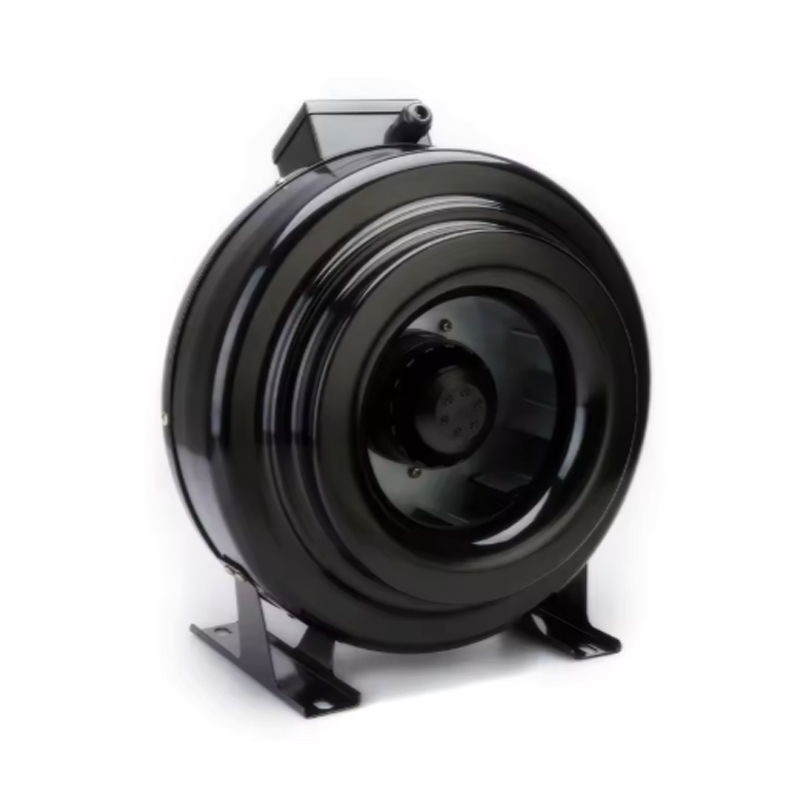
Where duct runs are long or a filter bank sits upstream of the fan, selection tends to land on a high-static-pressure single-inlet design rather than a standard compact unit:
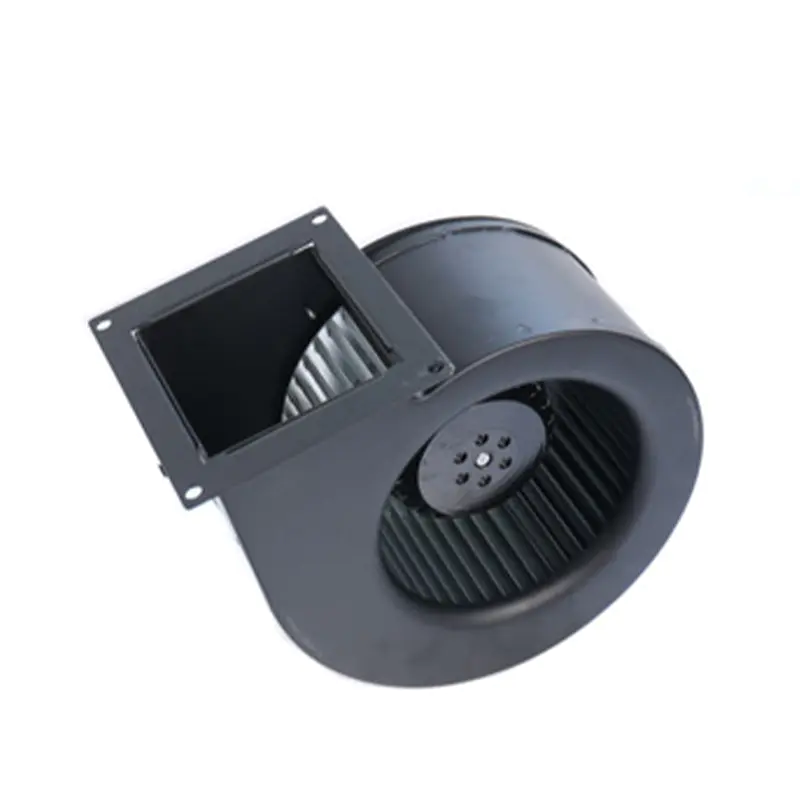
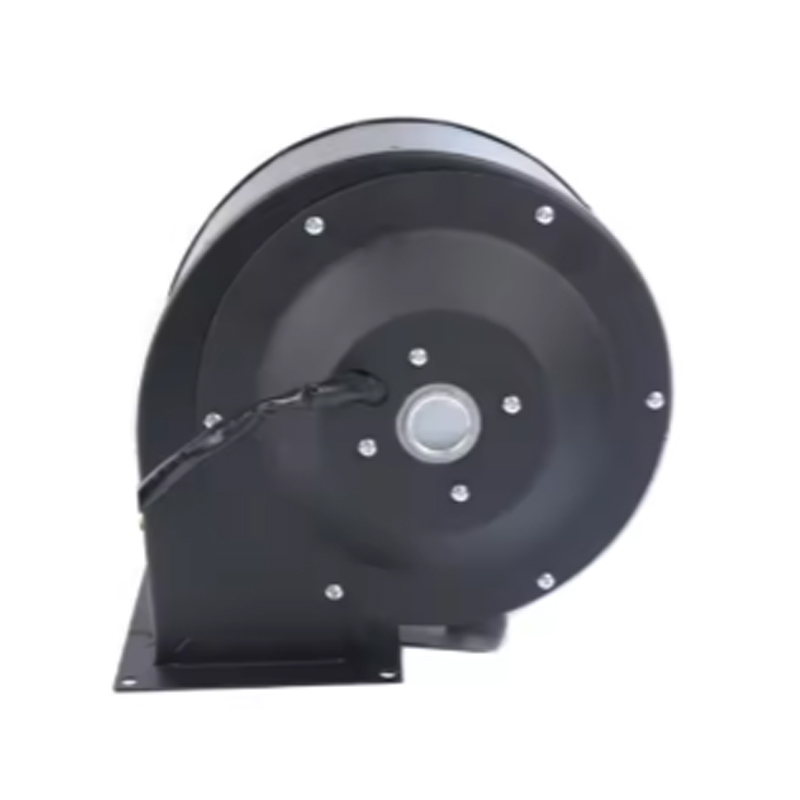 High Static Pressure Single-Inlet Duct-Mounted AC Centrifugal FanDuct-mounted AC centrifugal fan with volute impeller, up to 200 Pa static pressure, 500 m³/h airflow, and three speed modes for long duct runs.View Product →
Where Centrifugal Fans and Impellers Fit In
In most commercial systems the fan sits in one of three places: inside an air handling unit, inside a fan box or terminal unit, or directly in the duct as a booster. Centrifugal fans dominate all three because they generate usable pressure inside a housing that fits a rectangular ceiling void.
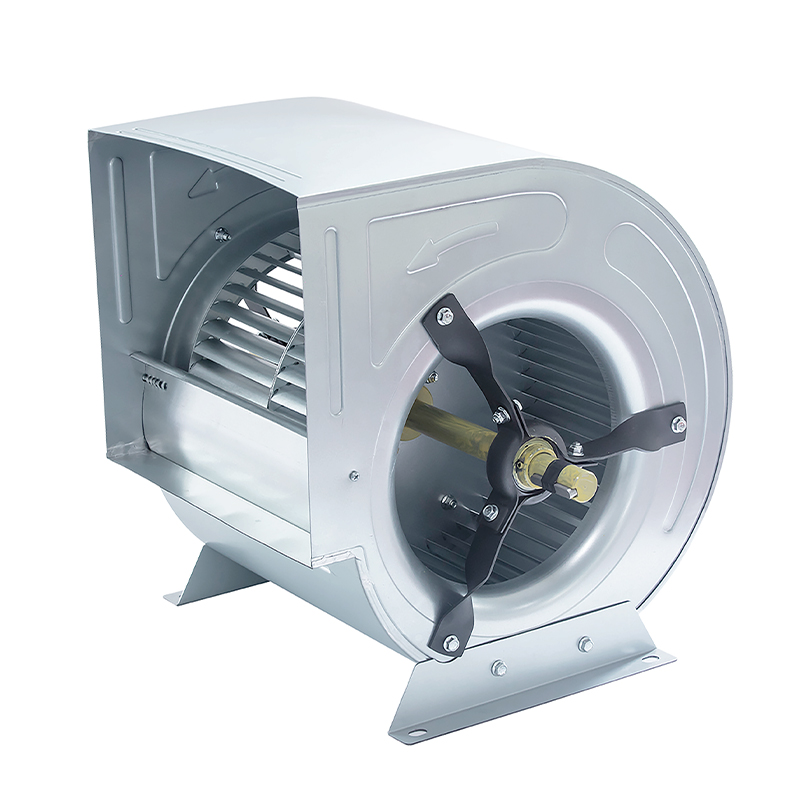
Direct-drive arrangements — impeller mounted straight onto the motor shaft — remove belts, pulleys, and the maintenance that goes with them. In air-conditioning duty, a 600 W direct-drive AC centrifugal fan sized for a terminal unit is a common building block, and it shows the pattern: fixed speed, single-phase supply, compact housing, and a forward-curved wheel chosen for quiet operation.
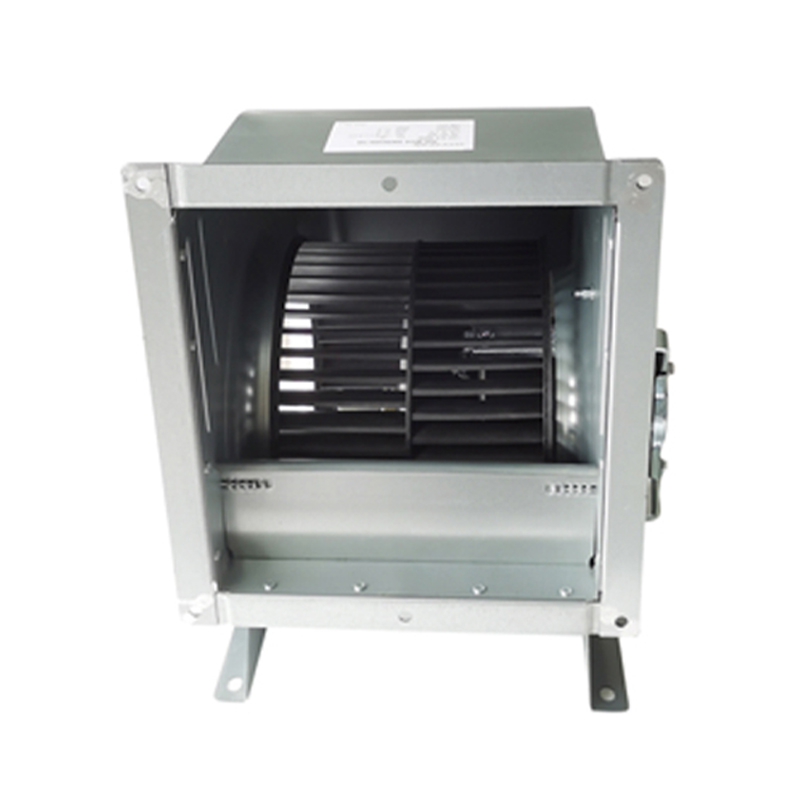 LKZ 10-8-600W Direct-Drive AC Centrifugal Fan for Air ConditioningDirect-drive AC centrifugal fan with IP54 aluminum housing, Class F insulation, and optional vertical bracket for exhaust cabinets, air exchange, and HVAC systems.View Product →
Impellers are also a service item. SGCC steel wheels, single- and double-inlet versions, and motor-compatible hubs with standard shaft bores exist so a damaged wheel can be replaced without scrapping the whole assembly.
Frequently Asked Questions
What does HVAC stand for?
Heating, ventilation, and air conditioning. The term describes both the equipment and the discipline that keeps indoor air at a usable temperature, humidity, and cleanliness.
Is a fan on its own an HVAC system?
No. A fan moves air. It becomes part of an HVAC system once it is connected to heating, cooling, filtration, and a duct network that delivers conditioned air to occupied space.
AC or EC motor — which should I specify?
For constant-volume duty with a fixed airflow requirement, a single-phase AC motor is usually the simpler and cheaper answer. When flow has to vary with load — VAV boxes, demand-controlled ventilation, pressure-controlled duct systems — an EC motor with a 0-10V or bus signal pays for itself in controllability and energy use.
The Short Version
HVAC systems heat, cool, ventilate, clean, and move air, and every one of those jobs adds resistance to the fan pushing the air through. Match the fan to design airflow, total static pressure, power supply, envelope, and sound limit, and decide whether the load is constant or variable before choosing between an AC and an EC motor.
If you are at the submittal stage and want a second opinion on a duty point or an impeller size, send us the schedule line and the fan curve you are working from and we will tell you where the selection is comfortable and where it is tight.
 ENG
