What are the main structural components of EC Centrifugal Fans?
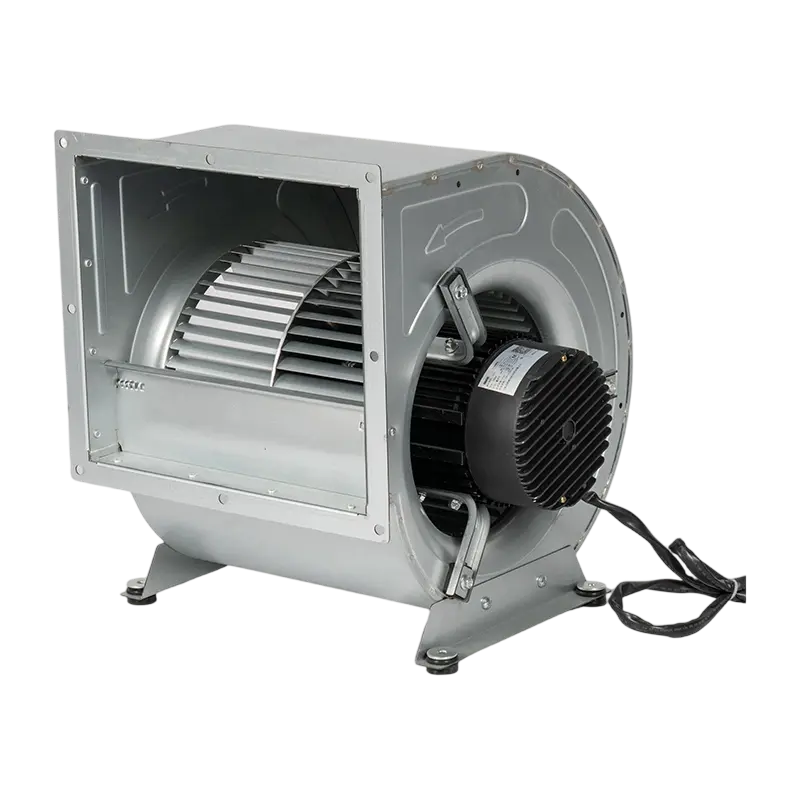
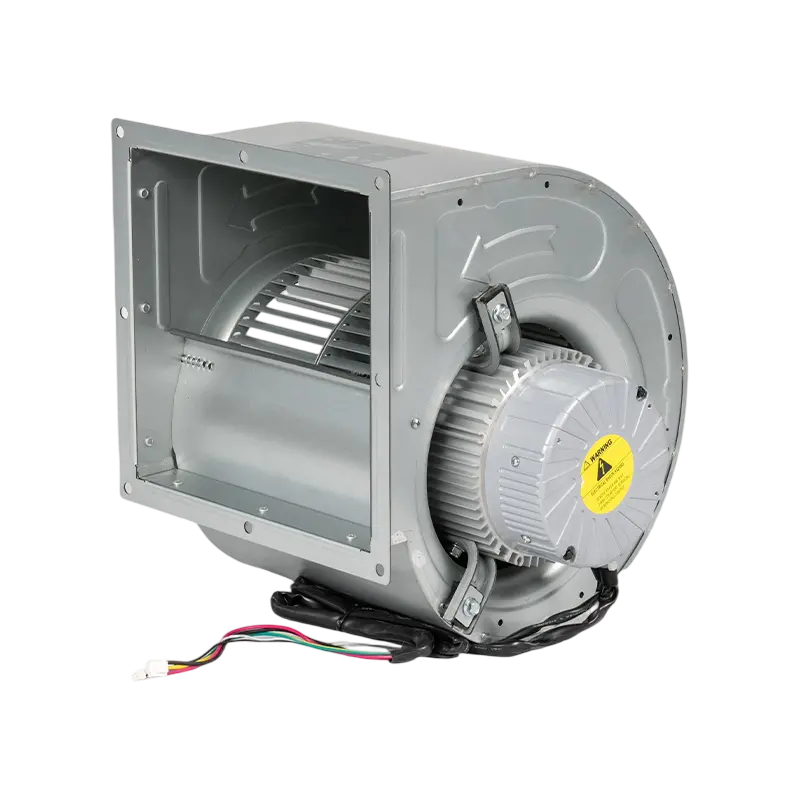
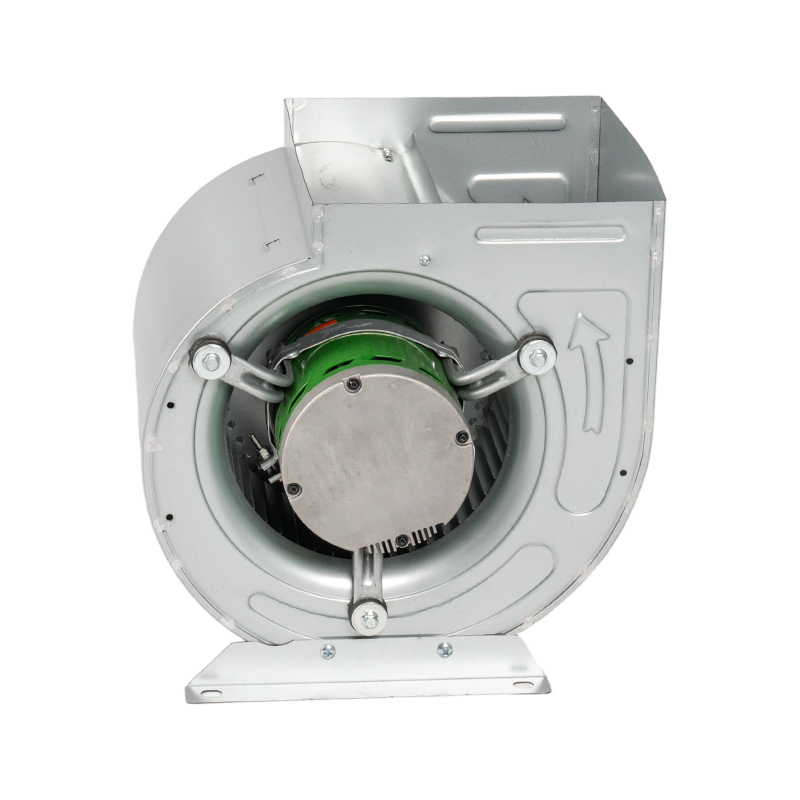
EC Centrifugal Fans are not simply a combination of a motor and a fan; they are composed of various high-efficiency modular components, forming a compact and easy-to-maintain overall structure.
1. External Rotor EC Motor: Utilizes brushless DC technology to directly drive the impeller, achieving efficient power transmission without mechanical commutation.
2. Backward-Inclined/Reverse-Curved Centrifugal Impeller: Employs a multi-blade design; the number and shape of the blades determine the fan's pressure and flow characteristics.
3. Volute (Vortex Casing): Converts the high-speed airflow generated by the impeller into static pressure; it is often equipped with sound-absorbing pads to reduce noise.
4. Support and Mounting Platform: Includes a base, bracket, and vibration damping devices to ensure stability and low vibration during high-pressure operation.
5. Modular Bracket Plate: Employs a plug-and-play structure for easy and rapid on-site installation and maintenance.
| Component |
Function Overview |
| External‑rotor EC Motor |
Electronic commutation drive, improves energy efficiency and control precision |
| Backward‑curved Centrifugal Impeller |
Generates high static‑pressure airflow, suitable for high‑pressure ventilation |
| Inlet Guide Vanes |
Uniformly guide air into the impeller, reducing inlet losses |
| Diffuser / Volute (Housing) |
Converts kinetic energy into pressure energy, forming a stable airflow |
| Casing / Housing |
Provides structural protection, dust and noise shielding |
| Support Structure / Base |
Load‑bearing and vibration damping, ensuring safe operation |
Does the noise level of EC Centrifugal Fans meet low-noise requirements?
Low noise is a core requirement of modern HVAC systems, and EC centrifugal fans offer multiple advantages in noise control.
1. Brushless motor design: Eliminates noise generated by mechanical commutation, resulting in smooth operation and a low noise floor.
2. Internal sound insulation structure: Sound insulation pads are installed inside the volute, and sound insulation cotton is provided in the air outlet duct, achieving multi-stage noise reduction.
3. Optimized blades and flow channels: The use of multi-blade blades and an optimized volute significantly reduces airflow impact noise, with actual operating noise reaching below 70dB.
4. Overall system noise reduction measures: Through the design of vibration damping brackets and soundproof enclosures, structural vibration noise is further suppressed.
Based on the above technologies, EC centrifugal fans can easily meet the "low noise" standard and are widely used in noise-sensitive scenarios such as hospital operating rooms, laboratories, and hotel rooms. Ningbo Haoyue, with its in-depth optimization of noise control, provides customers with customized products that meet stringent noise requirements.
Why are EC Centrifugal Fans more energy efficient than traditional AC centrifugal fans?
Energy Efficiency Advantages – Why EC Centrifugal Fans are More Efficient than Traditional AC Fans
The energy efficiency improvement of EC centrifugal fans primarily stems from the synergistic optimization of motor, drive, and aerodynamic design.
High-Efficiency Brushless DC Motor: Motor efficiency ranges from 80% to 90%, significantly higher than the maximum 75% of traditional three-phase induction motors.
1. Digital Drive and Precise Speed Control: Utilizing a digital brushless drive enables precise speed control, achieving up to 30% efficiency improvement under partial load.
2. Reduced Power Conversion Losses: Employing high-frequency power devices such as SiC MOSFETs significantly reduces switching losses, resulting in improved overall system energy efficiency.
3. Modular Design Reduces Accessory Losses: Plug-and-play brackets and a compact structure reduce pipe resistance and installation errors, improving aerodynamic efficiency.
These technological advantages enable EC centrifugal fans to consume significantly less energy than traditional AC fans under the same airflow and static pressure conditions, helping users achieve long-term savings in operating costs. Ningbo Haoyue has a complete supply chain and technical support for the selection and matching of EC motors and drive systems, enabling it to provide efficient and reliable energy-saving solutions for global customers.
Frequently Asked Questions (FAQ)
Q1: Which HVAC systems and scenarios are EC centrifugal fans suitable for?
A: They are ideal supporting products for various ventilation and air conditioning scenarios, including variable air volume (VAV) air conditioning units, ducted air conditioning units, HVACR systems, fresh air systems, air purification equipment, cleanroom fan filter units (FFUs), and data center cooling.
Q2: What key parameters should be considered when purchasing EC centrifugal fans?
A: These mainly include impeller diameter, rated speed, airflow range, static pressure, efficiency, noise level, power, control method (0-10V, PWM, RS485), and protection rating (IP54).
Q3: How do Ningbo Haoyue Fan Manufacturing Co., Ltd.'s EC centrifugal fans perform in terms of energy efficiency and noise?
A: The products adopt high-efficiency EC motors and optimized impeller design, achieving an energy efficiency improvement of over 30%; the noise level is as low as 55dB(A), significantly lower than traditional AC centrifugal fans at the same airflow.
Q4: How to perform daily maintenance and fault diagnosis of EC centrifugal fans?
A: Due to the use of brushless EC motors, maintenance-free bearings, and anti-stalling protection, daily maintenance only requires checking impeller cleanliness, bearing lubrication (if applicable), and motor overload, overcurrent, and stall alarms. In case of faults, operating parameters can be read through the built-in signal feedback or RS485 interface for diagnosis.

 English
 Español


 ENG
ENG
