
 English
 Español
Content
- 1 How an AC Centrifugal Fan Actually Moves Air
- 2 Airflow, Pressure, and Noise: The Numbers That Matter
- 3 AC Centrifugal Fans vs Conventional Centrifugal Fans
- 4 AC Centrifugal Fan Product Series
- 5 How to Choose the Right Model for Your System
- 6 Installation and Maintenance Practices That Extend Service Life
- 7 Diagnosing Electrical Faults Before They Become Failures
- 8 Where AC Centrifugal Fans Are Used
- 9 Frequently Asked Questions
An AC centrifugal fan moves air by spinning an impeller inside a scroll-shaped housing, using a single-phase, direct-coupled AC motor instead of a belt drive. Airflow rises in direct proportion to rotational speed, while noise climbs far faster — roughly with the 4.8th power of speed — so the fastest way to size a unit correctly is to match required air volume first, then use frequency control to hold noise inside the target range rather than simply choosing a bigger motor.
How an AC Centrifugal Fan Actually Moves Air
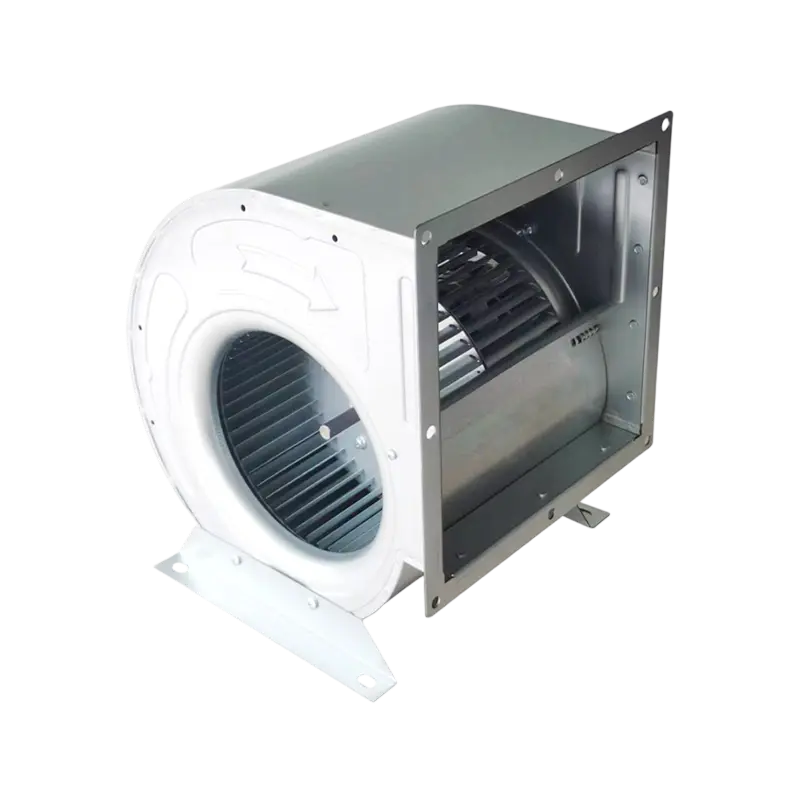
Unlike axial fans that push air straight through a tube, a centrifugal fan pulls air in along the impeller's axis and throws it outward at 90 degrees into a volute casing. This design lets the fan build meaningful static pressure, which is why centrifugal fans dominate ducted systems where air has to travel through filters, coils, and bends before reaching a room.
Two structural choices define most AC centrifugal fans on the market today:
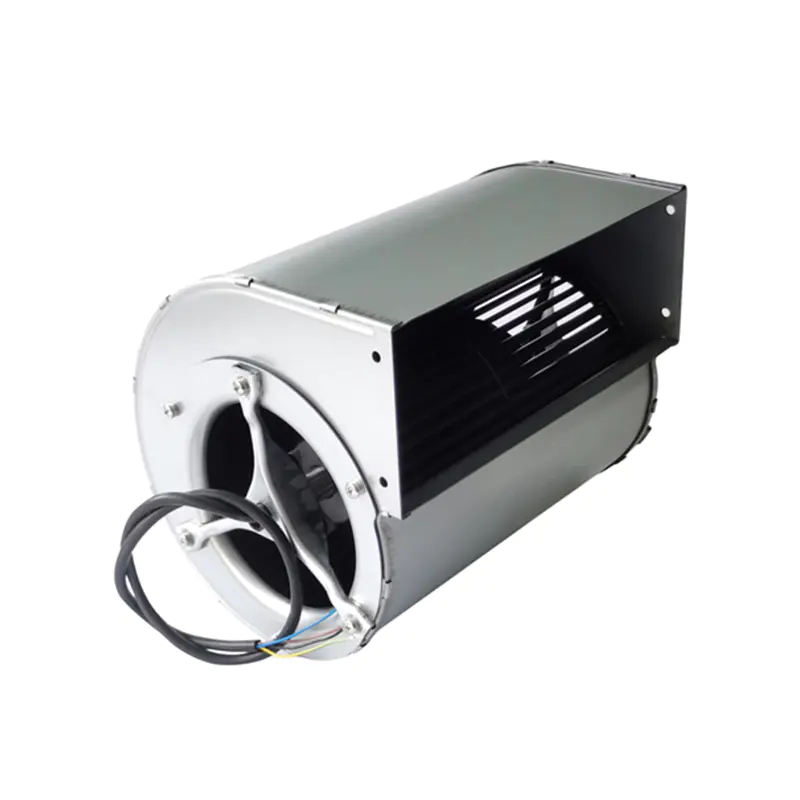
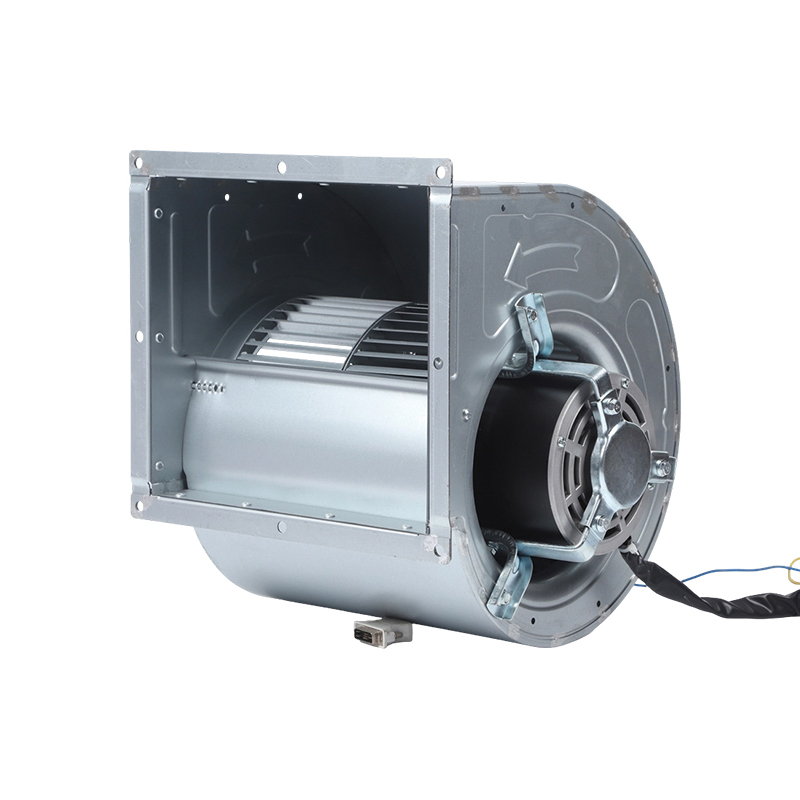
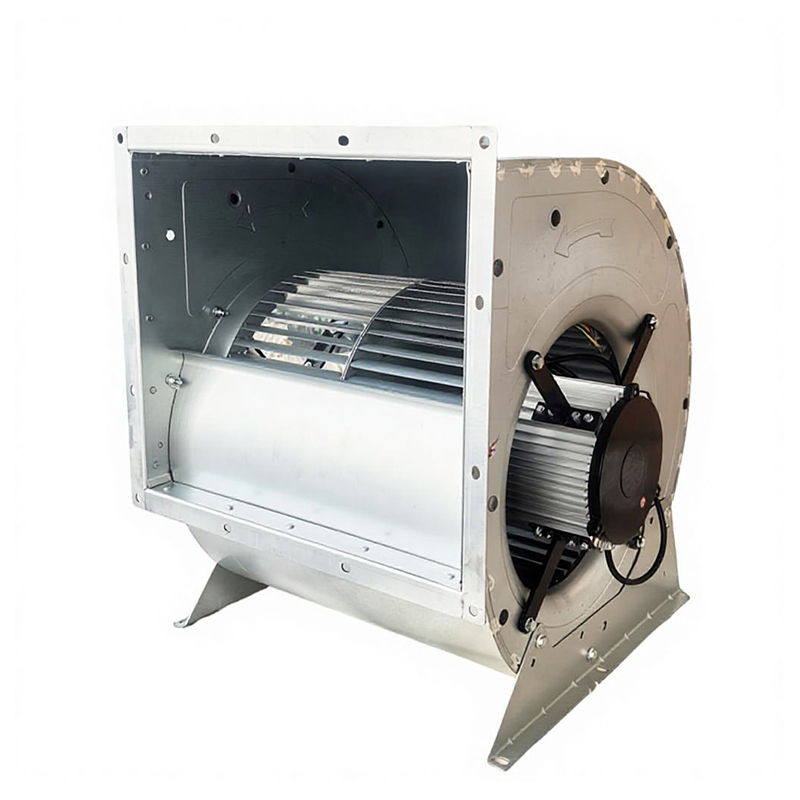
- External rotor motors — the motor shell rotates with the impeller, giving a shorter, more compact assembly common in models such as DDM 160-250 or YDK 160-60 units.
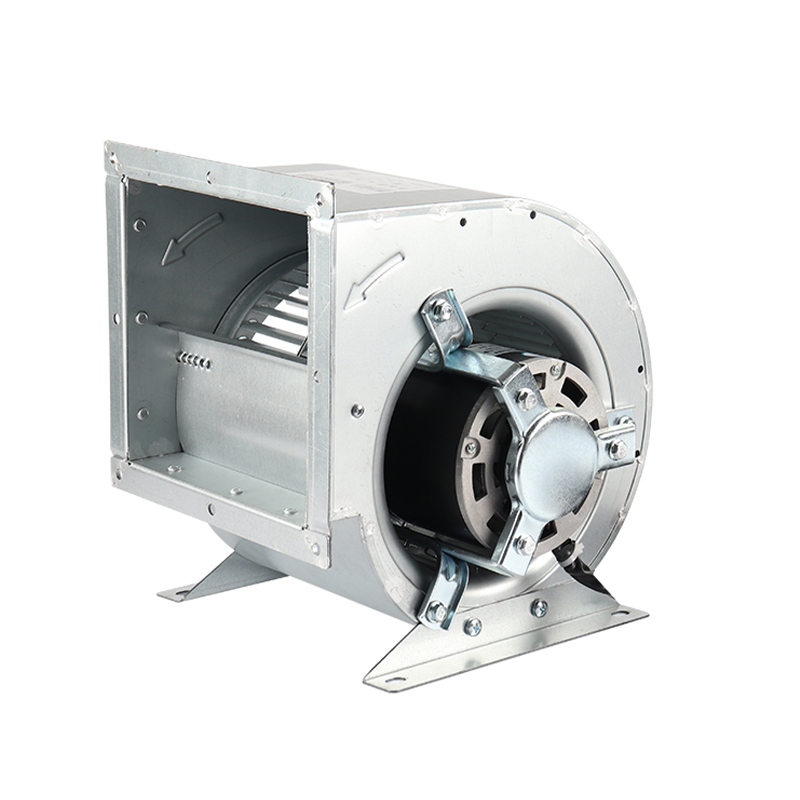
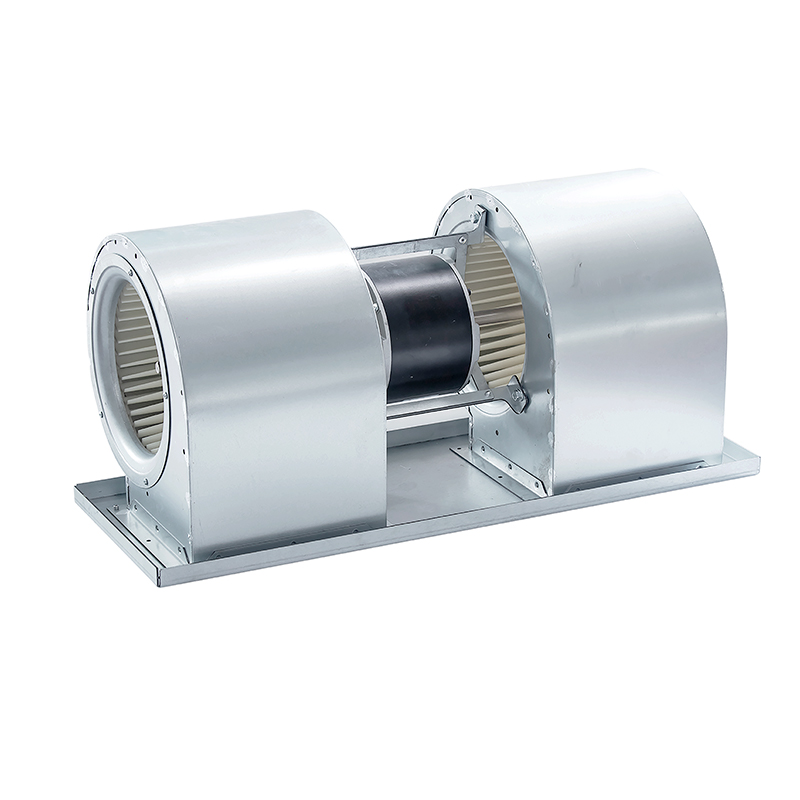
- Direct-coupled single-inlet or dual-inlet impellers — dual-inlet designs pull air from both sides of the wheel, roughly doubling airflow for the same wheel diameter, which is why dual-inlet models like the DDM 130-190 series are popular in wide duct sections.
Airflow, Pressure, and Noise: The Numbers That Matter
Fan performance is governed by three fan laws that any purchasing engineer should keep close at hand:
| Airflow (Q) | Changes in direct proportion to rotational speed — Q is proportional to N |
| Static pressure (P) | Changes with the square of rotational speed |
| Sound power (L) | Changes with roughly the 4.8th power of rotational speed — doubling speed can raise noise by around 27 times |
This is why a fan spec sheet that only lists a headline airflow number is incomplete. At high speed, eddy-current noise dominates in the 500Hz to 2kHz band — the range human ears are most sensitive to — while at low speed the noise character shifts toward rotational tones. A well-optimized AC centrifugal fan can reach a specific sound power level as low as 24dB at its best efficiency point, which is only achievable when the impeller geometry and speed are tuned together rather than the motor simply being oversized.
Practical takeaway for selection: define the airflow you need first, check the pressure the ductwork demands, then apply variable frequency control to trim the speed down to the quietest point that still satisfies both numbers.
AC Centrifugal Fans vs Conventional Centrifugal Fans
Buyers frequently confuse "AC centrifugal fan" with any generic centrifugal blower. The practical differences show up in drive method, control, and long-term running cost.
| Drive Method | Single-phase direct-coupled AC or EC motor, no belt | Belt or gear-driven induction motor |
| Speed Control | Electronic or VFD, stepless adjustment | Fixed speed or manual damper only |
| Noise at Rated Point | Can reach roughly 24dB specific sound power | Typically higher due to unoptimized blade profile |
| Maintenance Interval | Longer, fewer moving parts to wear | Shorter, belt and pulley wear add service points |
| Best Fit | VAV systems, precision fresh-air units, clean rooms | General exhaust, cost-sensitive ventilation |
AC Centrifugal Fan Product Series
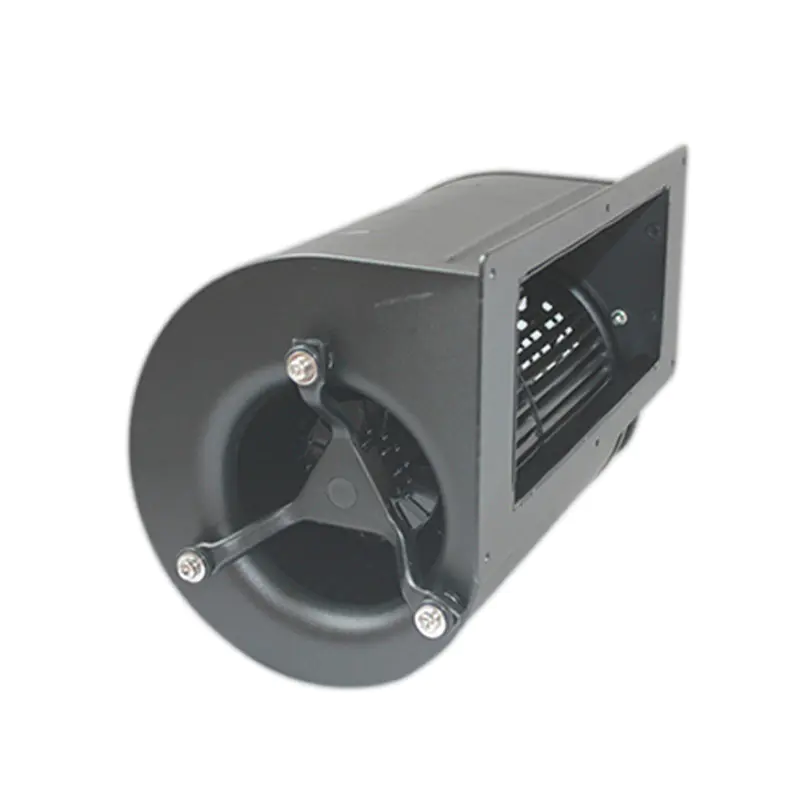
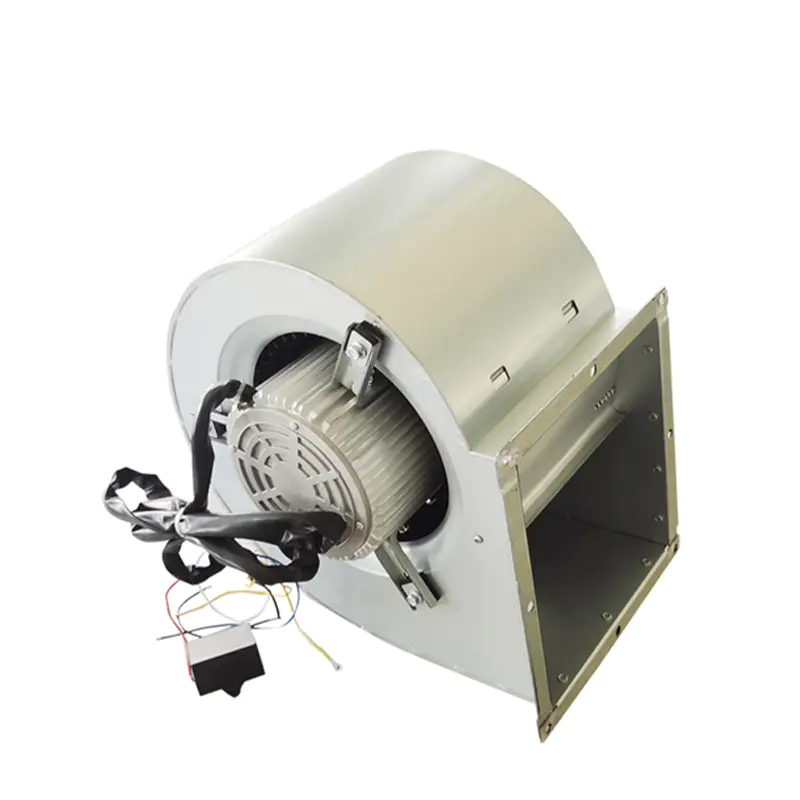
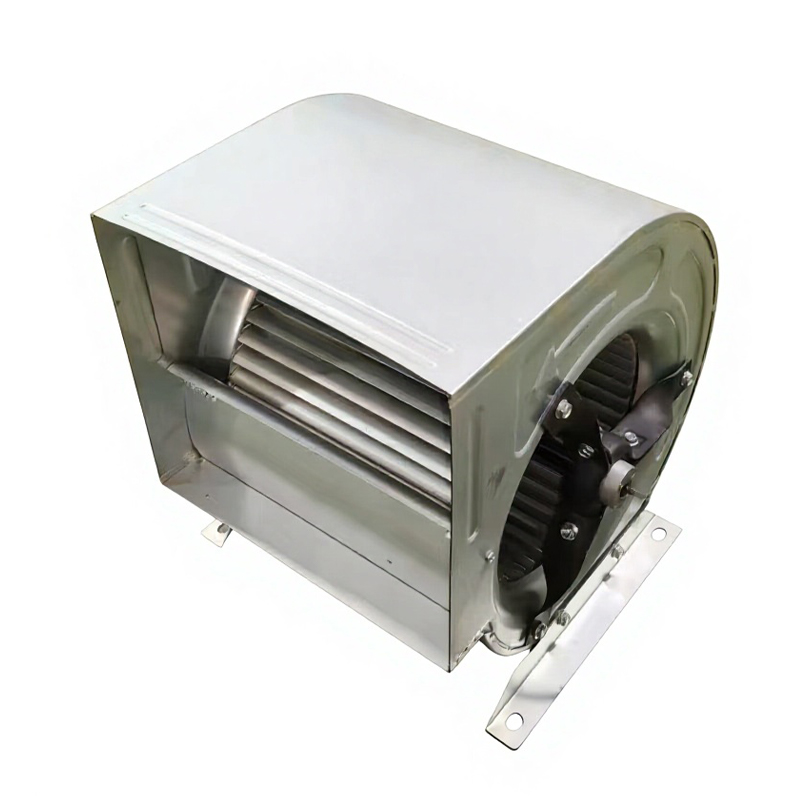
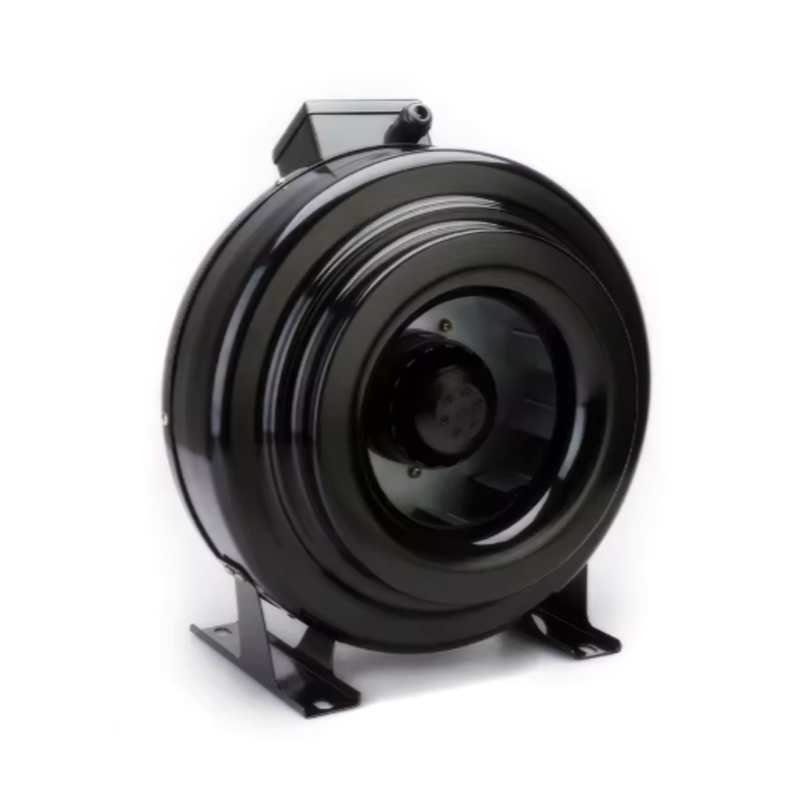
A snapshot of production models covering external-rotor, dual-inlet, and turbine-blade configurations, sized from small blower units up to high-output exhaust models for industrial ducting.
How to Choose the Right Model for Your System
Selection comes down to matching the fan to the ductwork, not just to the room size. Work through the checklist in this order:
- Calculate required airflow based on room volume or process exhaust demand, then add a 10 to 15 percent margin for duct leakage.
- Estimate system static pressure by adding resistance from filters, coils, dampers, and duct length — undersized pressure rating is the most common cause of underperformance in the field.
- Match the drive type — pick single-phase AC for simpler retrofit jobs and lower upfront cost, or EC motors when the application needs frequent airflow modulation and the lowest possible energy draw.
- Check the noise budget for the space — occupied offices and clean rooms need models tuned closer to the 24dB specific sound power class, while back-of-house exhaust runs have more tolerance.
- Confirm mounting geometry — external rotor units suit tight plenum spaces, while dual-inlet impellers fit wider duct cross-sections better.
Installation and Maintenance Practices That Extend Service Life
Most premature failures trace back to a handful of preventable issues rather than motor defects. A consistent maintenance routine keeps both airflow and noise close to the original spec sheet.
| Dust on impeller and volute | Every 1-3 months | Reduces airflow and unbalances the wheel, raising vibration and noise |
| Bearing lubrication check | Every 3-6 months | Prevents overheating and premature bearing wear |
| Insulation resistance test | Every 6-12 months | Readings below 1MΩ signal insulation aging and shock risk |
| Motor casing temperature | During routine inspection | More than 10 degrees C above rated value indicates a load or cooling problem |
| Wiring and phase sequence | After any reinstallation | Incorrect phasing can reverse impeller rotation and cause mechanical shock |
Always cut power before opening the housing, and inspect terminals for looseness or corrosion during every scheduled visit — a loose terminal is one of the fastest paths to an overheated motor casing.
Diagnosing Electrical Faults Before They Become Failures
Three fault categories account for the large majority of AC centrifugal fan electrical issues:
- Motor overload — shows up as elevated current draw and a noticeable temperature rise; usually caused by excessive load or a speed setting outside the design range.
- Insulation degradation — accelerated by humid or high-temperature environments, leading to leakage current or short circuits over time.
- Control system malfunction — a faulty inverter, contactor, or protective relay can cause erratic start and stop behavior even when the motor itself is healthy.
A simple three-step diagnostic sequence catches most problems early: visually inspect the casing and terminals for cracks, corrosion, or dust buildup; measure insulation resistance and confirm grounding continuity; then monitor the starting current waveform for abnormal spikes, which usually point back to inverter parameters rather than the motor windings.
Where AC Centrifugal Fans Are Used
The application list spans nearly every environment where conditioned or filtered air needs to move through ductwork under pressure:
- Variable air volume (VAV) terminal boxes in commercial HVAC systems
- Ducted air conditioning units and fresh-air makeup systems
- Air purification and filtration equipment requiring stable pressure across filter stages
- Electrical cabinet and industrial equipment cooling where compact external-rotor units fit tight enclosures
- Dehumidification and ceiling-mounted single-intake fan assemblies
Frequently Asked Questions
What airflow and pressure range do typical AC centrifugal fans cover?
Production ranges commonly span from around 400 to 40,000 cubic meters per hour, with static pressure from about 100 to 800 Pa and motor power from 0.5 to 5 kW, depending on wheel size and series.
Is a belt-driven fan ever a better choice?
Belt-driven units can still make sense for very high-pressure, cost-sensitive industrial exhaust where fine speed control is not required, but they trade away the compact size and stepless speed regulation that direct-coupled AC designs offer.
Does adding variable frequency control really change the noise outcome?
Yes — because sound power rises with roughly the 4.8th power of speed, even a modest reduction in operating speed through VFD control produces a disproportionately large drop in perceived noise, often without a meaningful loss in required airflow.
 ENG
ENG
