
 English
 Español
Content
- 1 What EC Actually Changes Inside the Motor
- 2 Main Structural Parts of an EC Centrifugal Fan
- 3 Energy Efficiency: The Main Reason EC Fans Exist
- 4 Featured EC Centrifugal Fan Models
- 5 Noise Performance Compared With AC Fans
- 6 Typical Applications for EC Centrifugal Fans
- 7 Key Specifications to Check Before Buying
- 8 EC Fan vs AC Fan: Quick Comparison
- 9 Maintenance and Fault Diagnosis Basics
- 10 Frequently Asked Questions
EC on a fan stands for Electronically Commutated. An EC fan uses a brushless DC motor with a built-in electronic control board instead of the mechanical brushes and windings found in a standard AC motor. This single change lets the fan reach higher motor efficiency, run at precisely controlled speeds, and operate with noticeably less noise than a traditional AC-driven unit.
What EC Actually Changes Inside the Motor
A conventional AC fan motor relies on the power grid's fixed frequency to set its speed, and it loses energy through mechanical commutation and slip. An EC motor replaces that mechanism with a digital drive board that switches current electronically, so the rotor is driven directly and smoothly across its full speed range. This is why EC centrifugal fans can be paired with 0-10V, PWM, or RS485 control signals and adjust output on the fly, rather than running at one fixed speed.
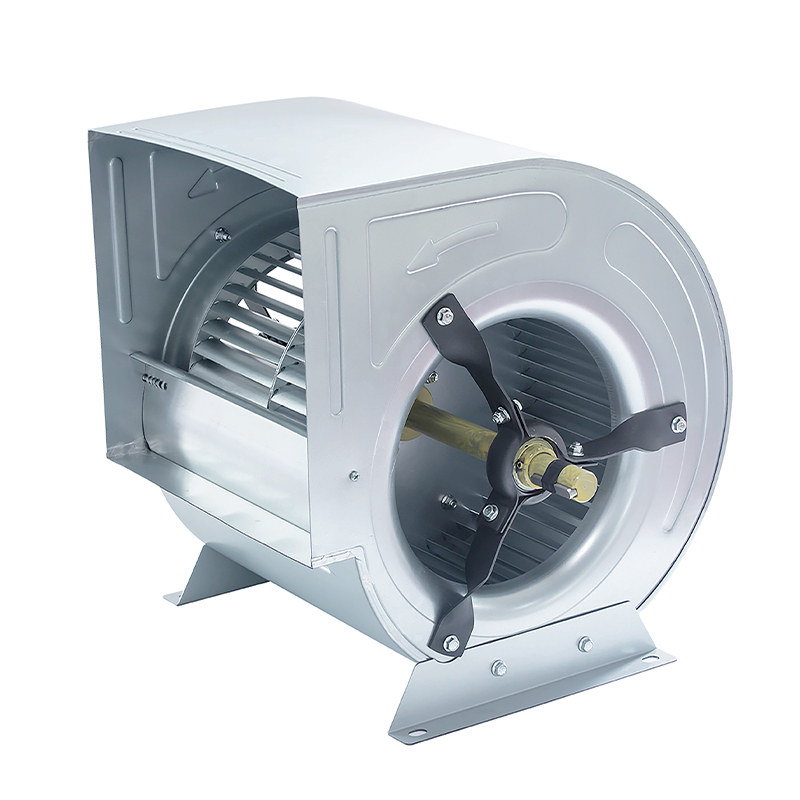
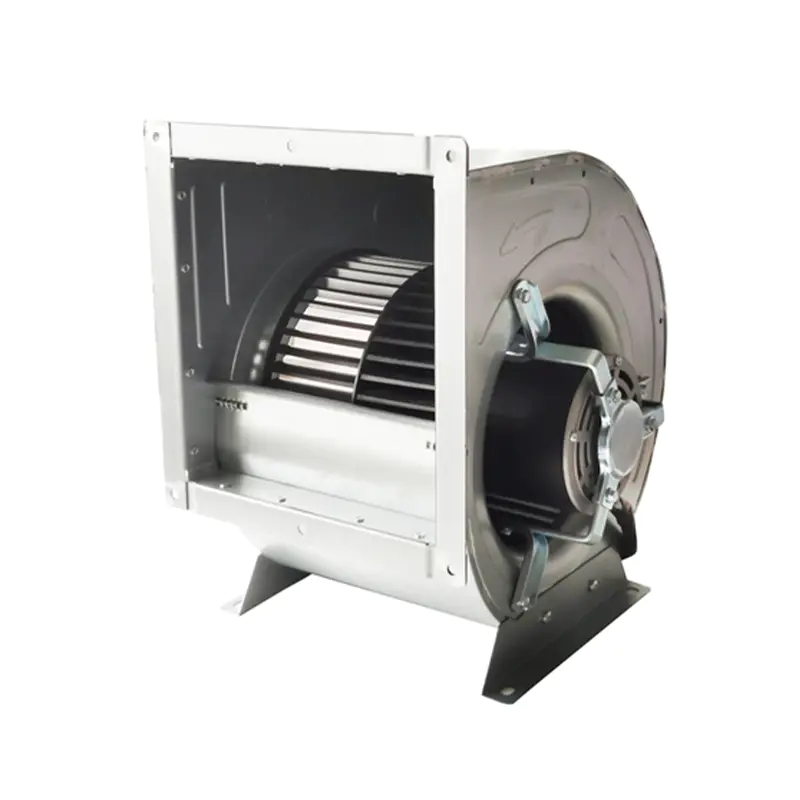
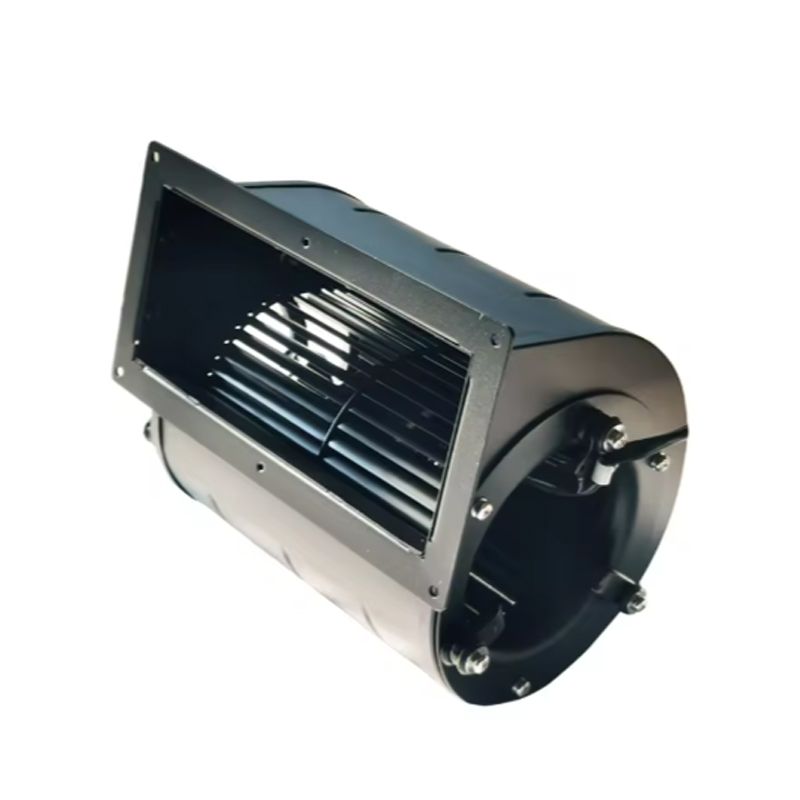
In a centrifugal fan, this electronic drive works together with a backward-curved or backward-inclined impeller inside a volute housing. The impeller compresses and directs airflow, while the volute converts that fast-moving air into usable static pressure. Because the motor itself is more responsive, the whole assembly can hold tighter airflow and pressure targets even as duct conditions change.
Main Structural Parts of an EC Centrifugal Fan
An EC centrifugal fan is not just a motor bolted to a fan wheel. It is a modular assembly made of several parts that each affect performance, and knowing them helps when comparing datasheets or troubleshooting a unit on site.
| Component | Role in the Fan |
| External-rotor EC motor | Drives the impeller directly using brushless DC technology, avoiding mechanical commutation losses |
| Backward-curved impeller | Blade count and curvature set the fan's pressure and airflow characteristics |
| Volute (housing) | Converts high-speed air into static pressure, often lined with sound-absorbing pads |
| Mounting base and bracket | Provides vibration damping and structural stability during high-pressure operation |
| Control interface | Accepts 0-10V, PWM, or RS485 signals for speed and feedback control |
Energy Efficiency: The Main Reason EC Fans Exist
The letters EC are most often brought up because of energy savings, and the numbers explain why. A brushless EC motor typically reaches 80 to 90 percent efficiency, compared with a ceiling of around 75 percent for a standard three-phase induction motor. Digital speed control adds a further gain because the fan only draws as much power as the load actually needs.
- Motor efficiency: 80 to 90 percent for EC motors versus up to 75 percent for standard AC induction motors
- Partial-load efficiency gain: up to 30 percent improvement when the fan runs below full speed
- Switching losses: reduced through high-frequency power devices such as SiC MOSFETs in the drive board
- Installation losses: lowered by plug-and-play brackets that reduce duct resistance and mounting error
Because most HVAC and refrigeration loads spend the majority of their operating hours below peak output, this partial-load advantage is often where an EC fan saves the most electricity over a year, not just at full speed.
Featured EC Centrifugal Fan Models
Below is a snapshot of production EC centrifugal fan series built for airflow, pressure, and control requirements ranging from low-pressure supply air to double-suction high-pressure duty.
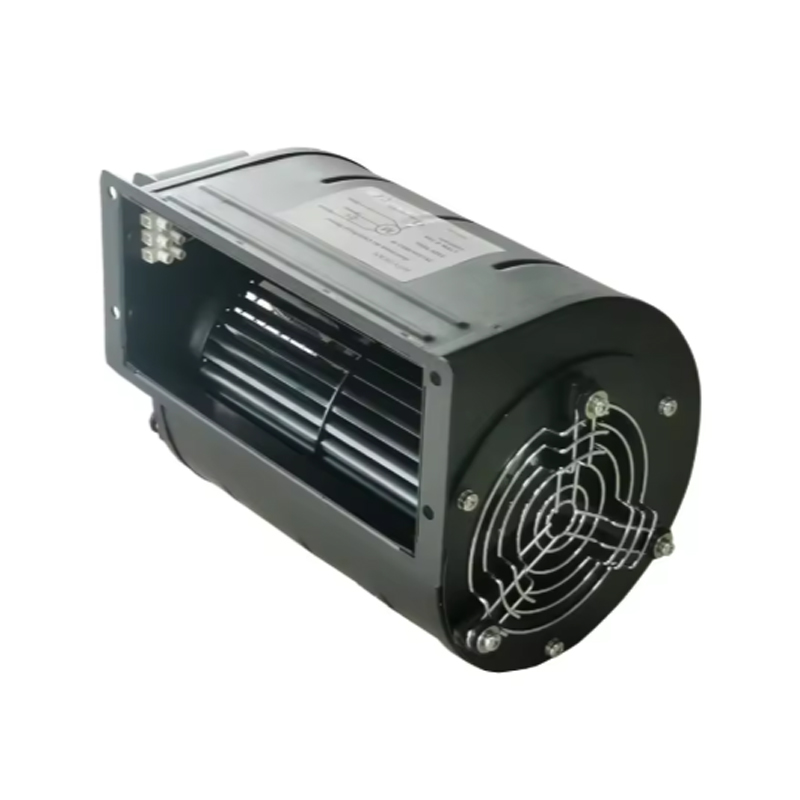
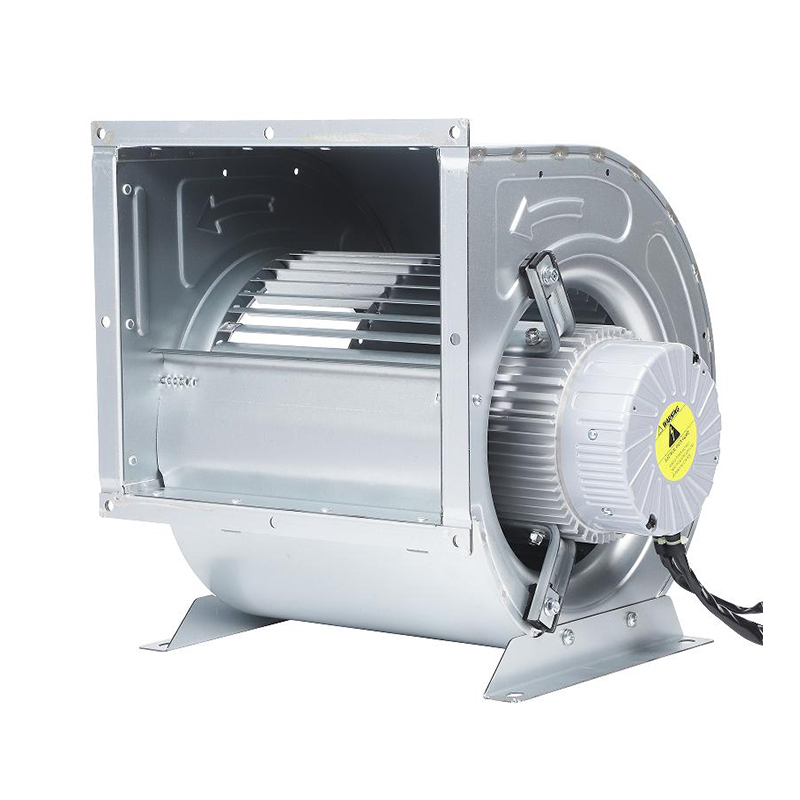 SYZ 10-10 Large Airflow Radial
 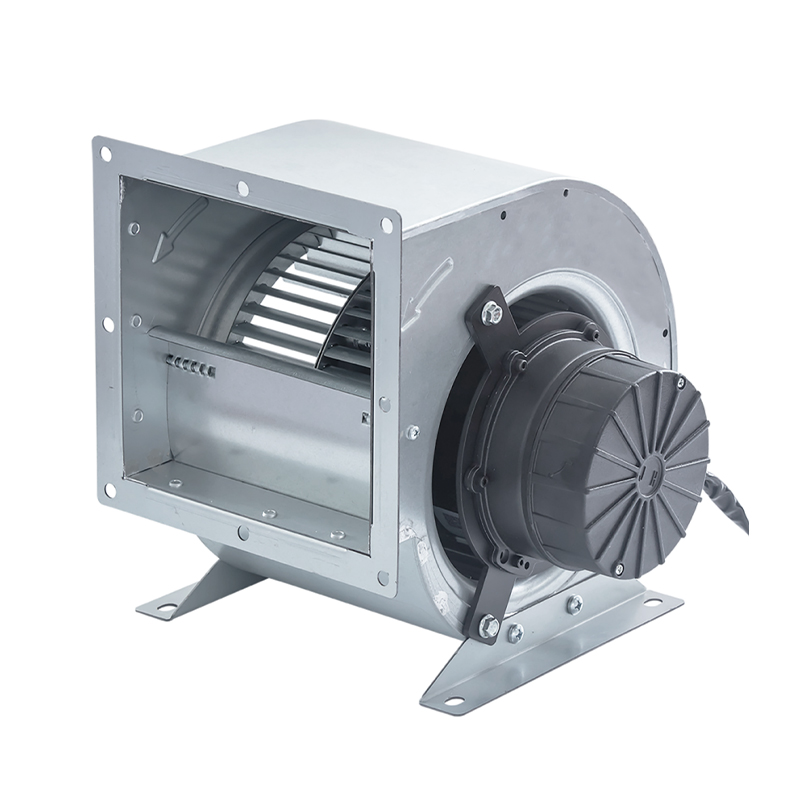 SYZ 7-5 Low Pressure Blowing
 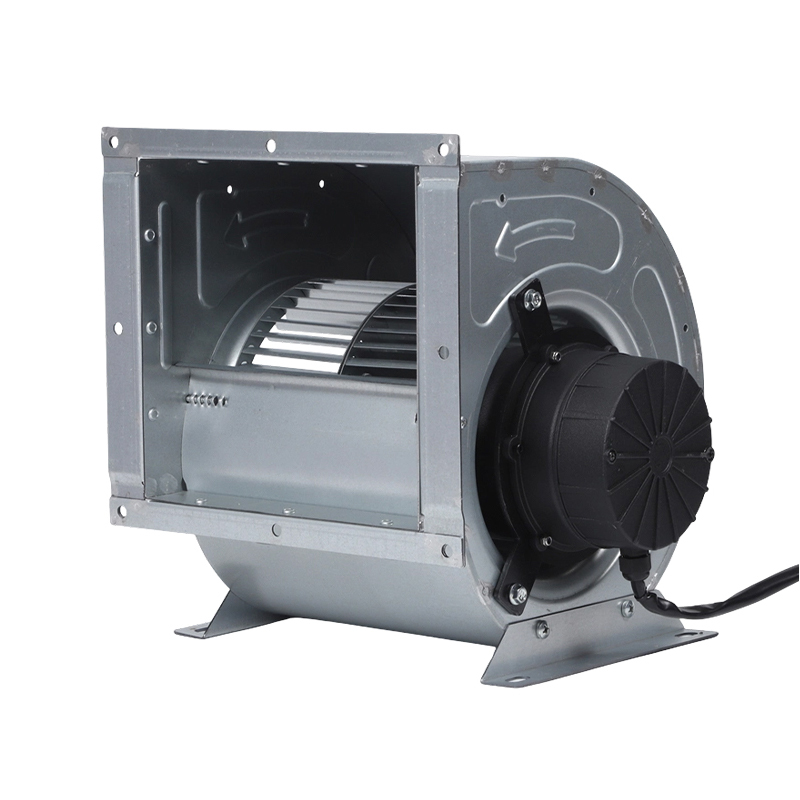 SYZ 7-7 0-10V Speed Control
 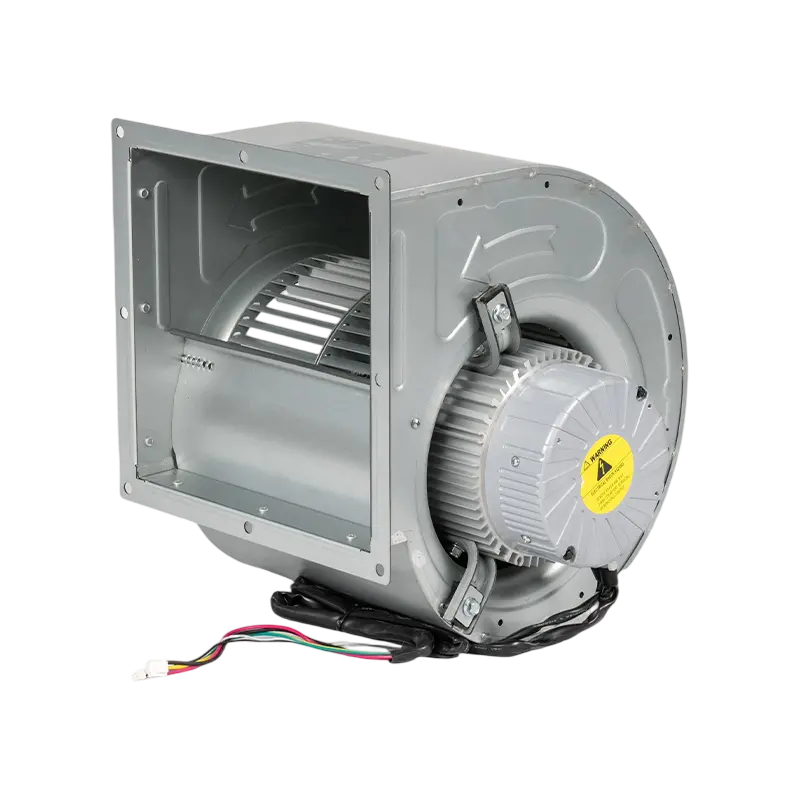 SYZ 8-7 Double Suction with Gearbox
 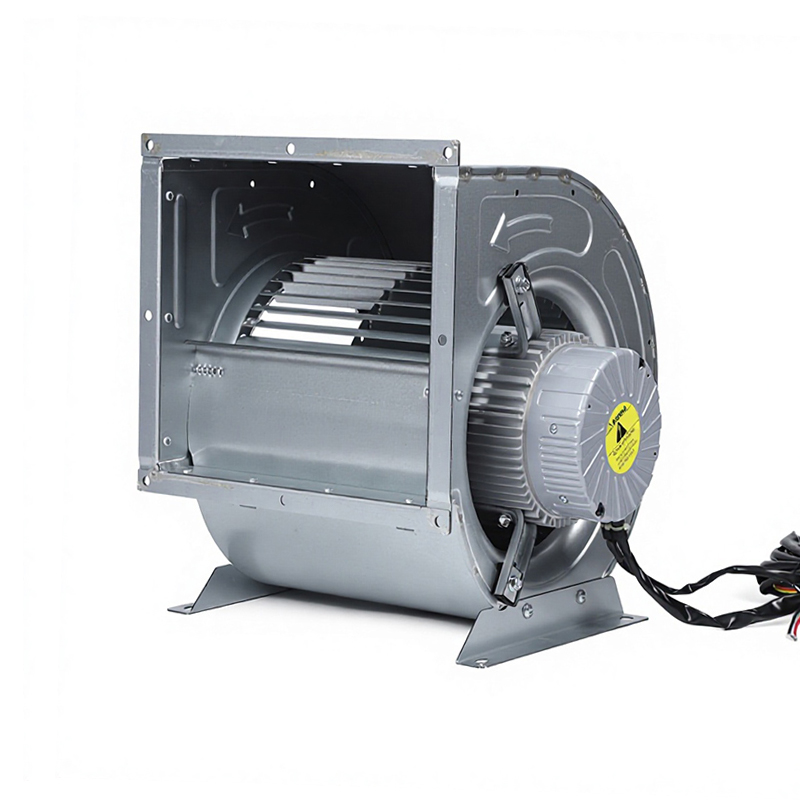 SYZ 9-9 Variable Speed HVAC
 Noise Performance Compared With AC Fans
Because there is no mechanical brush contact, an EC motor removes one of the main noise sources found in AC motors. Combined with acoustic treatment in the volute and outlet duct, this brings measured operating noise for many EC centrifugal fans below 70dB, with optimized models reaching as low as 55dB(A) at the same airflow that a comparable AC fan would need higher speed, and higher noise, to achieve.
- Brushless drive eliminates commutation noise at the source
- Sound-absorbing pads inside the volute reduce airflow impact noise
- Vibration-damping brackets suppress structural noise transmitted through the mounting frame
- Lower rated speed for the same airflow, since EC motors reach target output more efficiently
This noise profile is a major reason EC centrifugal fans are specified in hospitals, laboratories, and hotel HVAC systems, where a few decibels of difference is noticeable to occupants.
Typical Applications for EC Centrifugal Fans
The combination of precise control, high static pressure, and quiet operation is why EC centrifugal fans show up across a fairly specific set of equipment types rather than general-purpose cooling.
- Variable air volume (VAV) air conditioning units
- Ducted air conditioning units and HVACR systems
- Fresh air handling systems
- Air purification equipment and cleanroom fan filter units (FFUs)
- Data center and server cabinet cooling
- Refrigeration equipment requiring stable directional airflow
Key Specifications to Check Before Buying
Datasheets for EC centrifugal fans list a similar set of parameters, and comparing them side by side is the fastest way to size a fan correctly for a given duct system.
| Parameter | Why It Matters |
| Impeller diameter | Sets the baseline airflow and pressure capacity of the fan |
| Rated speed and airflow range | Confirms the fan can meet the duct system's design airflow |
| Static pressure | Determines whether the fan can overcome duct and filter resistance |
| Control method | 0-10V, PWM, or RS485 defines how the fan integrates with a building control system |
| Protection rating | IP54 or higher indicates suitability for dust or moisture-exposed installation |
EC Fan vs AC Fan: Quick Comparison
| Factor | EC Fan | AC Fan |
| Motor efficiency | 80 to 90 percent | Up to 75 percent |
| Speed control | Built-in electronic, stepless | Requires external VFD for variable speed |
| Typical noise | 55 to 70dB(A) | Generally higher at comparable airflow |
| Maintenance | Maintenance-free bearings, no brushes to replace | Periodic brush and bearing checks |
Maintenance and Fault Diagnosis Basics
Because EC motors use brushless technology and maintenance-free bearings, day-to-day upkeep is lighter than on an AC unit. Routine checks generally cover three things: impeller cleanliness, bearing lubrication where applicable, and the motor's built-in overload, overcurrent, and stall alarms. When a fault occurs, the RS485 interface or built-in signal feedback can be read to identify the cause without opening the housing, which shortens diagnostic time considerably compared with a purely mechanical AC fan.
Frequently Asked Questions
Which systems commonly use EC centrifugal fans?
Variable air volume units, ducted air conditioning systems, fresh air systems, cleanroom FFUs, and data center cooling all commonly specify EC centrifugal fans for their control precision and efficiency.
Is an EC fan always quieter than an AC fan?
In most comparable-airflow cases yes, because the brushless motor removes commutation noise and the fan can reach target airflow at a lower operating speed.
Do EC fans cost more upfront than AC fans?
EC fans typically carry a higher purchase price due to the electronic drive board, but the efficiency gain, especially at partial load, is usually what offsets that cost over the equipment's service life.
 ENG
ENG
