
 English
 Español

Content
- 1 What an HVAC Squirrel Cage Blower Actually Is
- 2 Wheel Geometry Sets Performance, Not Motor Power
- 3 Matching a Blower to the Equipment It Goes Into
- 4 AC or EC Drive: Where the Difference Actually Shows
- 5 Noise and Vibration: Tolerances You Can Check
- 6 What to Verify Before You Approve a Sample
- 7 Frequently Asked Questions
- 8 Getting the Specification Right the First Time
Most airflow complaints trace back to a blower that was matched to the wrong duty point, not to a motor that failed. An HVAC squirrel cage blower is a forward-curved, multi-blade wheel spinning inside a scroll housing — the part that actually pushes air through air handlers, fan coils, VAV boxes, ducted purifiers and heat-recovery units. Wheel diameter, wheel width, blade shape and motor type decide whether a unit runs quietly at its design airflow or labours at half of it.
Below: what the term really covers, how to read the numbers that matter, what to check before approving a sample, and where underspecified blowers usually go wrong.
What an HVAC Squirrel Cage Blower Actually Is
The name gets applied to two different things, and mixing them up wastes engineering time.
- The blower wheel. A cylindrical cage of many shallow, forward-curved blades on a hub. Air enters one or both ends and leaves through the scroll. This is the part that moves air.
- The squirrel-cage rotor. A motor-theory term — the cast or fabricated rotor inside a single-phase AC induction motor. It has nothing to do with airflow.
When a datasheet says "squirrel cage blower," it means the fan. When an electrician says "squirrel cage motor," they mean the rotor construction. In most air handlers both appear together: an induction motor with a squirrel-cage rotor driving a squirrel-cage blower wheel, direct-coupled with no belts.
Direct drive matters commercially. Removing belts and pulleys removes two bearings, a wear item and a periodic tensioning task, and it lets the whole assembly fit into a shallower cabinet.
| Component | Function | Typical symptom if off-spec |
|---|---|---|
| Blower wheel | Converts motor torque into airflow; defines the shape of the fan curve | Low airflow, tonal noise, vibration |
| Scroll housing | Collects air from the wheel and converts velocity into static pressure | Pressure loss, turbulence noise |
| Inlet ring | Feeds air into the wheel with minimal shock loss | Recirculation, reduced flow |
| Motor (AC or EC) | Supplies torque at the required speed; EC versions accept a control signal | Overheating, thermal cut-out |
| Mounting and balance | Keeps the rotating assembly inside vibration limits | Bearing wear, early replacement |
Wheel Geometry Sets Performance, Not Motor Power
Doubling motor power does not double airflow. The wheel sets the curve; the motor only decides whether the wheel can reach the speed at which that curve matters. If the wheel is too small for the pressure the system needs, a bigger motor simply draws more current at the same disappointing airflow.
Forward-curved wheels carry many shallow blades and move large air volumes at modest static pressure. Backward-curved wheels carry fewer, deeper blades and reach higher pressure at better efficiency, which is why they dominate longer duct runs and higher-pressure air purification. For a fixed housing, increasing wheel diameter adds pressure capability; increasing wheel width adds flow.
Two curves decide everything. The fan curve falls as airflow rises, because a fan working against less resistance delivers more volume. The system curve rises as airflow rises, because ducts, coils, filters and grilles all resist flow, and resistance grows with the square of velocity. Where they cross is the duty point — and that is the only airflow figure worth quoting.
Matching a Blower to the Equipment It Goes Into
Start from the air side, not the motor. The following sequence avoids the usual redesign loop.
- Define the airflow required at the real operating pressure, in m³/h or CFM — never "free air" figures.
- Add up external static pressure, including a dirty-filter allowance. A 40 Pa allowance is not paranoid; it is realistic.
- Confirm voltage, frequency and phase for the destination market, and whether a capacitor is supplied.
- Decide the control method: fixed speed, multi-tap, or a 0–10 V signal from the unit controller.
- Set an acoustic target at 1 m, in the mounting orientation the unit will actually use.
- Check the envelope: wheel diameter plus scroll plus inlet clearance, and the mounting footprint.
- Confirm duty cycle and ambient temperature at the motor, not at the room.
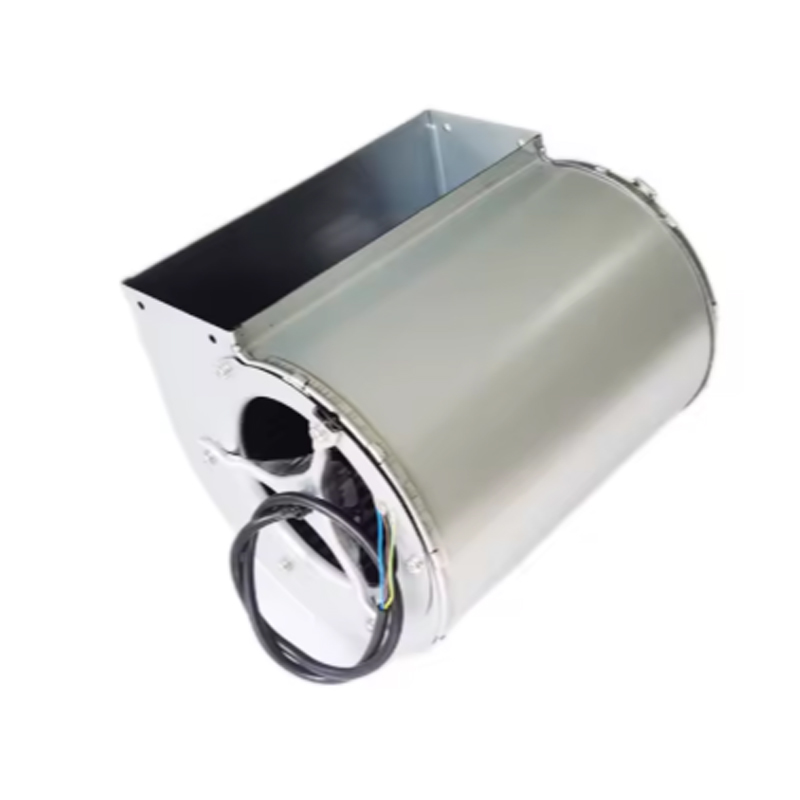
 LKZ 7-5-150W AC centrifugal blower fans1.The housing is constructed of galvanized steel, offering excellent corrosion and impact resistance. It withstands moisture, dust, and other erosions found in industr...View Product →
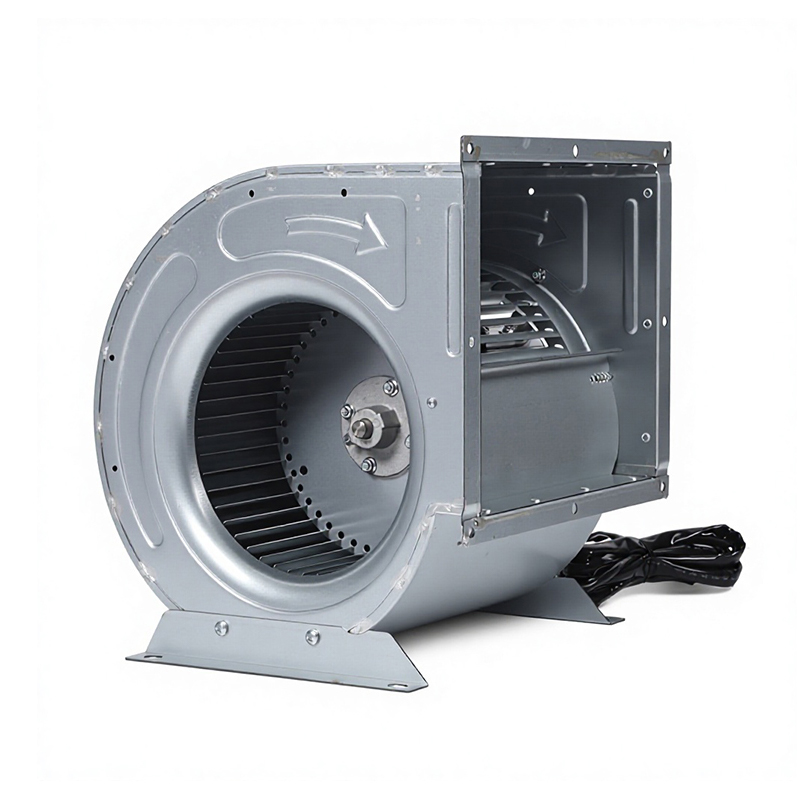
A 150 W class direct-drive AC centrifugal blower is a good example of where this matters. It suits compact air handlers, ducted purifiers and heating appliances where the wheel diameter is limited by cabinet depth. Ask for the curve at the actual voltage, because a curve drawn at nominal voltage can look optimistic once the line sags.
AC or EC Drive: Where the Difference Actually Shows
An AC induction motor runs at a speed set by line frequency and slip. To reduce airflow you either damper the outlet or live with the airflow you get. An EC motor accepts a control signal and changes speed directly, so airflow tracks demand instead of being throttled.
| Attribute | AC induction | EC (brushless) |
|---|---|---|
| Speed control | Fixed or multi-tap | Continuous, 0–10 V or PWM |
| Part-load power | High: throttling wastes energy | Falls roughly with the cube of speed |
| Control wiring | Power only | Power plus low-voltage signal |
| Typical use | Fixed-duty appliances, cost-driven builds | VAV, variable-flow purifiers, EC retrofit |
| Service profile | Simple, capacitor and winding checks | Electronics module is the wear item |
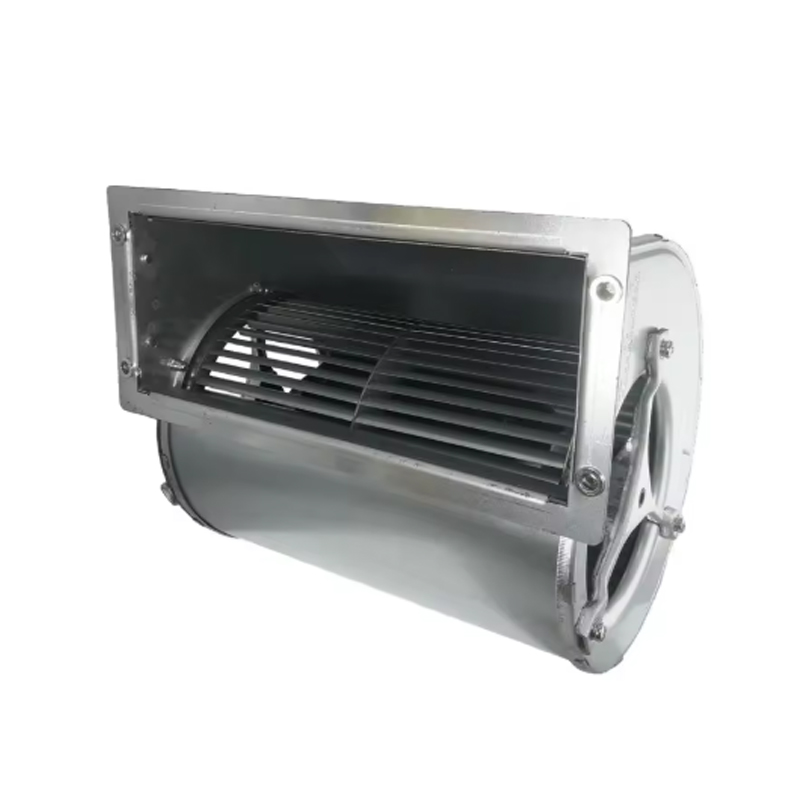
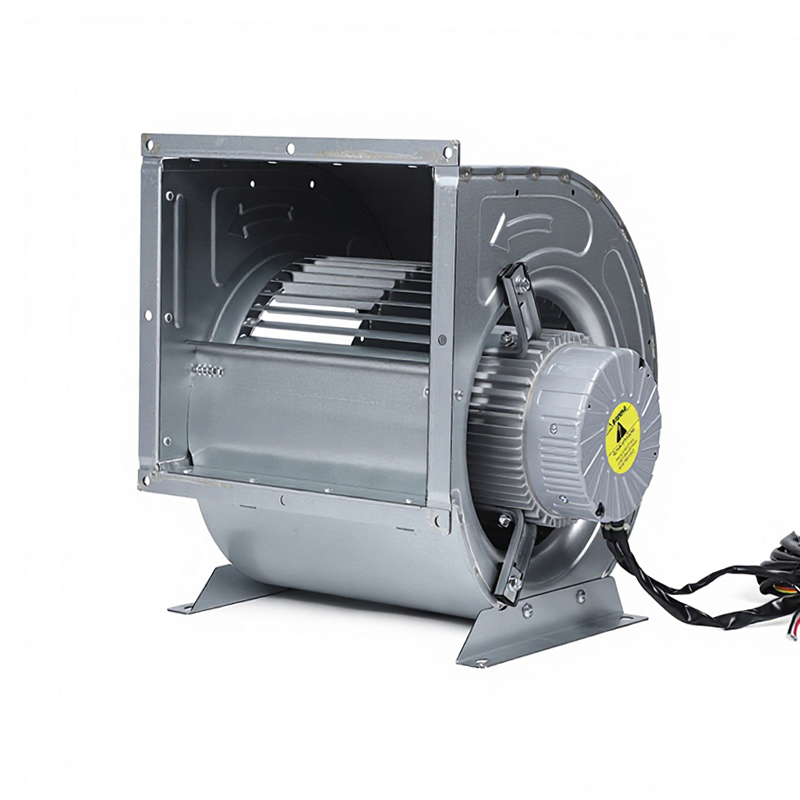
 SYZ 9-9 variable speeds EC centrifugal fans for HVAC1. The speed can be adjusted from 200 to 1100 RPM. The direct-drive design reduces energy loss during transmission and improves transmission efficiency. 2. The 1000W m...View Product →
At 60 percent airflow, speed control cuts shaft power far more than dampering does, because power falls with roughly the cube of rotational speed while a damper keeps the wheel spinning at full speed. On a continuously running unit, that difference usually repays the EC premium within a couple of seasons. On an appliance that runs twenty minutes a day, it rarely does.
Noise and Vibration: Tolerances You Can Check
Most noise complaints are mechanical before they are aerodynamic, and a few checks separate the two quickly.
- Wheel balance. Ask for the residual unbalance value, not just "balanced."
- Radial and axial runout at the wheel inlet ring — excessive runout produces a once-per-revolution tone that no amount of duct lining hides.
- Scroll cut-off clearance. Too tight and the blade passing frequency becomes audible; too wide and pressure drops.
- Inlet clearance. A wheel starved by a cabinet wall loses flow and gains noise.
- Mounting rigidity. Rubber grommets on a thin panel amplify rather than isolate.
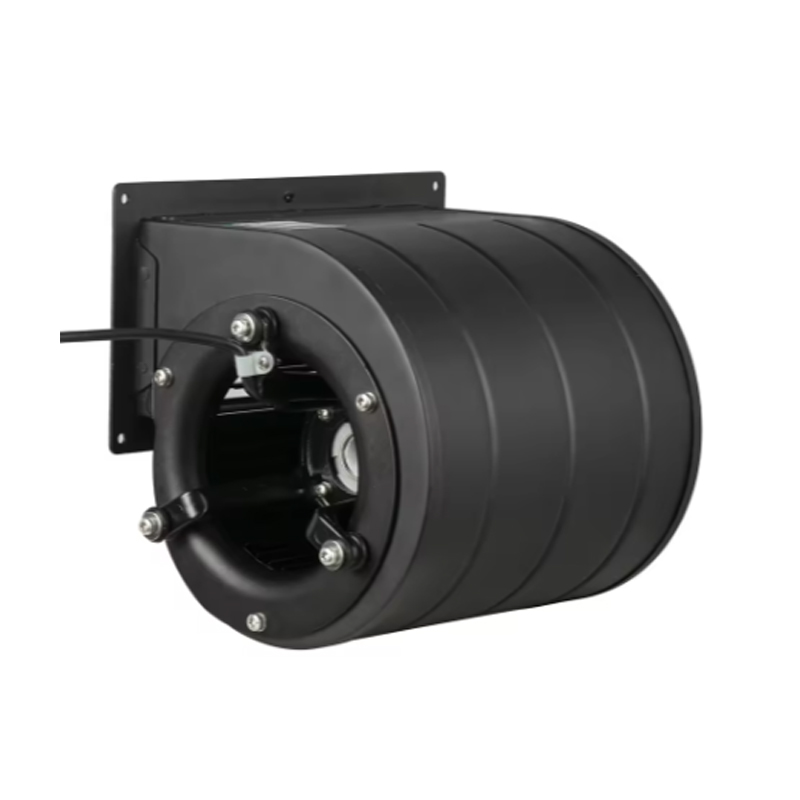
 160-80 small volute duct single inlet centrifugal fans1. Featuring a powder-coated metal casing and a galvanized steel impeller, this single-inlet centrifugal fan with a compact volute design ensures smoother airflow and ...View Product →
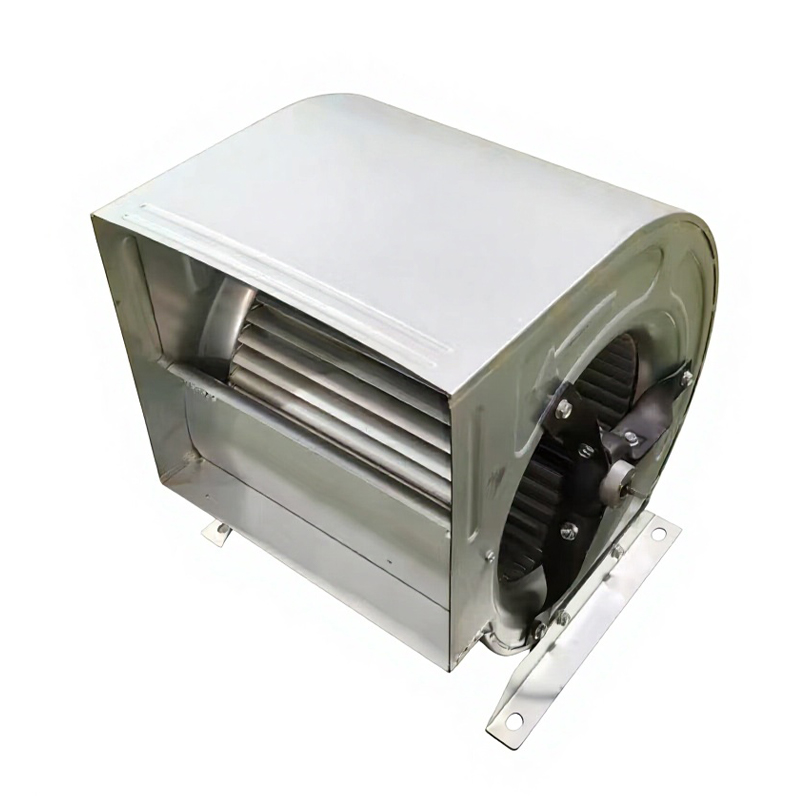
Where space is genuinely tight, a small-volute single-inlet blower in a duct run is often the quieter answer than a larger wheel squeezed into a corner of the cabinet, because the housing is designed around the airflow path instead of the airflow being fitted around the housing.
- Wheel imbalance or dirt build-up — 35%
- Bearing or motor wear — 25%
- Wrong duty point in selection — 22%
- Duct or installation effects — 18%
What to Verify Before You Approve a Sample
- Measure current draw at the rated voltage and compare it with the nameplate.
- Run the unit at the intended duty point for at least an hour and record motor case temperature.
- Measure sound pressure at 1 m in the final mounting orientation.
- Check wheel runout and confirm the balance weight is mechanically fixed, not adhesive-only.
- Confirm the insulation class and the thermal protection fitted.
- Ask what changes when the order scales from ten units to ten thousand.
The last point catches more problems than the first five combined. Tooling, winding wire and bearing grade are the three places where cost pressure appears first, and all three show up as field failures roughly eighteen months later. Details on how wheel construction affects all of this are covered in this note on blower impeller design.
Frequently Asked Questions
Is a squirrel cage blower the same as a centrifugal fan?
Practically, yes — a squirrel cage blower is a forward-curved centrifugal fan with a multi-blade wheel. The "squirrel cage" label describes the appearance of the blade cage. Backward-curved centrifugal fans are also centrifugal, but they are usually called by their blade type instead.
Can I replace an AC blower with an EC blower directly?
Only if the mounting footprint, wheel diameter and inlet geometry match, and if the unit controller can supply a 0–10 V signal. Airflow at full speed is often different too, so the fan curve has to be re-checked rather than assumed.
What static pressure should I specify?
Specify the pressure your ductwork, coil and filter actually produce at design airflow, then add a fouling allowance for filters. A blower chosen at zero static pressure will underperform in every real installation.
How do I know which wheel diameter I need?
Fix the required pressure first, since diameter governs pressure capability. Then widen the wheel to reach the airflow target. Increasing diameter to chase airflow usually adds noise and depth you did not budget for.
Why does a blower get louder over time?
Usually dirt on the blades rather than wear. A few grams of dust on one side of a wheel is enough to unbalance it, and the resulting vibration is transmitted straight into the cabinet panel.
Getting the Specification Right the First Time
Write the duty point, the static pressure budget, the voltage and the acoustic limit into the enquiry before you ask for a price. Suppliers who can respond to those four numbers with a curve rather than an adjective are the ones worth keeping on the approved list.
If you are designing a compact air handler, a ducted purifier or a heating appliance and need a direct-drive centrifugal blower matched to your duty point, send us the airflow and pressure figures and we will come back with a curve and a sample plan.

 ENG
