
 English
 Español
Content
- 1 What Is a Centrifugal Process Fan?
- 2 How Centrifugal Force Works in Process Applications
- 3 Centrifugal Fan Types for Process Duty
- 4 AC vs. EC Motors in Process Fans
- 5 Key Selection Criteria for Process Fans
- 6 Common Process Fan Applications
- 7 Manufacturing Quality and Ownership Costs
- 8 Frequently Asked Questions
A process fan that goes down in the middle of a shift can stop an entire production line. In air-handling units, drying tunnels, clean rooms, and combustion systems, the centrifugal process fan is the component that supplies the right airflow at the right pressure. The good news is that selecting a reliable centrifugal fan is not complicated if you focus on a few engineering facts: impeller type, drive arrangement, motor control, and the actual static pressure your process demands. This guide walks through those fundamentals from a manufacturer's perspective, so you can specify a fan with confidence and avoid the common mistakes that show up after installation.
What Is a Centrifugal Process Fan?
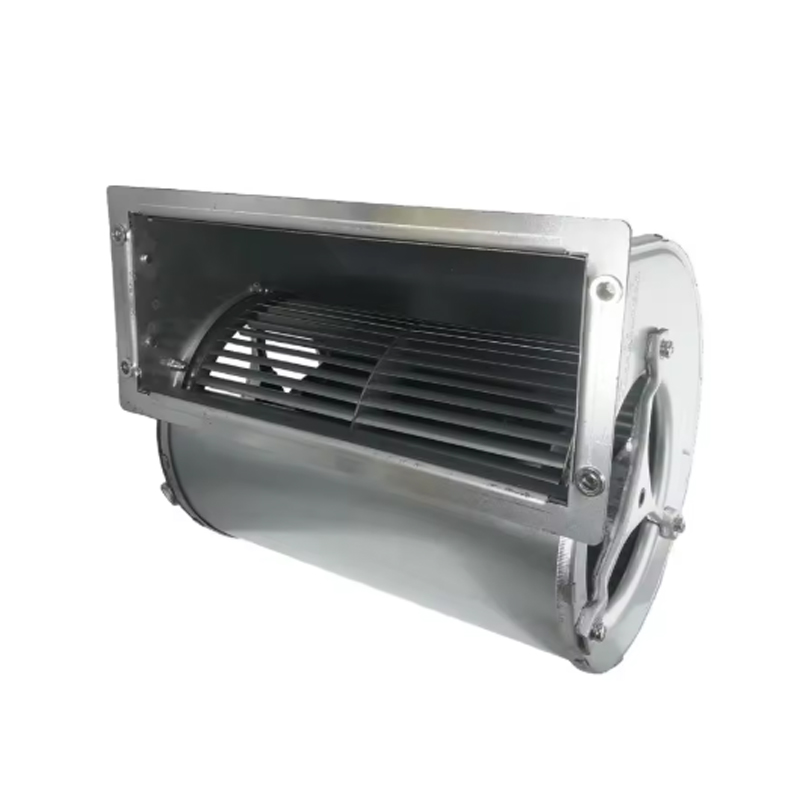
A centrifugal process fan draws air into the inlet along the fan axis and discharges it at a 90-degree angle from the housing. The rotating impeller throws air outward, increasing both its velocity and static pressure. Unlike axial fans, which move air straight through the blade row, centrifugal fans are better suited to systems with ductwork, filters, heat exchangers, and other flow restrictions that require a higher pressure rise.
In process applications, the term "process fan" usually means a fan designed for continuous industrial or commercial duty, not a lightweight circulation fan. That difference shows up in the motor size, bearing quality, impeller material, and the way the fan is balanced. When you look at a range of centrifugal fan products, you are really looking at different compromises between airflow, pressure capability, efficiency, noise, and physical size.
How Centrifugal Force Works in Process Applications
The working principle is simple. The impeller spins, and centrifugal force pushes air outward to the outer diameter of the wheel. The volute housing collects that high-velocity air and gradually converts its velocity into static pressure before the air exits the discharge. That conversion is why a centrifugal fan can do something an axial fan cannot: maintain a stable airflow against a moderately high system resistance.
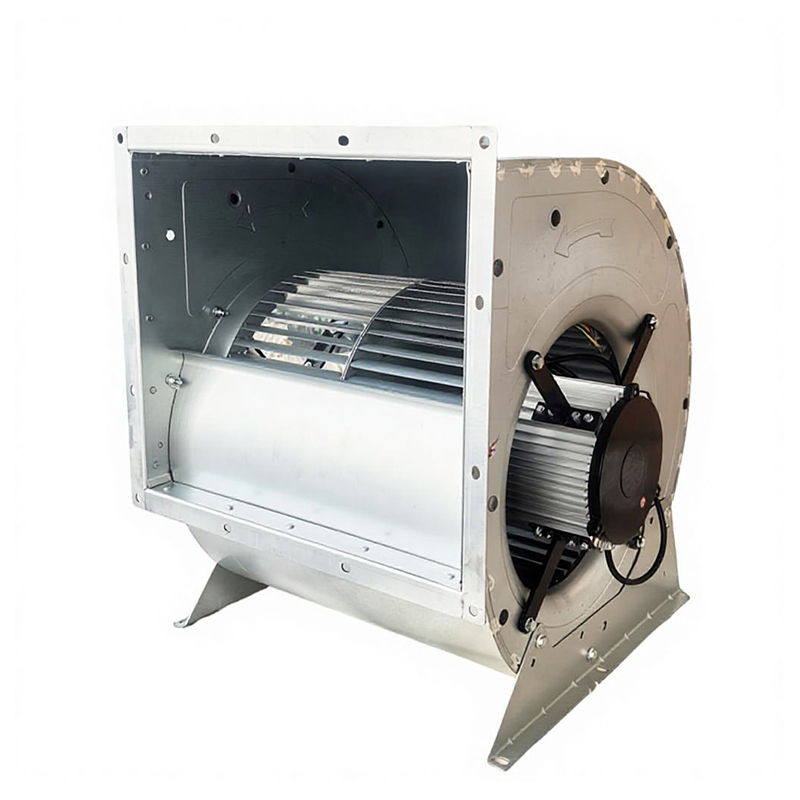
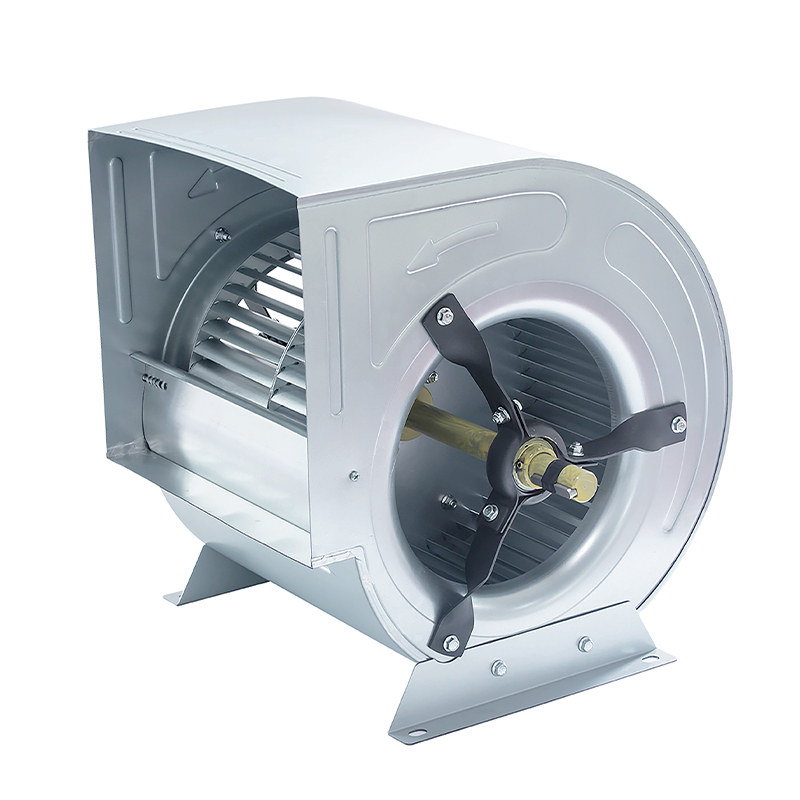
For process duty, the direct-drive arrangement is often preferred because it eliminates belt losses and reduces maintenance. Direct-driven motors also give you a more predictable speed-to-pressure relationship, which matters when you need to repeat the same process conditions day after day. This is one reason our line includes both AC and EC direct-drive direct-drive AC centrifugal fans for continuous operation in HVAC and process equipment.
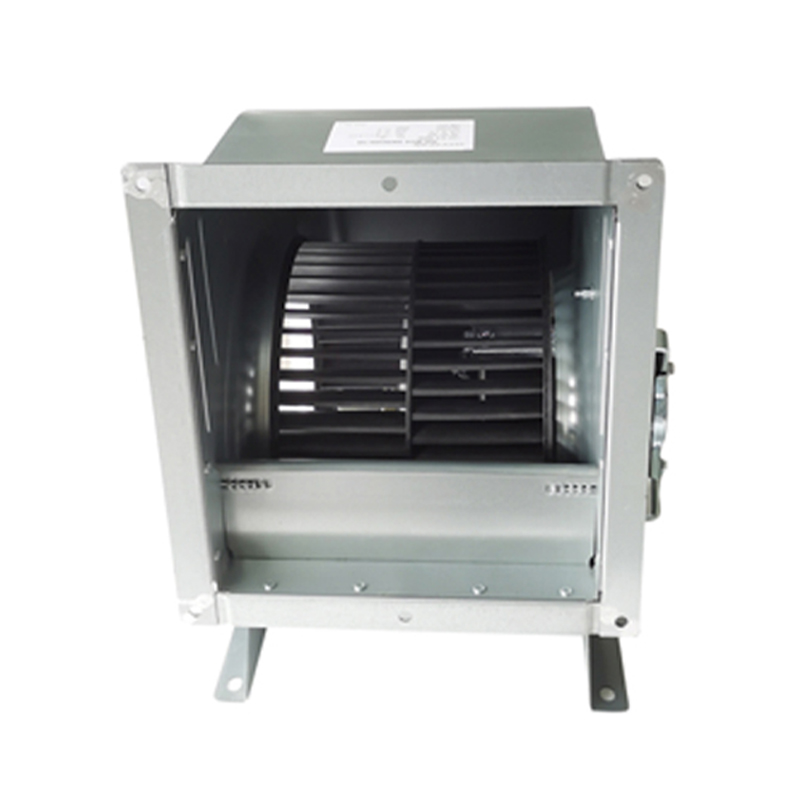 Custom High Temperature Metal Exhaust Fan Supplier, OEM CompanyYuyao Jiale Ventilation is China OEM high temperature metal exhaust fan supplier and company, we specialize in custom air conditioner dir...View Product →
Centrifugal Fan Types for Process Duty
Not all centrifugal fans perform the same way. The impeller blade shape changes the fan's pressure characteristic, efficiency, and resistance to dust or sticky material. Three common families dominate process applications: forward-curved, backward-curved, and radial blades.
| Impeller type | Typical efficiency | Pressure capability | Best suited for |
|---|---|---|---|
| Forward-curved | 60-75% | Low to medium | Ducted HVAC, air conditioning units |
| Backward-curved | 75-85% | Medium to high | High-efficiency process ventilation |
| Radial (straight blade) | 55-70% | High | Material handling and high-pressure duties |
For clean air moving in HVAC and ventilation systems, forward-curved wheels are compact and quiet. For higher pressure and better energy efficiency, backward-curved wheels are usually the better choice. Radial blades handle dust but are noisier and less efficient. When you talk to a manufacturer, always ask about the impeller geometry in the actual model, not just the motor power.
If your process has limited space, single-inlet and double-inlet configurations matter. Double-inlet fans pull air from both sides, which helps when the system needs more airflow without increasing fan speed. For compact ducted equipment, a high-static-pressure single-inlet centrifugal fan can deliver the pressure you need in a small footprint.
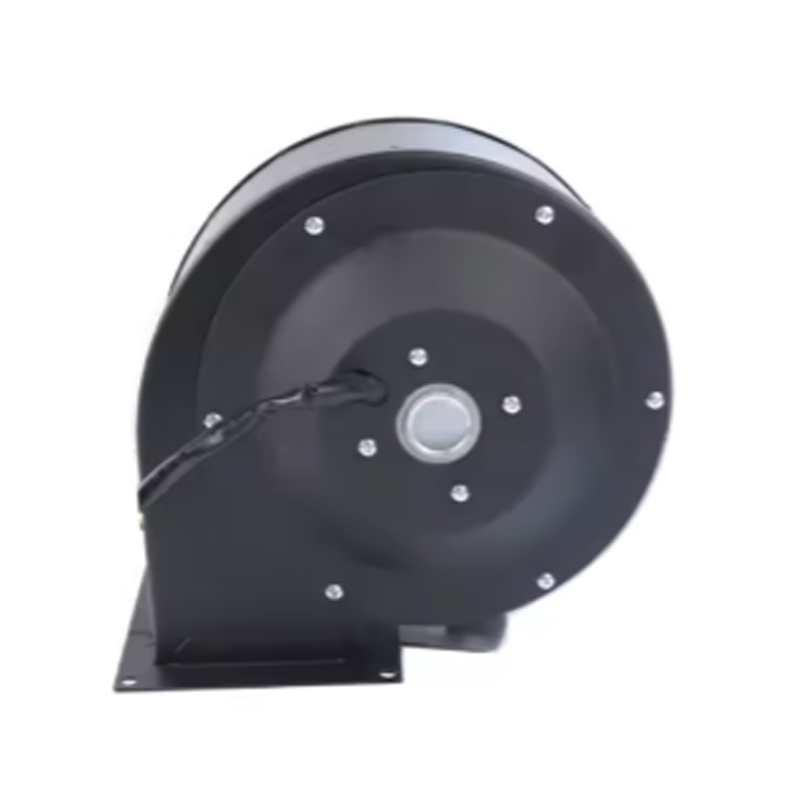 High Static Pressure Snail Single Inlet Centrifugal Fans Supplier, Custom FactorYuyao Jiale Ventilation Equipment Co., Ltd is China OEM High static pressure snail single inlet centrifugal fans supplier and factory, we...View Product →
AC vs. EC Motors in Process Fans
Motor choice is not an afterthought; it defines how much energy the fan uses and how easily you can adjust airflow. Traditional AC motors are simple and rugged, especially in larger power classes. They run at a fixed speed or with simple taps, which is fine for constant-load processes.
EC motors, on the other hand, integrate a controller into the motor and allow speed control with an external 0-10 V signal or building management system. That makes EC fans ideal for variable-air-volume systems where airflow needs to track demand. They also tend to be more efficient at partial load, which is where most HVAC fans actually run. If you need flexible airflow control, look for a fan such as the 0-10 V speed-controlled EC centrifugal fans from our SYZ series.
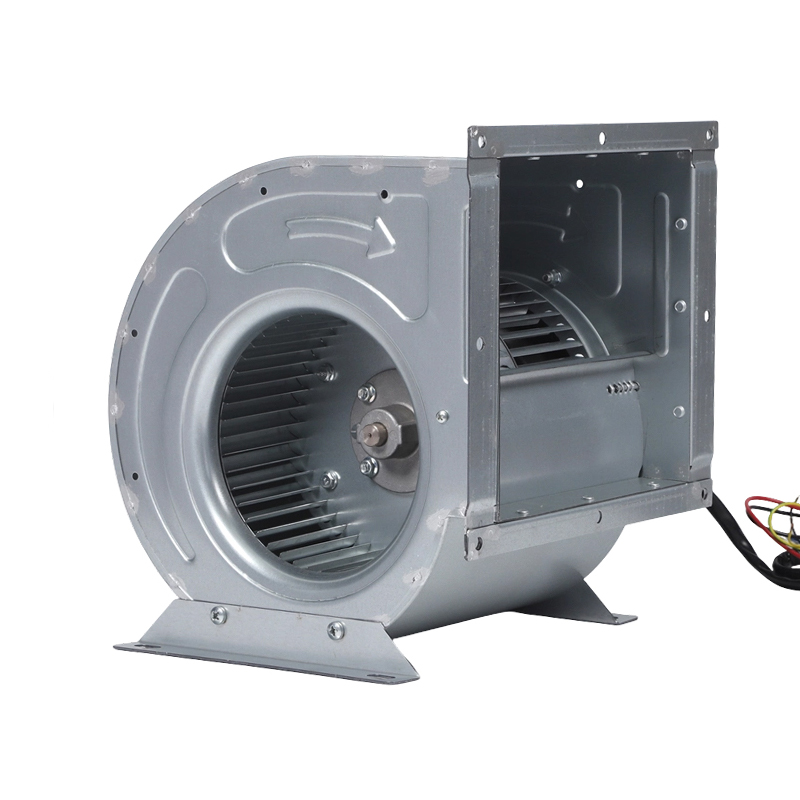 Syz 7-7 0-10v Speed Control Ec Centrifugal Fans Supplier, Custom Factory - YuyaoYuyao Jiale Ventilation Equipment Co., Ltd is China OEM SYZ 7-7 0-10V Speed Control EC centrifugal fans supplier and factory, we speciali...View Product →
We build both motor types with direct drive because that reduces the number of wearing parts. A well-sealed motor and a balanced impeller are the two things that keep a process fan running quietly for years.
Key Selection Criteria for Process Fans
Before you place an order, you should be able to answer three questions: what airflow do I need, what static pressure does my system impose, and what control strategy will I use? Everything else—fan size, noise, motor power, and cost—follows from those numbers.
- Airflow (m³/h or CFM): The volumetric flow your process needs at the operating point.
- Static pressure (Pa or in w.g.): The resistance from ducts, filters, coils, and exhaust outlets.
- Speed control: Fixed speed, multi-tap, or continuously variable EC control.
- Duty cycle: Continuous operation demands better bearings and thermal protection.
- Environment: Temperature, humidity, and airborne particles all affect material choice.
It is tempting to oversize the motor "just to be safe," but that usually creates excess noise and higher power draw. Instead, use the actual system curve. A reputable manufacturer will quote the fan at your specific operating point, not just hand you a catalog page. If you are retrofitting an existing unit, you can send the old fan's dimensions and motor specs; a direct-drive replacement can often match or outperform the original.
Common Process Fan Applications
Centrifugal process fans appear wherever clean, conditioned air must be delivered against duct resistance. We see them most often in the following sectors.
- HVAC & AC units (35%)
- Air purification (20%)
- Drying systems (15%)
- Other processes (30%)
In HVAC and air-conditioning units, forward-curved fans are valued for their compact size and low noise. In air purifiers and ventilation equipment, EC fans are increasingly standard because they allow speed modulation and save energy at part load. In drying and heating systems, the fan must operate efficiently against a stable static pressure, which is where backward-curved and high-static-pressure single-inlet designs shine.
Manufacturing Quality and Ownership Costs
The purchase price of a process fan is only the beginning. Over a ten-year life, energy consumption and downtime usually cost more than the fan itself. That is why quality details matter: the type of bearing, the thickness of galvanized steel, whether the impeller is dynamically balanced, and how the motor is protected against overheating.
A manufacturer that also makes its own blower impellers has more control over those quality details. In-house impeller production allows tighter balance tolerances and consistent repeatability from one production unit to the next. When you evaluate manufacturers, ask about their quality process. Is the impeller balanced on a precision arbor? Are production samples tested against a fan curve? Does the factory have experience with the same type of application? For continuous process duty, a slightly heavier fan with a better bearing is almost always worth the extra cost.
Frequently Asked Questions
What is the difference between a centrifugal process fan and a standard exhaust fan?
A process fan is selected for a specific performance point and is built to run continuously. Standard exhaust fans are often lower-cost, with lighter bearings and a less defined performance curve.
Can I use an AC motor fan with a variable frequency drive?
Some AC motors are compatible with VFDs, but not all. The motor must have inverter-grade insulation and cooling that works at low speed. If you need variable speed, a dedicated EC motor is usually simpler and more efficient.
How do I know whether to choose a single-inlet or double-inlet fan?
Double-inlet fans provide more airflow at the same wheel diameter, but take up more width. If the system fits a single-inlet layout and the required pressure is achievable, the single-inlet design is more compact and often easier to service.
What information does the manufacturer need for a custom fan quote?
A basic quote needs air volume, operating temperature, static pressure, available voltage, and space constraints. If you can provide a diagram of the duct system, even better.
Selecting the right centrifugal process fan is not a black-box exercise. Define your operating point, choose an impeller family that matches the pressure and efficiency you need, and select a motor that allows the right control approach. Then work with a fan manufacturer that can back up the design with balanced impellers, reliable direct-drive motors, and clear performance data. If you have a specific process requirement, contact our engineering team with your airflow and pressure figures—we can walk you through the selection and even build a sample for testing.
 ENG
ENG
