
 English
 Español

Content
A submittal sheet for a small air-handling unit usually carries one line that decides the whole project: 2,000 m³/h at 200 Pa, 220 V single phase, 62 dB(A) at 1.5 m. Buyers often skim past it and concentrate on cooling capacity instead. That is the wrong order.
The short version: an HVAC system moves heat, and it moves air. Heating and cooling equipment handles the heat. The fan, the impeller and the ductwork handle the air. If the air side is undersized or badly matched, the heating and cooling side never gets the chance to perform, however good the compressor or the coil is.
What follows is the practical version of that idea: what the main components do, how the air side really behaves, and which details matter when specifying or replacing a fan for an air-conditioning, ventilation or air-purification unit.
What an HVAC System Actually Does
The letters stand for heating, ventilation and air conditioning, and each one is a separate job with its own hardware. In practice they overlap:
- Heating — adds heat to a space through a furnace, a heat pump in reverse, an electric heater bank or hot water coils.
- Cooling — removes heat and moisture with a refrigeration cycle: compressor, condenser, expansion device and evaporator coil.
- Ventilation — replaces stale air with outdoor air and distributes conditioned air through ducts.
- Air quality — filters, and in many units an additional purification stage, sit in the same airstream.
All four depend on one shared resource: a steady, predictable flow of air. That is why the fan is not a peripheral part of an HVAC system. It is the component that connects the other three.
The Main Components, and What Each One Controls
Most service calls and most specification arguments come back to a handful of parts. This table lists them in the order that air and heat actually pass through the system.
| Component | Job | Typical symptom when it is wrong |
|---|---|---|
| Thermostat or controller | Reads temperature, switches stages, and on EC systems sends the 0-10V speed signal | Short cycling; rooms that swing 2-3 °C around setpoint |
| Filter | Traps dust before it reaches the coil and the fan | Rising static pressure, falling airflow, fouled coil |
| Cooling coil and compressor | Removes heat and moisture from the airstream | Coil icing, low suction pressure, poor dehumidification |
| Heating section | Adds heat by burner, electric element or reversing valve | Long run times, high discharge temperature, tripped limits |
| Fan and impeller | Moves the design airflow against the resistance of the system | Low airflow, high noise, motor overload at high static pressure |
| Ductwork and dampers | Delivers air to each zone and balances the branches | Uneven rooms, whistling diffusers, pressure imbalance |
Read that table as a chain. A loaded filter raises resistance, the fan moves less air, the coil sees a lower load, and the compressor cycles while the room stays humid. Nothing has actually broken, yet the system no longer performs.
Air Movement: Where Fan Curves Meet Real Ductwork
Three numbers describe any fan: airflow in m³/h, static pressure in Pa, and speed in rpm. They are linked by the fan laws, and those relationships are not linear:
- Airflow changes in direct proportion to speed.
- Static pressure changes with the square of speed.
- Shaft power changes with the cube of speed.
The third rule is why speed control saves so much energy, and why a larger fan turning slowly is usually a better purchase than a small fan running flat out. It is also why the free-air airflow printed on a catalogue cover means very little. A fan quoted at 1,000 m³/h free air may deliver 600 m³/h once a filter, a coil and eight metres of duct with three bends are added.
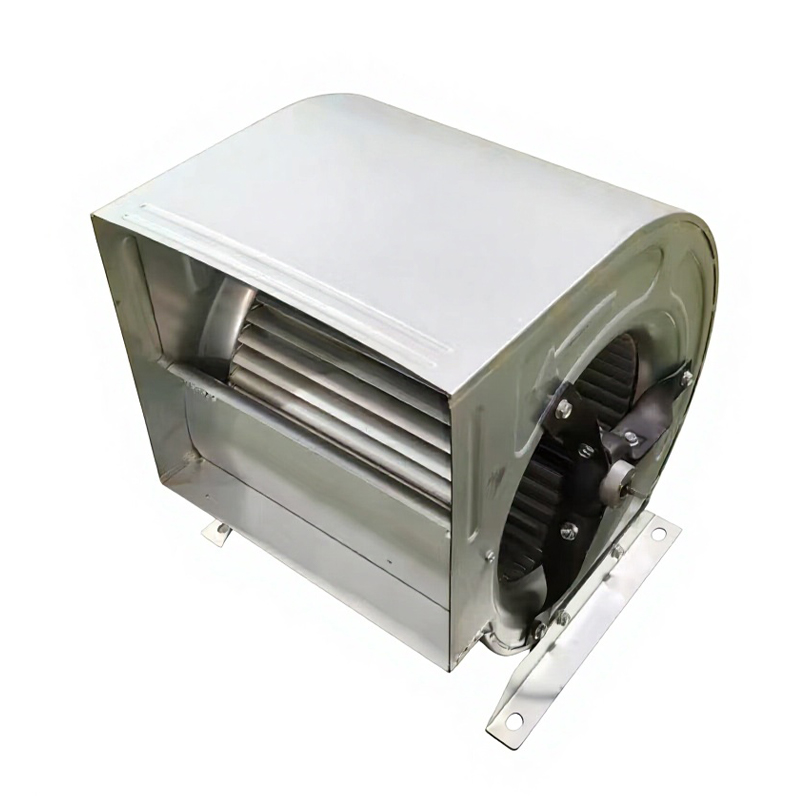
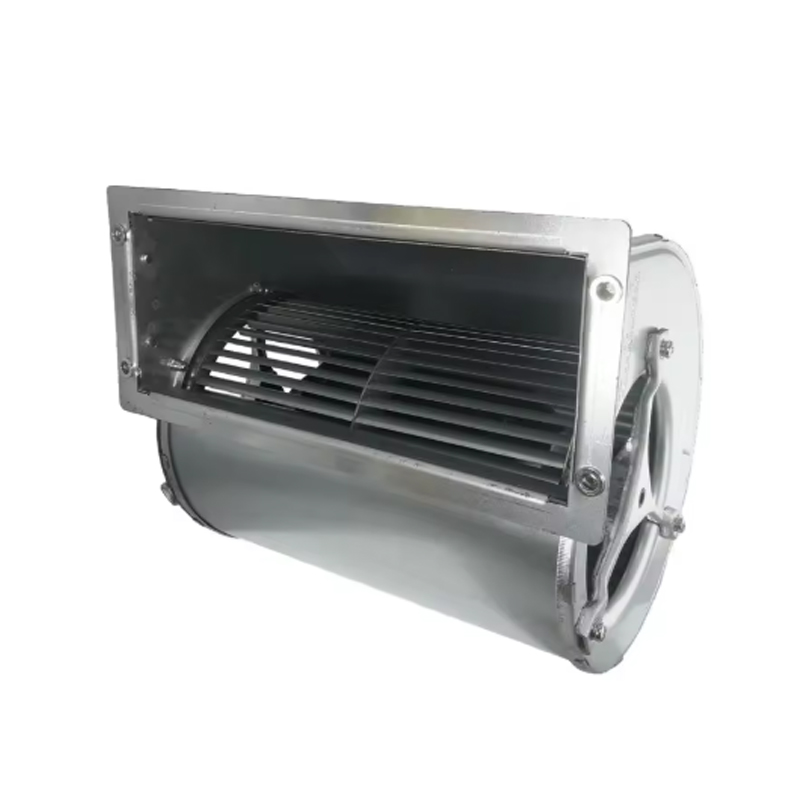
For ducted and high-resistance installations, the sensible starting point is a high static pressure single-inlet centrifugal fan, where the volute shape and impeller width are chosen for pressure rather than for maximum open-flow volume.
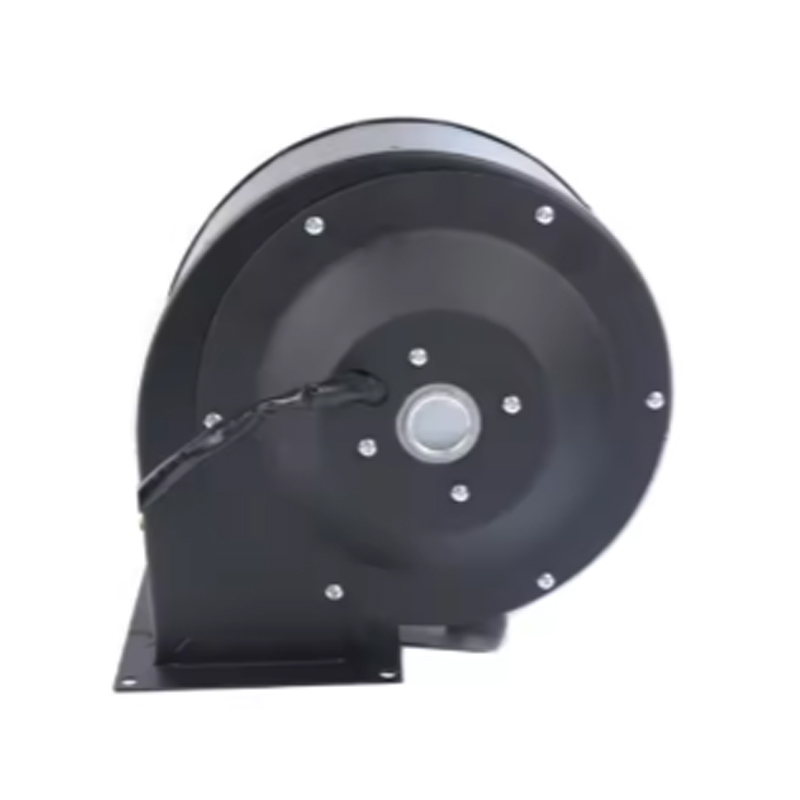 High Static Pressure Single-Inlet Centrifugal Fan YDK 160-60Duct-mounted AC centrifugal fan with three speed modes, up to 200 Pa static pressure, and 500 m³/h airflow for high-resistance ventilation.View Product →
AC or EC Motors: The Choice That Sets Your Control Options
Two fan builds dominate air-handling and ventilation equipment, and the difference is not only efficiency.
Single-phase AC motors
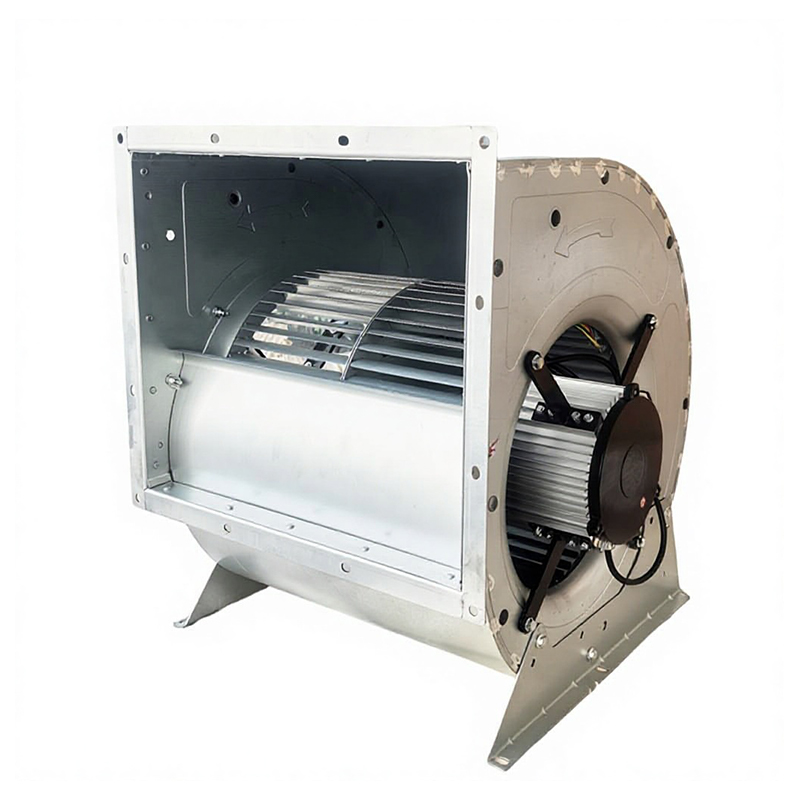
AC induction motors run at a speed set by supply frequency and pole count, so 50 Hz gives roughly 2,900, 1,450 or 960 rpm. They are simple, robust and inexpensive, and they tolerate voltage variation well. Speed control needs an external device, and the fan curve shifts with it. A direct-drive AC centrifugal fan such as the 600 W air-conditioner series is a typical match for constant-volume units where airflow is set once at commissioning.
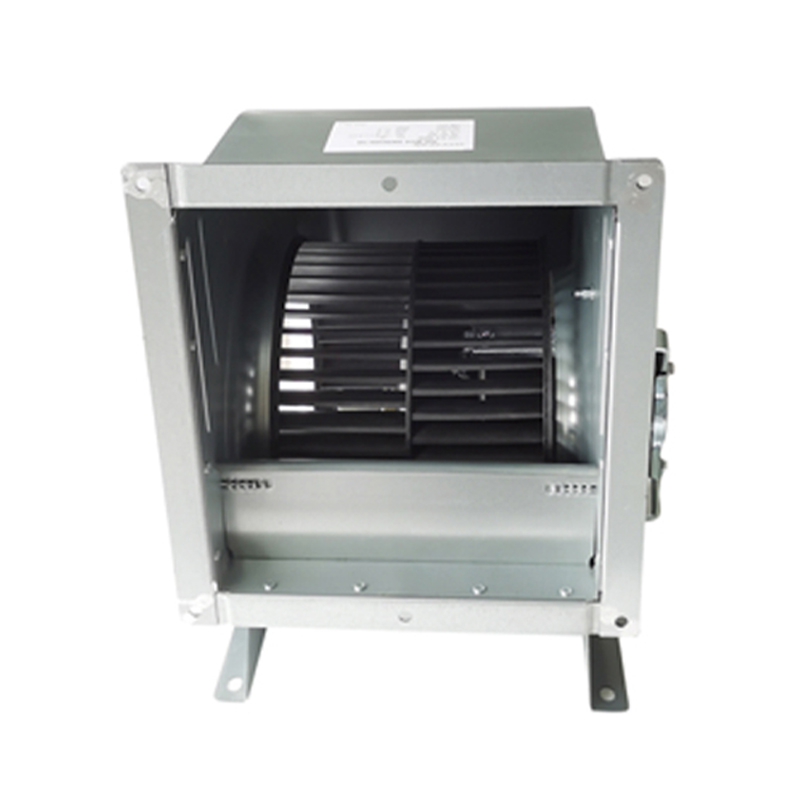 LKZ 10-8-600W Direct Drive AC Centrifugal FanDirect-drive AC centrifugal fan for constant-volume HVAC and air-exchange units, featuring IP54 aluminum housing, F-class insulation, and optional vertical bracket.View Product →
EC motors
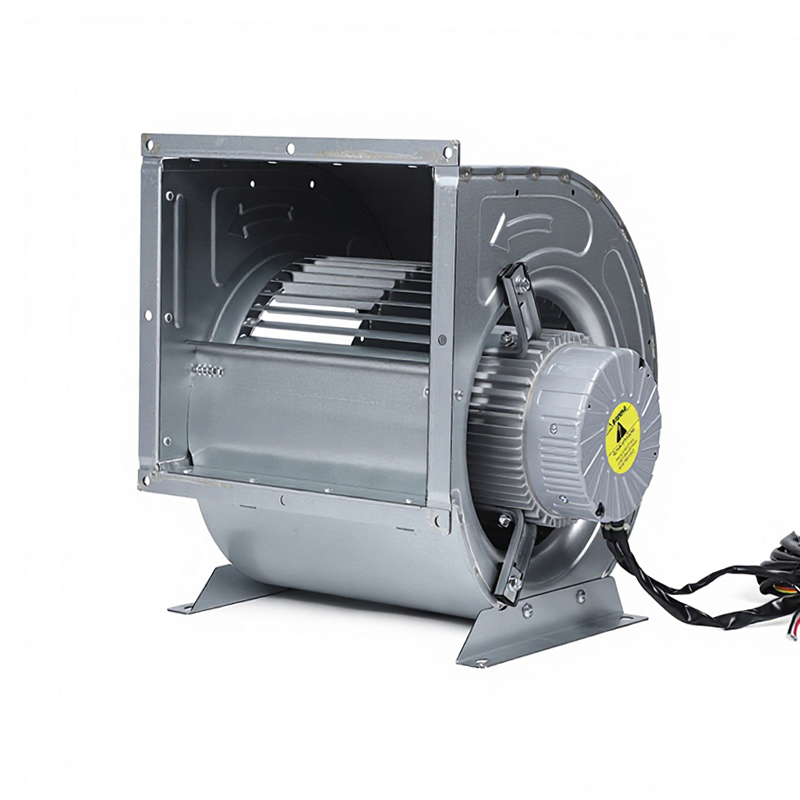
EC motors carry their own drive electronics. They accept a 0-10V or PWM signal directly, hold their speed as the filter loads up, and can report status back to a building management system. On a variable air volume system that is the difference between a fan that follows zone demand and a fan that simply runs. The trade-off is a higher unit price and electronics that must be protected from moisture and heat.
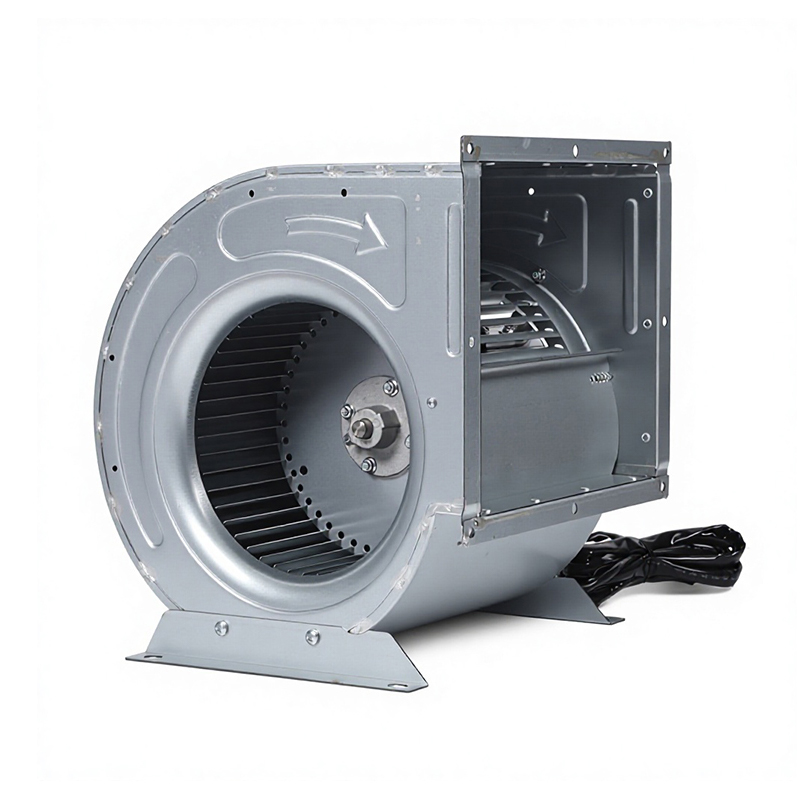 SYZ 9-9 Variable Speed EC Centrifugal Fan for HVACVariable-speed EC centrifugal fan for HVAC, with 200–1100 RPM control, direct-drive design, and 1000W motor for adjustable airflow.View Product →
If you are comparing the two families for a project, reading the EC centrifugal fan range alongside the AC range helps, because both sets of curves are measured the same way.
Impeller Shape Sets the Pressure and the Noise
The impeller is the only part that touches the air, so its geometry defines the character of the whole fan.
- Forward-curved, multi-blade — many shallow blades, high airflow at low pressure, compact and quiet. Standard in air handlers, fan coils and mini centrifugal fans.
- Backward-curved — fewer, deeper blades, higher efficiency and a non-overloading power curve. Common in ducted and larger ventilation duties.
- Radial and inclined-blade — built for dirty or high-pressure streams; noisier, but they keep moving air as resistance climbs.
Material matters as much as shape. Impellers pressed from SGCC galvanised steel sheet resist corrosion in humid airstreams and hold their balance better than thin painted steel, which counts on a fan that runs continuously for years. Balance and bore tolerance are the two things worth asking about: an impeller with a loose shaft fit will vibrate, and vibration is what destroys bearings.
What to Check Before You Specify a Fan
Most replacement failures are specification failures rather than manufacturing failures. Check these points against the submittal:
- Duty point, not maximum. Compare at your actual airflow and static pressure; a fan that only matches at free air is not a match.
- Voltage, frequency and phase. A 230 V / 50 Hz single-phase motor behaves differently on 220 V or 60 Hz. Allow roughly ±10 % voltage tolerance and recalculate the speed.
- Sound level and measuring distance. A dB(A) figure means little without the distance and the mounting condition.
- Physical envelope. Diameter, height, mounting centres and shaft extension should be checked against the old unit before ordering.
- Control interface. Confirm whether the unit needs 0-10V, PWM or a dry contact alarm.
- Environment. Ambient temperature, humidity and dust decide whether a protected EC module or a simple AC motor is the right answer.
A useful habit: ask for the curve at the exact duty point, in writing, and keep it with the commissioning record. When airflow drops two years later, you will know whether the fan changed or the ductwork did.
FAQ
Why does airflow drop over time?
Filter loading, dust on the impeller blades and small duct leaks all add resistance. Because airflow falls along the fan curve as static pressure rises, a modest increase in resistance can cost 15-20 % of design airflow.
Can an AC fan be replaced with an EC fan?
Often yes, but the mounting envelope, the impeller and the control wiring all have to match, and the EC version needs a permanent live supply as well as a signal. The efficiency gain is real on systems that run at part load for most of the year.
Is a bigger fan always better?
No. Oversized fans run at low speed and can lose efficiency, and their larger physical size may not fit the unit. Size to the duty point with a small margin, then use speed control for the rest.
Understanding an HVAC system comes down to one habit: follow the air. Heating and cooling get the attention, but the airflow path — filter, coil, fan, duct — is where the design is either achieved or quietly lost.
If you are matching a centrifugal fan, a blower impeller or a box-type fan unit to a specific duty point, send the airflow, static pressure and supply details and the matching curve can be checked against your system rather than against a catalogue cover.
 ENG
